Range of Motion Exercises: How to Perform Passive ROM Safely and Correctly
Range of Motion Exercises: How to Perform Passive ROM Safely and Correctly

Photo by yury kirillov on Unsplash
Range of motion exercises help move joints through their normal positions to support flexibility, comfort, and mobility. In care settings, these exercises are often done for people who need assistance moving an arm, hand, leg, foot, or toes.
This guide explains what passive range of motion is, how to prepare safely, and which joint movements are commonly included for the upper and lower body.
What are range of motion exercises?
Range of motion, or ROM, exercises are controlled movements that take a joint through its natural motion. They are commonly used as part of basic nursing and caregiving care.
Passive ROM means the caregiver moves the person’s joints for them. This is different from active ROM, where the person moves independently.
These exercises may involve the:
- Shoulder
- Elbow
- Forearm
- Wrist
- Thumb and fingers
- Hip
- Knee
- Ankle
- Toes
Why passive ROM matters
When a person cannot move a limb well on their own, careful joint movement can help maintain mobility and support comfort during daily care. It also gives the caregiver a chance to observe how the joint moves and whether the person appears uncomfortable.
Good technique matters. The movements should be steady, supported, and done with attention to body alignment and privacy.
Before starting: safety and preparation
Before beginning passive ROM exercises, basic setup is important.
- Wash hands before care.
- Explain what you are doing so the person knows what to expect.
- Raise the bed to a safe working height to protect your back.
- Position the bed appropriately. A flat head-of-bed position may be used while performing the exercises.
- Expose only the area being exercised to preserve privacy and warmth.
- Support the limb throughout the movement rather than pulling from the hand or foot alone.
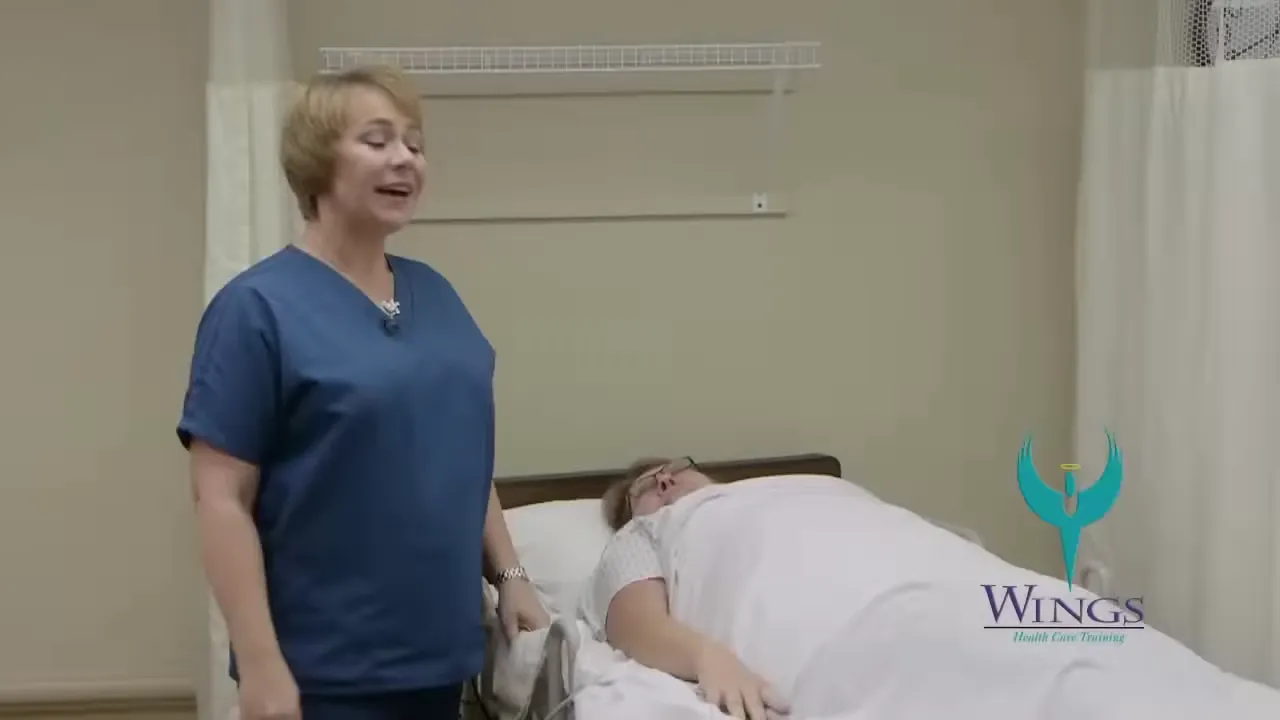
At the end of care, the person should be repositioned comfortably, the bed returned to a low position, and the call light placed within reach. Side rails should be used if ordered.
General rules for performing ROM exercises
Use these principles during every movement:
- Move the joint smoothly and gently.
- Support the limb above and below the joint when needed.
- Work one joint at a time.
- Keep motions controlled, not forced.
- Observe for pain, resistance, or guarding.
- Reposition the person for comfort when finished.
A practical way to organize passive ROM is to complete the upper extremity first, then the lower extremity.
Upper body range of motion exercises
Shoulder ROM
The shoulder is moved through several common patterns:
- Flexion and extension of the upper arm
- Hyperextension by moving the arm slightly behind the body when positioned at the side
- Abduction and adduction, moving the arm away from and back toward the body
- Outward and inward rotation
During shoulder rotation, the upper arm should be kept at about a 90 degree angle from the body.
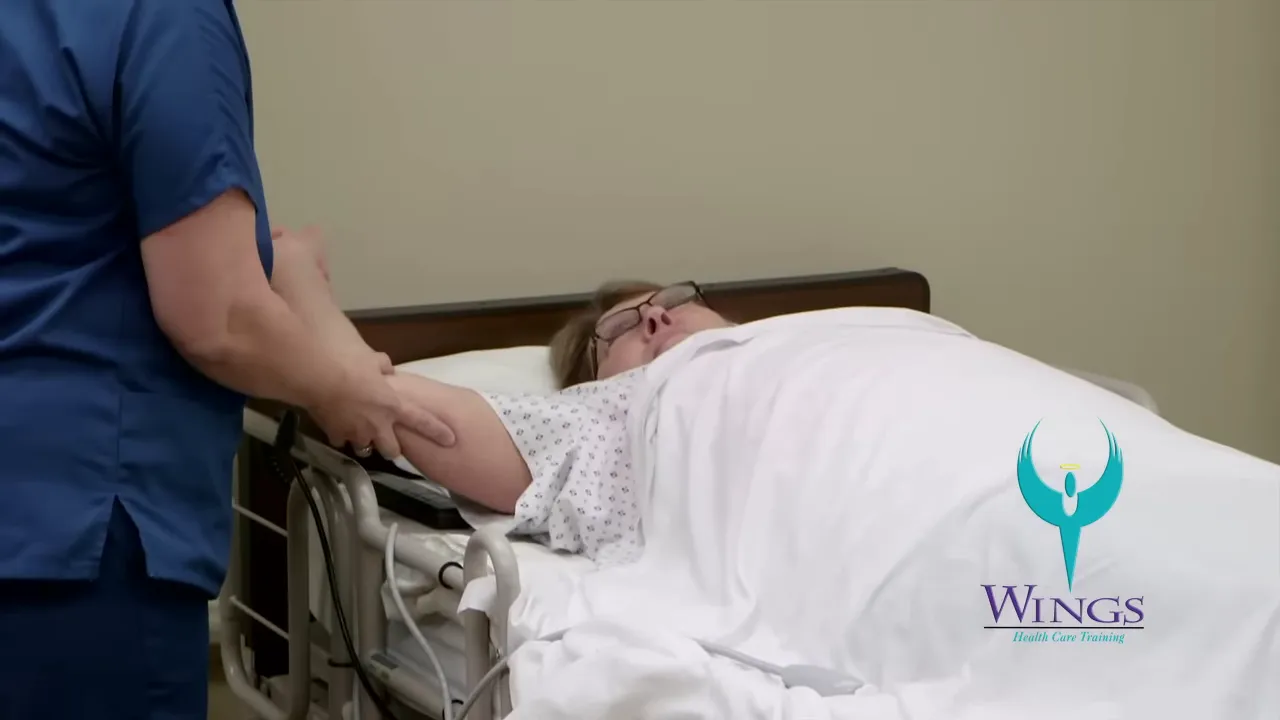
Elbow and forearm ROM
For the elbow and forearm, the common movements are:
- Flexion and extension of the elbow
- Supination and pronation of the forearm, turning the palm up and down
These movements should be supported so the wrist and elbow are not strained.
Wrist ROM
The wrist is commonly moved through:
- Flexion
- Extension
- Hyperextension
- Radial flexion
- Ulnar flexion
Radial and ulnar flexion move the hand side to side at the wrist.
Thumb and finger ROM
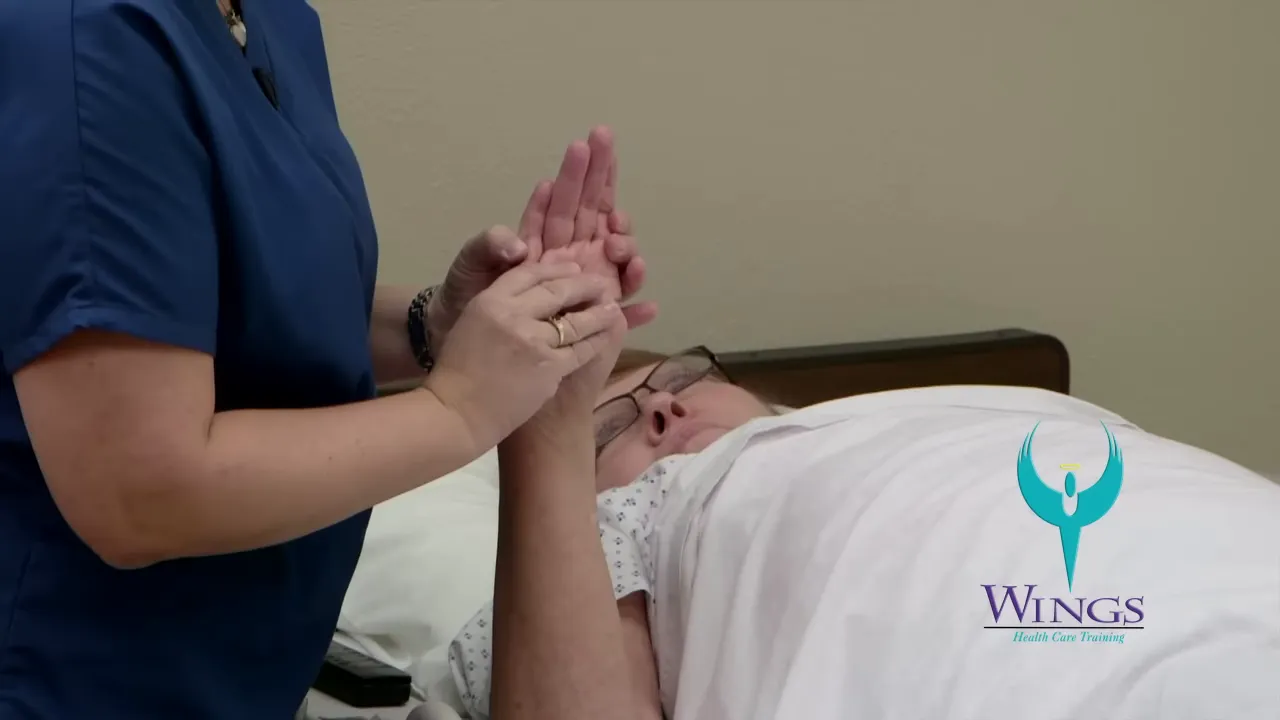
Hand exercises often include both the thumb and the fingers.
Thumb movements:
- Abduction and adduction
- Flexion and extension
- Opposition to the little finger
Finger movements:
- Abduction and adduction
- Individual movement of each finger
- Flexion and extension
Lower body range of motion exercises
For the lower body, only one leg should be exposed at a time.
Hip ROM
The hip is typically moved through:
- Flexion and extension
- Abduction and adduction
- Outward and inward rotation
Support the leg carefully at the thigh and lower leg during these movements.
Knee ROM
The knee movement is straightforward:
- Flexion and extension
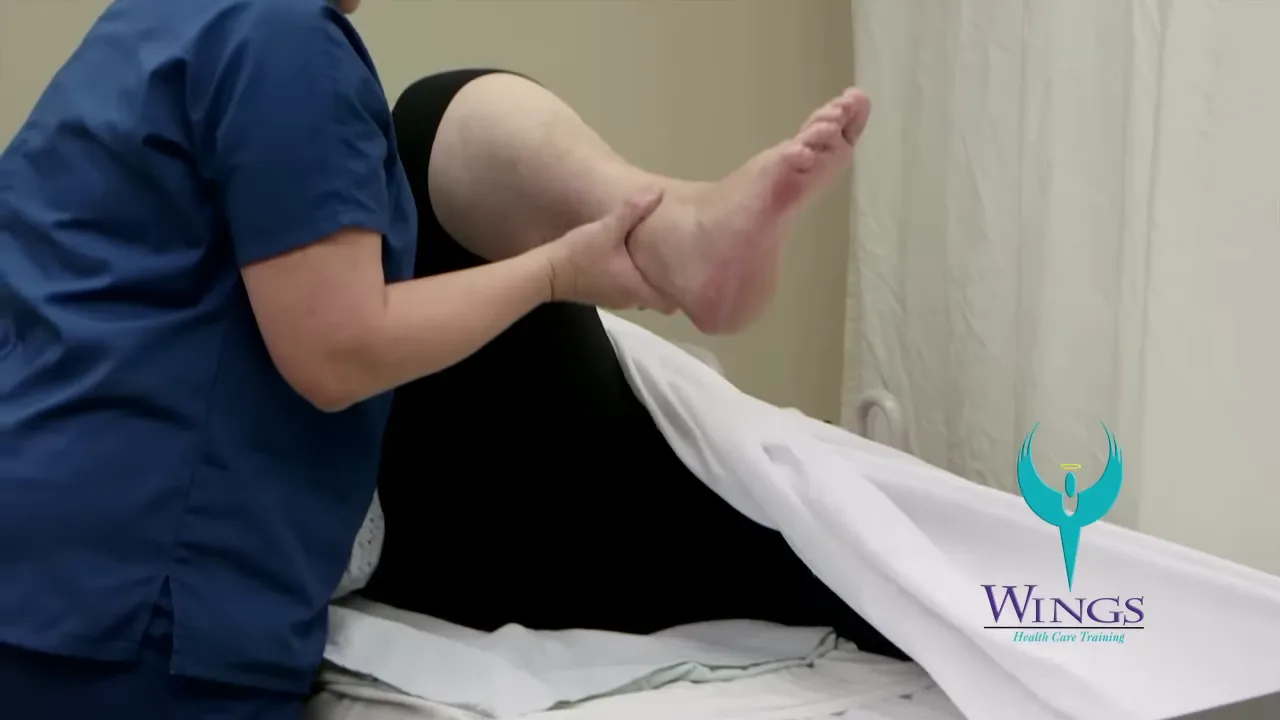
Lift and bend the leg in a controlled way, then return it smoothly.
Ankle ROM
The ankle exercises usually include:
- Plantar flexion
- Dorsiflexion
- Inward rotation
- Outward rotation
Plantar flexion points the foot downward. Dorsiflexion brings the foot upward.
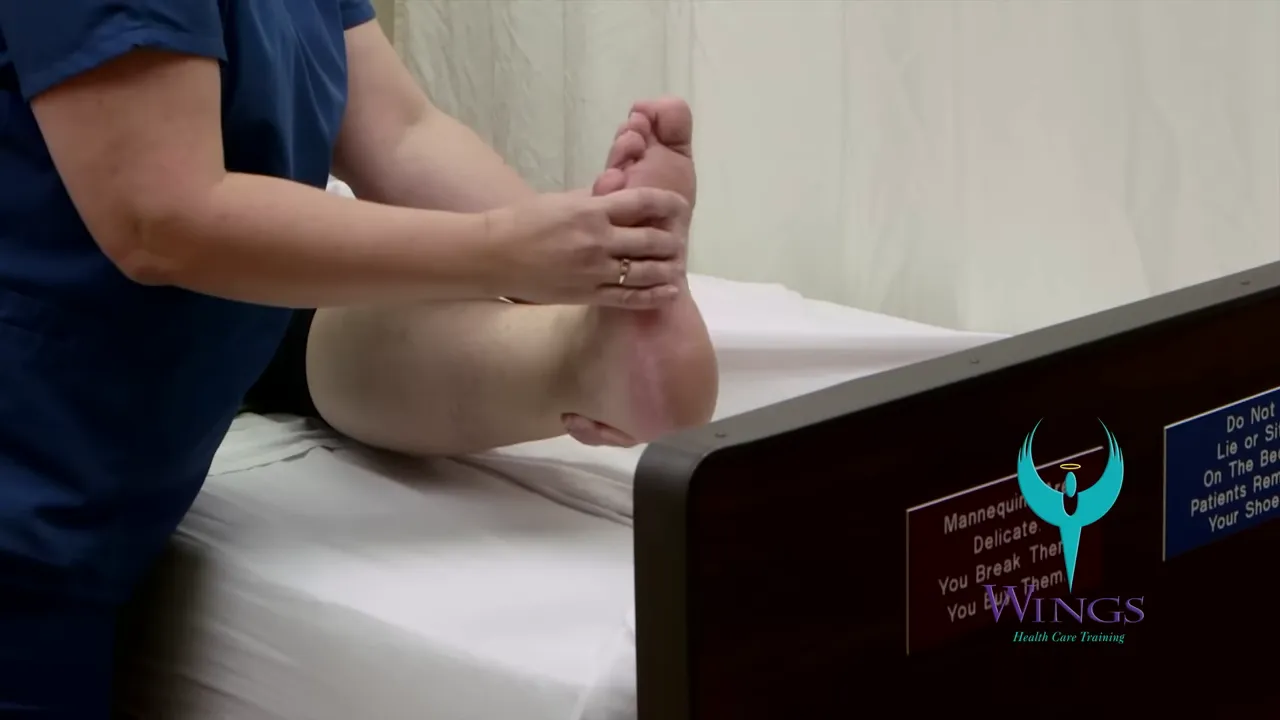
Toe ROM
Toe exercises commonly include:
- Abduction and adduction
- Moving each toe individually
- Flexion and extension
These small movements should still be done gently and with full support.
Step by step passive ROM sequence
A simple full-body passive ROM sequence may look like this:
- Prepare the room, bed, and person.
- Start with the upper body on one side.
- Move the shoulder through its main motions.
- Continue to elbow, forearm, wrist, thumb, and fingers.
- Cover the upper body and expose one leg only.
- Move the hip, knee, ankle, and toes.
- Reposition the person for comfort.
- Lower the bed, place the head of bed at about 30 degrees if appropriate, and ensure the call light is within reach.
- Wash hands again, then record and report as required.
Common mistakes to avoid
Even simple ROM exercises can be done poorly if basic care principles are skipped.
- Moving too quickly
- Failing to support the joint properly
- Exposing more of the body than necessary
- Forgetting to return the bed to low position
- Leaving the person uncomfortable after the exercise
- Skipping hand hygiene and documentation
What to check after finishing
After ROM exercises are complete, make sure the person is:
- Covered properly
- Positioned comfortably
- In a low bed position
- With the head of bed raised as appropriate
- With side rails up if ordered
- With the call light within reach
Care is not complete until comfort and safety are restored.
Frequently asked questions
What is the difference between passive and active range of motion?
Passive ROM means the caregiver moves the joint. Active ROM means the person moves the joint independently.
Which joints are usually included in a full ROM routine?
A full routine often includes the shoulder, elbow, forearm, wrist, thumb, fingers, hip, knee, ankle, and toes.
Why is only one leg exposed during lower body ROM?
This helps maintain privacy and keeps the rest of the body covered and comfortable.
Why should the bed be lowered after the exercises?
Returning the bed to a low position improves safety once care is finished.
Key takeaway
Passive range of motion exercises are a basic but important caregiving skill. The essentials are simple: prepare the environment, support each joint, move through the correct motions gently, protect privacy, and leave the person safe and comfortable afterward.
When done carefully, ROM exercises provide structured joint movement from the shoulders and hands down to the hips, ankles, and toes while reinforcing safe bedside care habits.