How to Clean Dentures in Nursing Care
How to Clean Dentures in Nursing Care

Denture care is a basic nursing and CNA skill, but it requires attention to detail. Dentures are costly, easy to damage, and easy to misplace. Patients who are ill, bedridden, or weak may need help removing, cleaning, storing, and reinserting them safely.
Proper denture care usually happens after meals and before bedtime. It also includes oral care to the mouth, not just cleaning the dentures themselves.
Why denture care matters
Good denture care helps prevent:
- Build-up of food particles and adhesive
- Bacterial growth in the mouth and on the dentures
- Patient discomfort when dentures are reinserted
- Damage from drops, hot water, or abrasive products
- Loss or mix-ups in shared care settings
Two priorities should guide the whole process: do not damage the dentures and do not lose them.

When nursing staff should clean dentures
Dentures are commonly cleaned:
- In between meals
- At bedtime, since patients generally do not sleep with them in
- Any time they become visibly soiled
If the patient is unable to manage their own oral care, staff may need to remove the dentures, clean them, perform mouth care, and help with reinsertion if the patient wants them back in.
Supplies needed for denture care
Gather all supplies before starting to avoid interruptions and reduce handling errors.
- Labeled denture cup
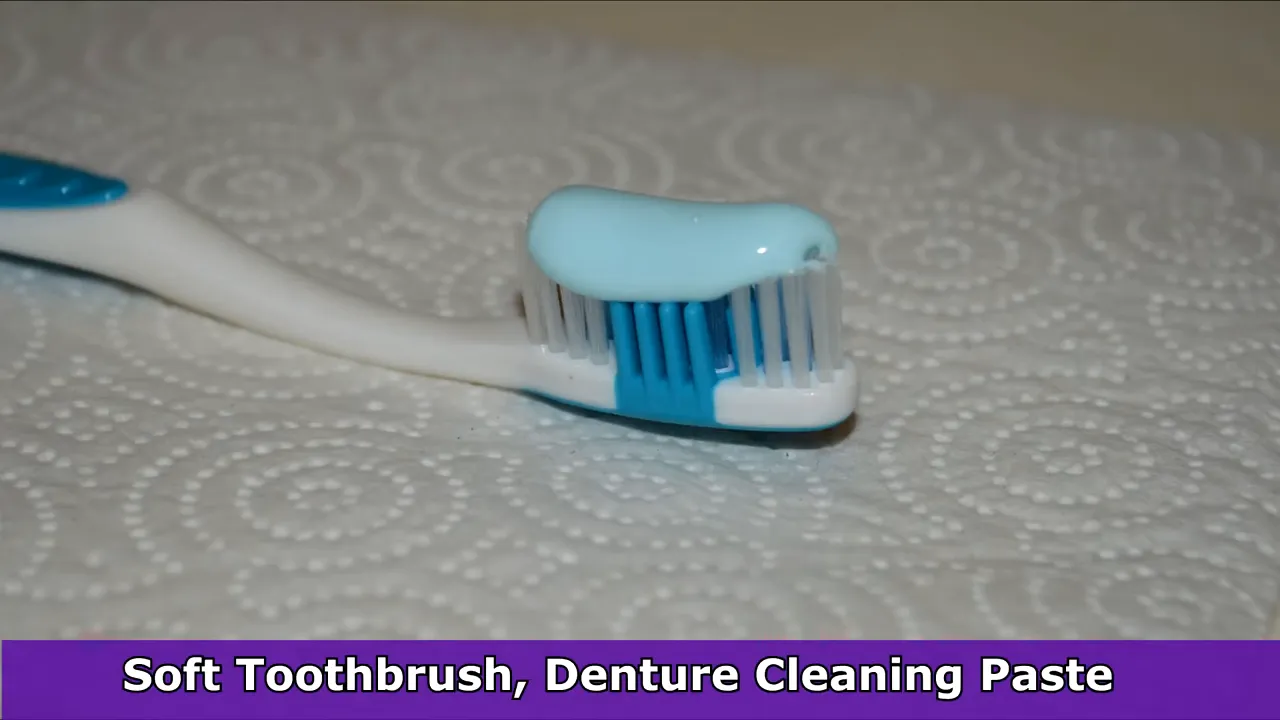
- Soft-bristled toothbrush or denture brush
- Denture cleaning paste if available
- Kidney basin or emesis basin
- Towels and paper towels
- Gloves
It is also smart to ask whether the patient brought their own denture supplies or has a preferred soaking solution.

What to use to clean dentures
The preferred option is denture cleaning paste. A soft toothbrush or denture brush should be used to gently scrub the appliance.
Regular toothpaste may sometimes be the only product available, but it is not ideal. Some toothpaste formulas, especially those with whiteners, can be abrasive and may wear the denture surface over time.
How to prepare the sink area safely
Before cleaning the dentures, set up the sink to reduce contamination and prevent breakage.
- Perform hand hygiene and put on gloves when handling dentures.
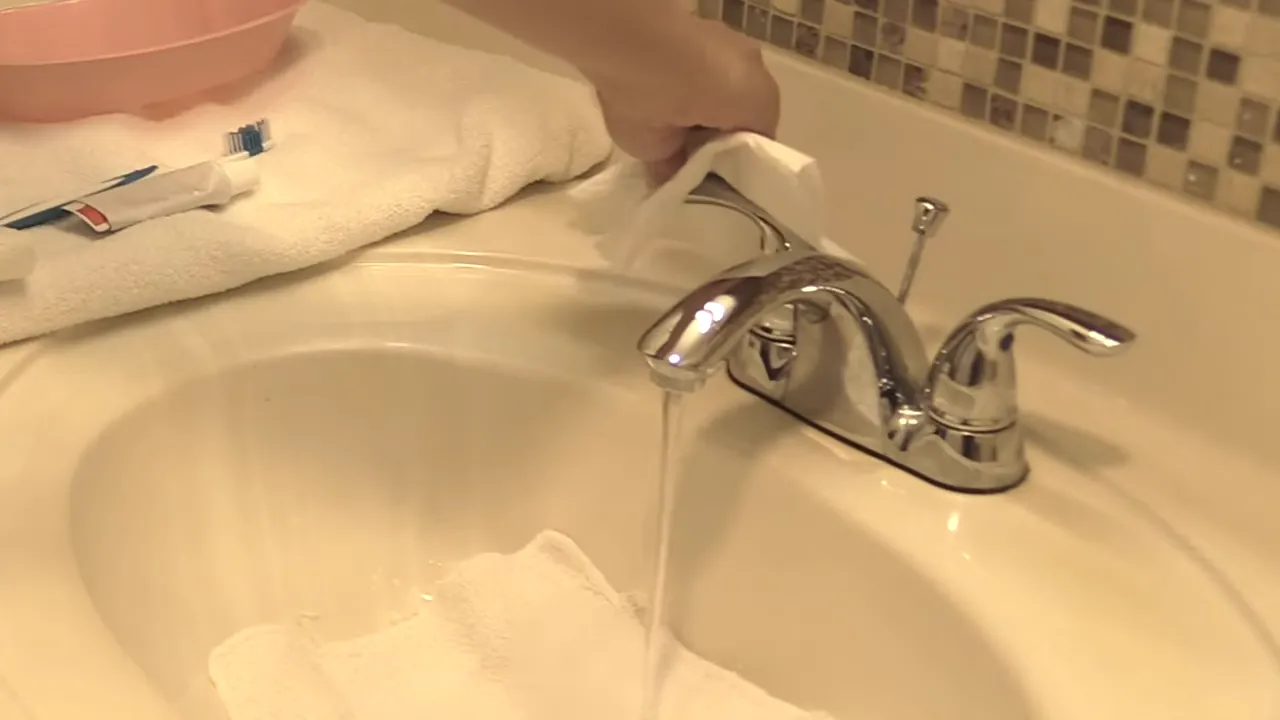
- Protect the workspace with towels.
- Use paper towels near the faucet handles so you can turn water on and off without contaminating your gloves.
- Create a cushion in the sink by placing towels in the basin and filling it partway with water.
This cushioning step is especially important. Dentures become slippery during cleaning and can easily fall from the hands. A padded sink helps reduce the chance of cracks or breakage.
Step-by-step: how to clean dentures
1. Remove the dentures carefully
Assist the patient with removing the dentures if needed. Place them in a denture cup temporarily. If the dentures were removed at the bedside, hand hygiene and glove changes may be needed before moving to the sink area.
2. Turn on warm water
Use warm water, not hot. Hot water can damage dentures. Very cold water is also less effective for cleaning.
3. Rinse the dentures first
Hold the dentures firmly and rinse away loose debris. Place them in the kidney basin while preparing the denture cup.
4. Clean the denture cup
Rinse the denture cup well before returning the dentures to it. The storage cup may contain residue and should not be reused without cleaning.
5. Add enough water to keep dentures moist
Put enough water in the denture cup to cover the dentures. Keeping dentures moist helps them maintain their shape and can make reinsertion easier for the patient.
Some patients may use a preferred soaking method, such as a commercial denture tablet or a home solution. Ask first before substituting anything.
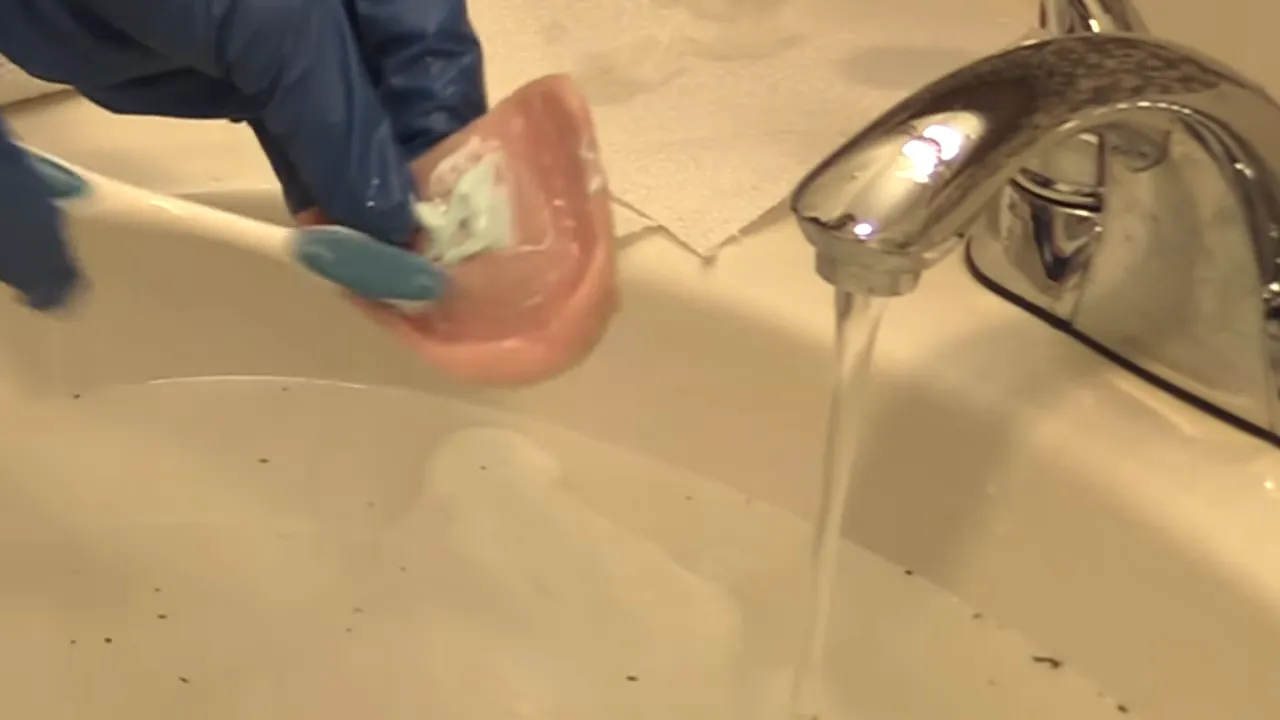
6. Brush all denture surfaces thoroughly
Apply denture paste to the brush and clean each denture carefully. Focus on:
- The inner gumline where adhesive and debris collect
- The front and back tooth surfaces
- The chewing surfaces
- The palate area on the upper denture
- The tongue-side surface on the lower denture
Use gentle, controlled strokes. The goal is thorough cleaning without bending or dropping the denture.
7. Rinse the dentures well
Rinse away all cleaning paste, food particles, and adhesive residue.
8. Return dentures to the labeled cup
Place the clean dentures into the prepared cup with water or the patient’s preferred soak. Secure the lid.
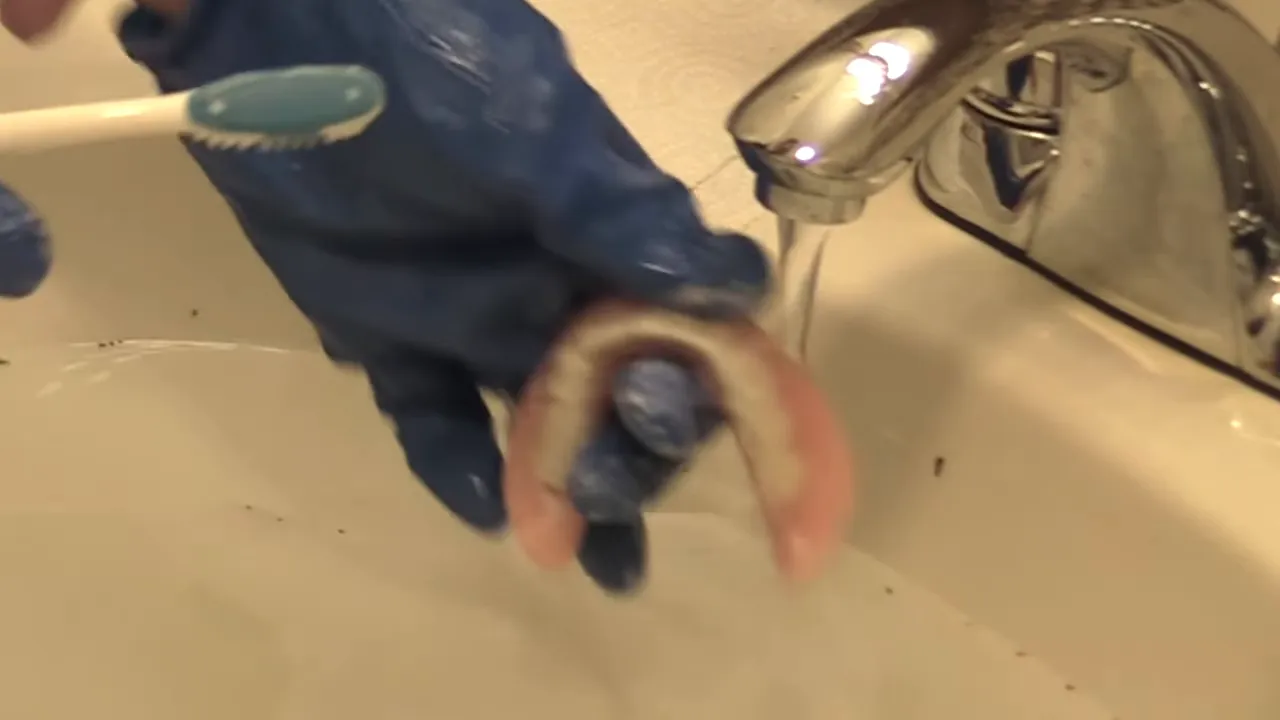
How to clean the lower denture
The same method applies to the lower denture. Clean the gumline, back teeth, front teeth, and the inner area where the tongue rests. These surfaces can trap adhesive, food, and bacteria just as easily as the upper plate.
Aftercare: do not forget oral care
Cleaning dentures is only part of the task. After the dentures are removed and cleaned, provide oral care to the patient’s mouth as needed. This helps remove bacteria and residue from the gums, tongue, and oral tissues.
If the patient wants the dentures back in, assist with reinsertion after cleaning is complete.
How to clean up equipment afterward
Once the dentures are stored, clean the remaining items used during care.
- Rinse the toothbrush thoroughly
- Use a gloved finger to remove trapped toothpaste or food particles from the bristles
- Rinse and dry the kidney basin
- Drain the sink and remove the protective towels
- Remove gloves and perform hand hygiene
Keeping the brush and basin clean prevents residue from carrying over to the next use.
Common mistakes to avoid
- Using hot water, which can damage dentures
- Skipping the sink cushion, increasing the chance of breakage if dropped
- Using abrasive toothpaste when denture paste is available
- Failing to label the denture cup, which can lead to loss or mix-ups
- Handling dentures without gloves
- Returning dentures to a dirty cup
- Forgetting mouth care after denture removal
- Not asking about patient preferences for soaking solution
Quick denture care checklist for CNA and nursing staff
- Gather supplies
- Label the denture cup
- Ask about patient preferences and personal supplies
- Perform hand hygiene
- Apply gloves
- Assist with denture removal
- Pad the sink with towels and partial water fill
- Use warm water only
- Rinse dentures
- Clean the denture cup
- Brush all denture surfaces with denture paste
- Rinse thoroughly
- Store in water or approved patient-preferred solution
- Clean the brush and basin
- Provide oral care
- Assist with reinsertion if requested
- Remove gloves and perform hand hygiene
Frequently asked questions
Should dentures be kept dry or in water?
They should generally be kept moist in the denture cup. This helps preserve shape and makes them easier to reinsert.
Can toothpaste be used on dentures?
It can be used if necessary, but denture cleaning paste is preferred. Regular toothpaste may be abrasive, especially whitening formulas.
Why is the sink lined with towels and water?
Because dentures are slippery and can fall during cleaning. The towel-and-water cushion reduces the chance of damage.
Do patients sleep with dentures in?
Typically no. Dentures are commonly removed and cleaned before bedtime.
Why does the denture cup need a label?
Labeling helps prevent loss and mix-ups, which is especially important in hospitals and long-term care settings.
Key takeaway
Safe denture care in nursing is simple but precise. Use a labeled cup, soft brush, warm water, and a protected sink setup. Clean every surface thoroughly, store dentures moist, and finish with mouth care. When done carefully, the process protects both the patient and the dentures.