Best Fall Prevention Exercises for Seniors Over 60
Best Fall Prevention Exercises for Seniors Over 60

Photo by Centre for Ageing Better on Unsplash
Fall prevention exercises for seniors focus on two big goals: building leg strength and improving balance. Together, these can help support safer walking, steadier standing, and more confidence during daily activities such as getting up from a chair, turning, and changing direction.
If you have been feeling unsteady, have had near falls, or have already fallen, it is important to speak with a doctor and get assessed by a physiotherapist. Falls can happen for many reasons, and exercise is only one part of the solution.
Who these exercises are for
These exercises are appropriate for many older adults who want to work on balance and lower body strength at home. They are especially relevant if you want to improve:
- Leg strength
- Standing balance
- Walking control
- Confidence with daily movement
- Mobility when turning or changing direction
Because people have different abilities, some movements may need to be modified. If you use a walking aid, keep it nearby and use it where needed.
Safety first before you start
Home fall prevention exercise should always be done with care. Use these safety checks before every session:
- Warm up first with a short walk or gentle movement.
- Use sturdy support such as a bench, rail, table, or solid chair.
- Place a chair nearby so you can sit and rest between exercises.
- Clear trip hazards such as loose rugs, plants, clutter, or anything in your walking path.
- Go at your own pace and rest as needed.
- Have someone nearby if you are at higher risk of falling.
Stop immediately if you feel faint, dizzy, short of breath, or develop pain.
Why strength and balance both matter
Many people think falls are only a balance problem. In reality, weak legs can make balance much harder. If the muscles around the hips, thighs, calves, and lower legs are not strong enough, everyday tasks become more difficult.
That includes:
- Standing up from a chair
- Lowering yourself down safely
- Walking heel to toe
- Recovering from small stumbles
- Turning around obstacles
A good fall prevention routine should train both.
10 fall prevention exercises to do at home
The routine below combines seated strengthening, standing strengthening, static balance, and dynamic balance work.
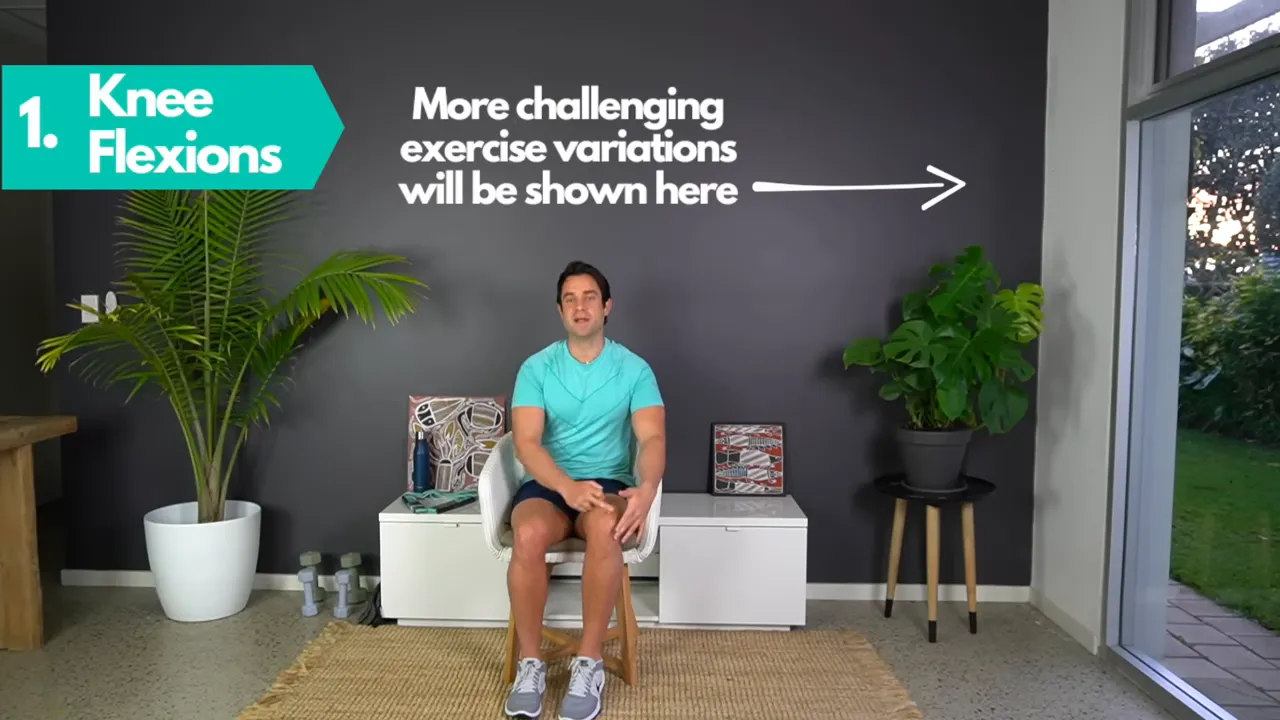
1. Seated knee extensions
This exercise works the quadriceps, the muscles at the front of the thighs. Strong quadriceps help with standing, walking, and controlling your knees.
How to do it:
- Sit back in a chair with tall posture.
- Straighten one knee fully.
- Pause briefly.
- Lower with control.
- Repeat on the other side.
Helpful form tip: Fully straighten the knee instead of stopping halfway.
2. Sit to stands
This is one of the most practical exercises for older adults because it trains the movement of getting up from a chair and sitting back down safely.
How to do it:
- Sit upright with feet just over hip width apart.
- Place your hands on the armrests if needed.
- Lean forward.
- Push through your legs to stand tall.
- Straighten your knees and hips fully.
- Slowly bend your knees and lower back down with control.
Progression options:
- Use both hands on the armrests
- Use one hand
- Use no hands
Key mistake to avoid: Do not drop or plop into the chair. The lowering part is part of the strengthening work.
3. Calf raises
Calf raises strengthen the muscles at the back of the lower legs, which are important for walking and push-off.
How to do it:
- Stand behind a sturdy chair, rail, or bench.
- Hold on for support.
- Rise up onto your toes as high as comfortable.
- Lower slowly.
Form tip: Stay upright and move slowly instead of bouncing.
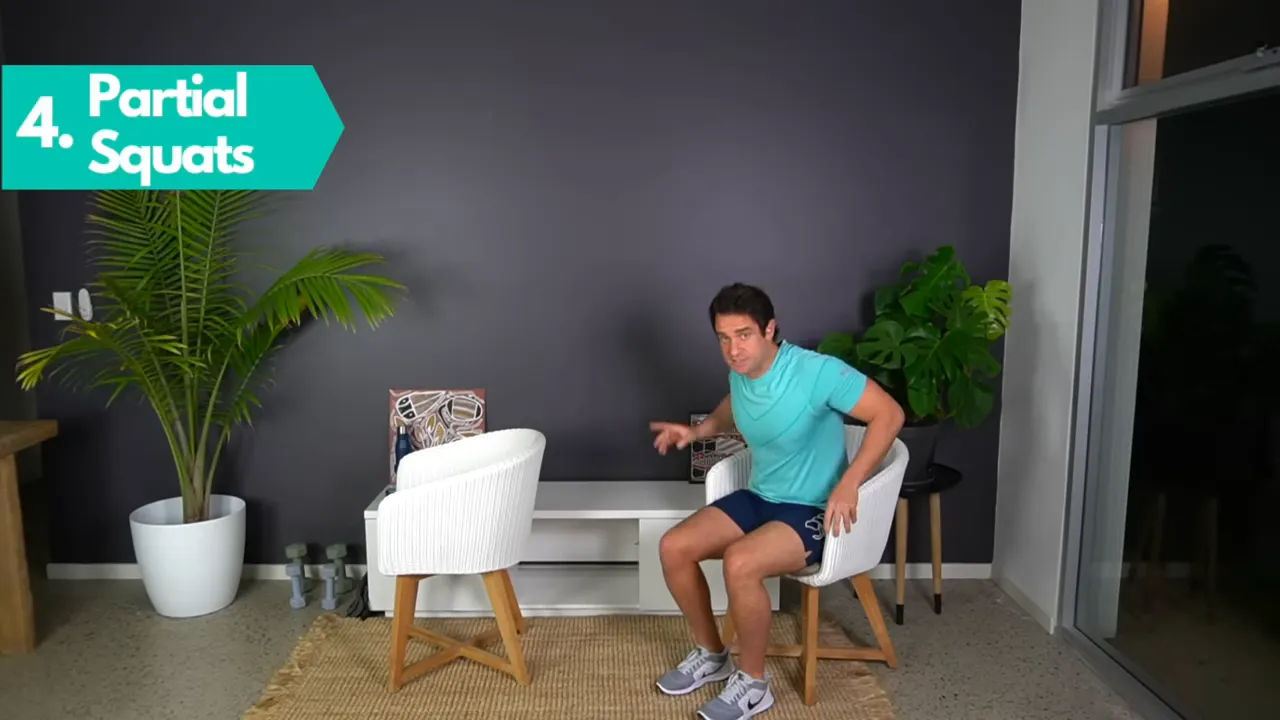
4. Partial squats
Partial squats strengthen the legs and hips while also helping with control during standing movements.
How to do it:
- Stand behind a chair and hold on.
- Place your feet just over hip width apart.
- Sit your hips back as if lowering toward a chair.
- Keep your knees in line with your toes.
- Push through your legs to return to standing.
Key cue: Think about sitting back, not just pushing the knees forward.
5. Standing knee flexions
This movement works the muscles at the back of the upper legs.
How to do it:
- Stand tall behind a chair or rail.
- Bend one knee to bring the foot upward behind you.
- Lower back down slowly.
- Repeat on each side.
Form tip: Stay tall and avoid rushing the movement.
6. Hip extensions
Hip extensions target the glutes, which play a major role in balance and walking stability.
How to do it:
- Stand tall behind a chair, rail, or bench.
- Keep one leg straight.
- Move that leg backward.
- Return to the starting position.
Key mistakes to avoid:
- Bending the moving leg
- Leaning the trunk forward
7. Hip abductions
This exercise strengthens the hips and glutes, which help control side-to-side stability.
How to do it:
- Stand tall and hold onto support.
- Move one leg out to the side.
- Keep the toes facing forward.
- Bring the leg back in with control.
Why it matters: Side hip strength is important for staying steady when shifting weight and walking.
8. Semi tandem balance hold
This is a static balance exercise, meaning you hold still rather than move.
How to do it:
- Stand next to a chair or rail.
- Place one foot slightly in front of the other.
- Start with both hands on support.
- As able, briefly lift one hand while keeping it hovering above the support.
- Build up your hold time gradually.
What if you sway? That is okay. Hold on, reset, and continue.
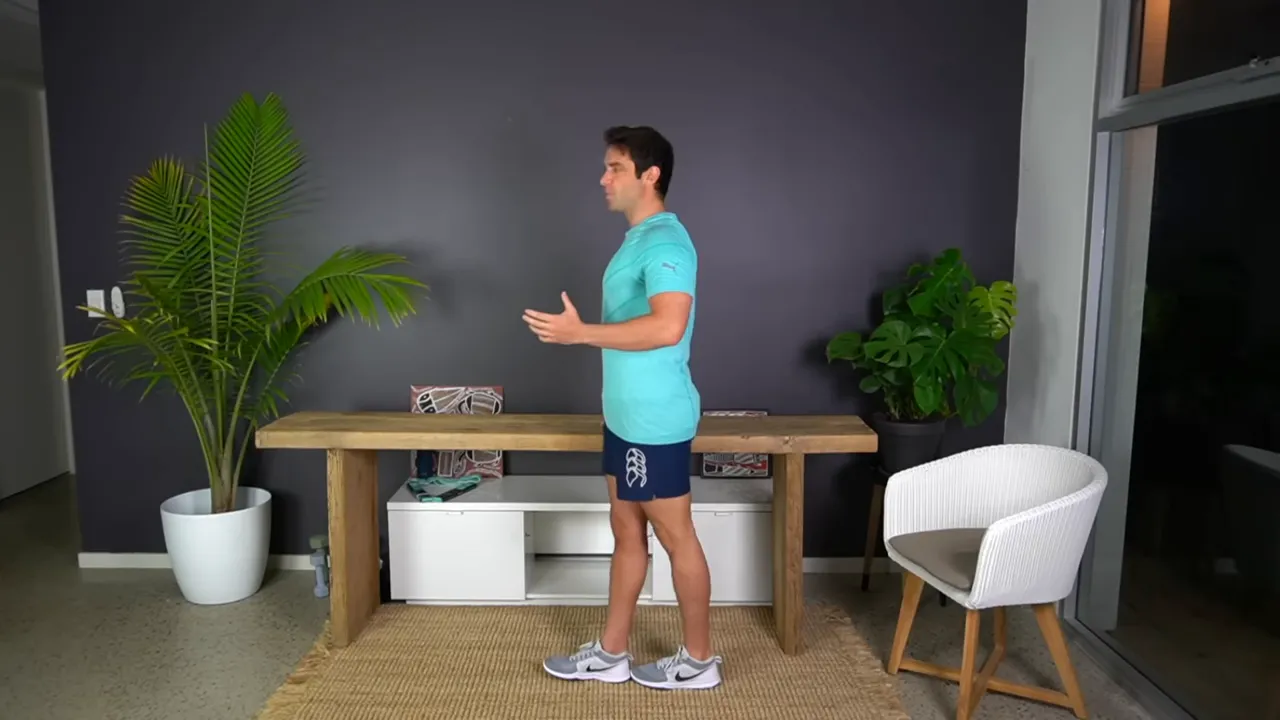
9. Heel to toe walk along support
This is a dynamic balance exercise, meaning you practice balance while moving.
How to do it:
- Stand beside a long support such as a kitchen bench, table, rail, or the back of a couch.
- Hold on lightly with one hand.
- Walk with one foot directly in front of the other.
- Keep your head up and posture tall.
- At the end, turn carefully by holding on and repositioning before returning.
Progression: When safe, hover your hand above the support instead of holding continuously.
10. Figure 8 walks
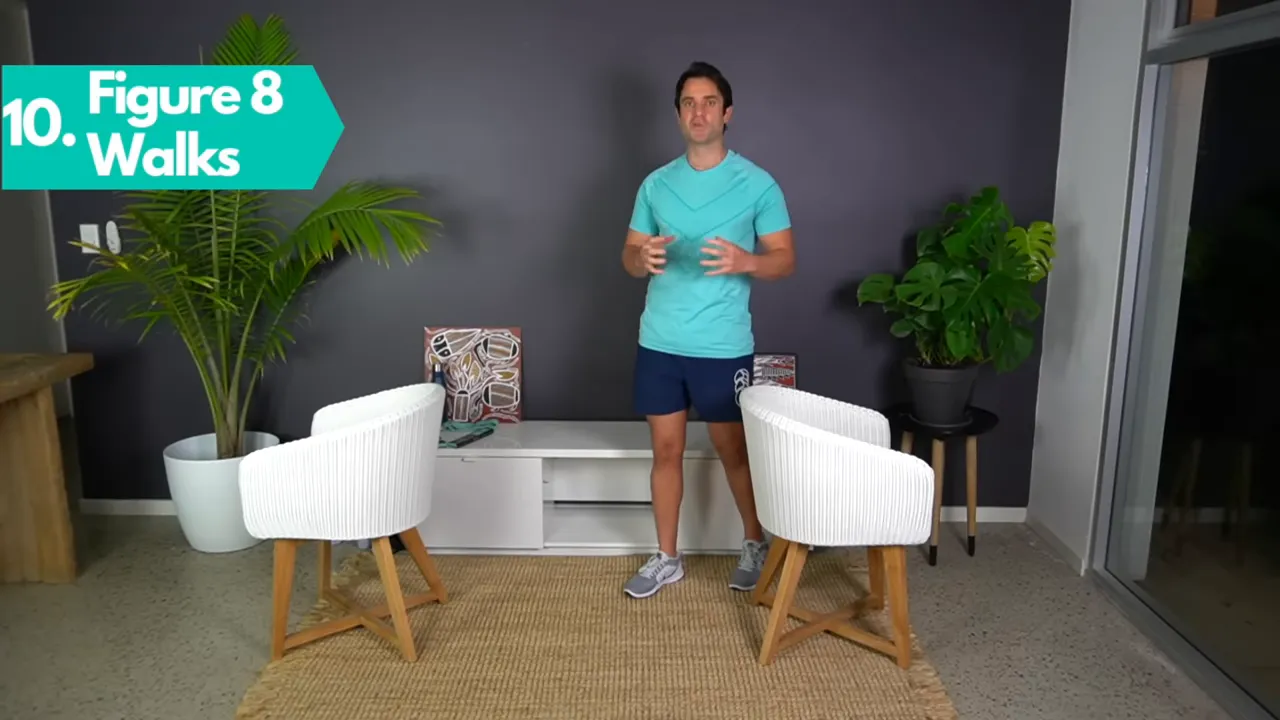
Figure 8 walking is excellent for mobility, balance, and change of direction. These are all useful in daily life.
How to do it:
- Set up two chairs with enough space between them.
- Walk around them in a figure 8 pattern.
- Stay tall and relaxed.
- Move at your own pace.
- Take smooth turns without cutting corners.
Important safety note: Make sure there is enough room between the chairs and nothing in the path that you could trip over.
How many reps and how often?
A simple starting point from this routine is:
- 10 repetitions for most strengthening exercises
- Build gradually if that is too much at first
- Work toward 3 sets of 10 over time
- Practice at least 3 times per week
If you can only manage 3 or 4 repetitions at first, that is still a valid starting point. Keep track and slowly increase as you get stronger.
How to progress safely
Progress matters because exercises that become too easy stop challenging the body enough to improve. Safe ways to progress include:
- Reducing hand support during sit to stands
- Holding balance positions for longer
- Using less support during walking balance drills
- Adding repetitions over time
- Improving control and range rather than speeding up
Progress should be slow and controlled, not rushed.
Common mistakes that reduce results
- Skipping the warm-up
- Going too fast instead of controlling the movement
- Using the arms too much when the goal is to strengthen the legs
- Not straightening fully during leg exercises or standing work
- Letting knees drift out of line during squats
- Doing balance drills near hazards such as rugs or clutter
- Setting chairs too close together for figure 8 walking
- Trying to do too much too soon
When to get professional help
Exercise can help reduce fall risk, but it should not replace an assessment when there are warning signs.
Seek medical or physiotherapy advice if:
- You have already fallen
- You are having repeated near falls
- You feel suddenly more unsteady
- You are not sure which exercises are safe for you
- You need an individualized exercise program
A physiotherapist can identify whether weakness, balance issues, or other physical factors are contributing to your fall risk.
Frequently asked questions
What are the best exercises to prevent falls in seniors?
The most useful exercises are those that train leg strength and balance together. This includes sit to stands, partial squats, calf raises, hip strengthening, static balance holds, heel to toe walking, and figure 8 walking.
How often should seniors do fall prevention exercises?
A practical target is at least three times per week, building up over time as tolerated.
Can these exercises be done with a walker?
Yes. If you use a walking aid, keep it with you and use it as needed. For walking drills such as figure 8 practice, the movement pattern can still be practiced with the aid.
Should balance exercises feel challenging?
Yes, but they should still feel safe. Mild swaying can happen. The key is to stay close to support, hold on when needed, and reset rather than pushing through unsafe instability.
What should I do if 10 reps is too much?
Start with fewer repetitions, such as 3 or 4, and gradually build up. Consistency matters more than doing a perfect full routine on day one.
Takeaway
The best fall prevention exercises for seniors over 60 are not complicated. The essentials are:
- Strengthen the legs
- Practice static and dynamic balance
- Use sturdy support and keep the area safe
- Start small and build gradually
- Stay consistent
If you want the greatest benefit, focus on slow, controlled reps, regular practice, and proper safety setup every time.