Safety Life Hacks Every Senior Can Use at Home
Safety Life Hacks Every Senior Can Use at Home

Photo by Mick Haupt on Unsplash
Simple changes at home can make everyday tasks easier and reduce common safety risks for older adults. Many of the most useful senior safety hacks are inexpensive, easy to set up, and based on real challenges like slippery showers, hard-to-grip containers, painful arthritis, and difficulty judging stairs.
This guide covers practical home safety tips for seniors that can improve comfort, independence, and confidence with daily routines.
Why small home changes matter for seniors
Aging can make ordinary tasks more difficult. Bathing, walking on stairs, holding a glass, opening jars, writing, and getting dressed may all become harder when arthritis, reduced grip strength, or vision changes are involved.
Small adaptations help in two important ways:
- They lower fall risk in places like bathrooms and stairways.
- They make daily tasks easier for seniors with arthritis or limited hand strength.
These ideas are not a replacement for grab bars, proper lighting, or professional home modifications when needed. They are simple add-ons that can make a noticeable difference.
Bathroom safety hack: keep soap off the floor
One of the most practical shower safety tips is to prevent dropped soap from becoming a slipping hazard.
A simple fix is to place a bar of soap inside a stocking or similar mesh-like fabric and tie it to the shower handle. This keeps the soap within reach and off the tub floor.
Why this helps
- Reduces the chance of soap falling to the bottom of the tub
- Limits bending and reaching in a slippery area
- Makes showering feel safer and less stressful
This can be especially helpful for anyone who hesitates to bathe because of fear of falling.
Best use tips
- Tie it securely to a stable shower handle
- Make sure it hangs within easy reach
- Replace the stocking when it wears out
Stair safety hack: use bright tape to mark step edges
Stairs can be difficult to judge, especially in low light or for seniors with vision changes. Adding bright duct tape or other high-contrast tape to stair edges can make each step easier to see.
The goal is visual contrast. When the edge of each step stands out, it becomes easier to judge depth and distance.
Why this helps
- Makes step edges more visible
- Helps with depth perception
- Can be useful in dim evening lighting
Where to apply it
- On the front edge of each stair tread
- In stairways with poor contrast between steps
- On indoor steps where the tape can adhere flat and cleanly
Use tape that is firmly attached and not curling up at the ends, since loose edges can become a tripping hazard.
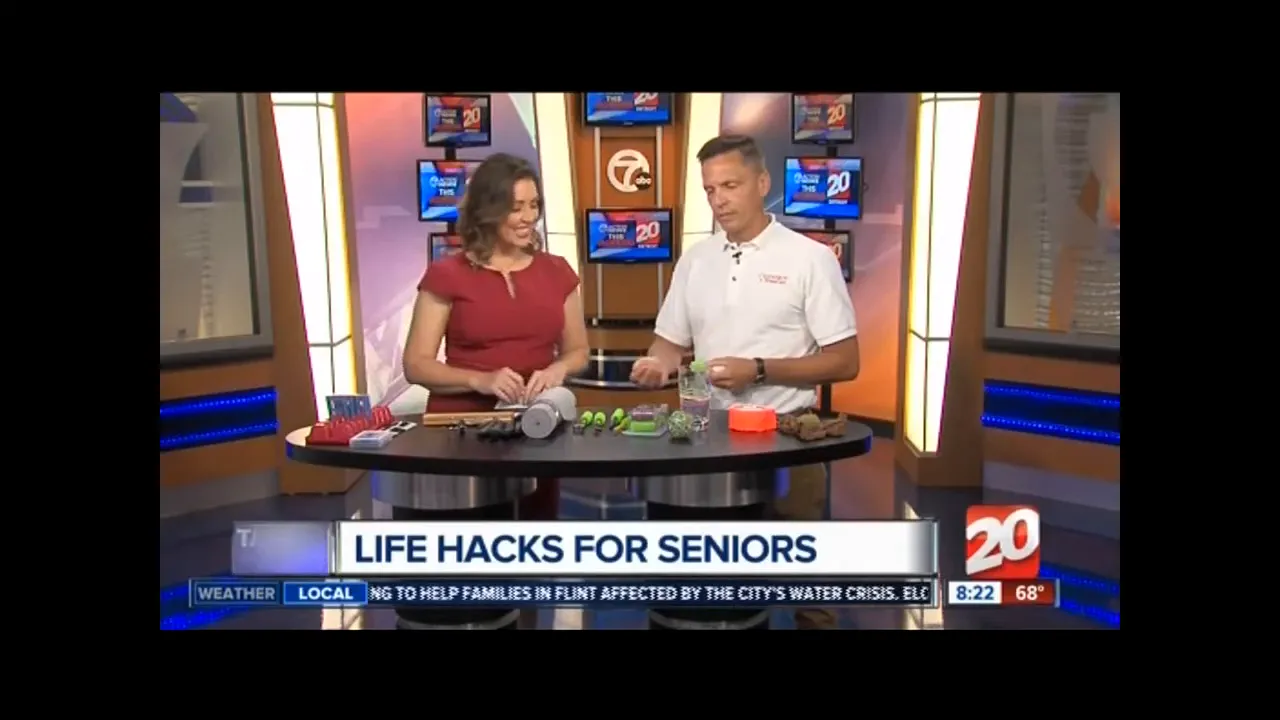
Grip hack for glasses: add rubber bands
For seniors with arthritis, a smooth drinking glass can be hard to hold, especially when condensation makes the outside slippery.
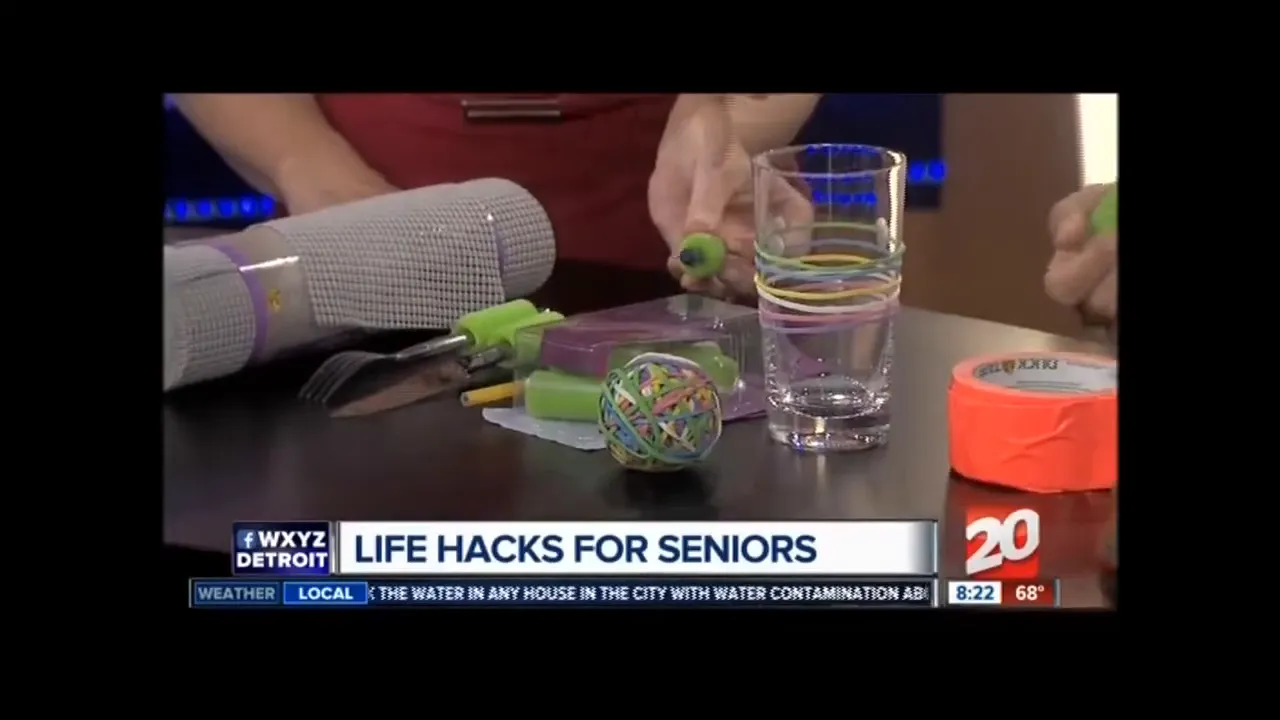
Wrapping rubber bands around the outside of a glass creates a more secure gripping surface.
Why this helps
- Improves grip on a slippery glass
- May reduce the chance of dropping it
- Can help prevent broken glass and hand injuries
How to set it up
- Choose a sturdy drinking glass.
- Wrap several rubber bands around the middle or lower half.
- Space them out so there are multiple textured grip points.
This is a quick, low-cost way to make everyday cups easier to handle.
Arthritis hack for utensils, pens, and pencils
Thin handles can be painful or difficult to grip for people with arthritis. A simple solution is to make the handle thicker.
One way to do that is to remove the foam cover from a hair roller and slide it over the handle of a utensil, pen, or pencil. The thicker, cushioned grip can make writing and eating easier.
Items that may benefit
- Forks and spoons
- Pens and pencils
- Other narrow household tools with slim handles
Why this helps
- Requires less finger strain than thin handles
- Can improve control
- Makes repetitive tasks more comfortable
Easy jar-opening trick with shelf liner
Opening containers can be frustrating for seniors with hand pain or weak grip strength. Shelf liner can provide extra traction on lids, making containers easier to open.
A small piece placed over the lid gives the hand more grip and can reduce slipping while twisting.
Good uses for shelf liner
- Jar lids
- Bottle caps
- Other smooth household tops that are hard to twist
Keep a few cut pieces in the kitchen so they are always easy to find.
Kitchen reading tip: hang recipes at eye level
Reading a recipe flat on the counter can be difficult for seniors with vision limitations. Hanging the recipe from a cabinet handle with a hanger or clip puts it in a better position for reading.
This can improve visibility and keep the paper off a busy countertop.
Benefits of hanging recipes
- Easier to see than a paper laying flat
- Helps reduce leaning forward to read
- Keeps the recipe accessible while cooking
Dressing hack: use a bobby pin on zipper pulls
Small zipper tabs can be hard to grasp. Attaching a bobby pin to the zipper gives a larger piece to hold, making it easier to pull up or down.
Why this works
- Creates a bigger grip point
- Can help with limited finger dexterity
- Makes dressing less frustrating
This is especially useful on jackets, dresses, and other clothing with small zipper pulls.
Which seniors may benefit most from these hacks?
These ideas can be useful for older adults who have:
- Arthritis
- Reduced grip strength
- Difficulty handling thin utensils or pens
- Vision changes that affect reading or stair depth perception
- Concerns about slipping in the shower
They may also help family caregivers looking for small ways to improve home safety without major renovation.
Common mistakes to avoid
Even helpful home hacks need to be used carefully. Watch for these issues:
- Do not use loose or peeling tape on stairs. It should lie flat so it does not create a trip hazard.
- Do not place shower items where they require reaching or twisting. Keep them within easy range.
- Do not assume a hack replaces medical or mobility support. If falls are a concern, consider more formal safety measures.
- Do not use fragile glassware if dropping is a regular problem. A better grip helps, but sturdier drinkware may also be worth considering.
Other smart ways to build on these senior safety ideas
These hacks work best when paired with basic home safety habits.
- Keep bathrooms and stairs well lit
- Reduce clutter in walking paths
- Store commonly used items where they are easy to reach
- Check that frequently used tools and containers are easy to grip
- Look for tasks that cause hesitation, strain, or repeated dropping
The best home safety improvements are often the ones that solve a very specific daily problem.
Quick checklist of senior life hacks for home
- Put bar soap in a stocking and tie it in the shower
- Mark stair edges with bright tape for better visibility
- Add rubber bands to glasses for a stronger grip
- Use foam roller covers to enlarge utensil and pen handles
- Use shelf liner for extra traction on lids and caps
- Hang recipes from a cabinet handle for easier reading
- Attach a bobby pin to a zipper pull for easier dressing
Final takeaway
The most effective senior home safety tips are often simple, practical, and easy to start right away. A few low-cost adjustments can make showering safer, stairs easier to judge, kitchen tasks more manageable, and everyday items easier to hold.
If an older adult struggles with a daily task, look for ways to improve grip, visibility, reach, and stability. Those four areas often reveal the quickest and most helpful fixes.