How to Transfer a Patient From Bed to Wheelchair Safely
How to Transfer a Patient From Bed to Wheelchair Safely

Photo by MRC Témiscamingue on Unsplash
Transferring someone from a bed to a wheelchair is a basic caregiving skill, but it needs to be done carefully. The goal is to move the person safely, protect the caregiver’s back, and make sure the patient feels supported throughout the transfer.
This guide explains a simple bed to wheelchair transfer using a gait belt, including preparation, body mechanics, step by step technique, and common mistakes to avoid.
Who this transfer method is for
This approach is designed for a person who can follow instructions and participate in the movement, at least to some degree. It involves helping the person move from lying in bed to sitting, then standing, pivoting with small steps, and sitting down in a wheelchair.
If the person cannot bear weight, cannot sit upright safely, or cannot follow directions, a different transfer method may be needed.
What to do before the transfer
1. Assess the patient
Before touching the patient, check how they are doing and whether they appear ready for the transfer. Make sure they are alert enough to understand what is about to happen.
2. Explain the plan
Tell the patient what you are going to do before each part of the transfer. Clear communication helps reduce fear and makes the movement smoother.
3. Position the wheelchair
Place the wheelchair close to the bed so the transfer distance is short. Keep it in a spot that allows you to guide the patient directly into the seat.
4. Lock the wheelchair before the transfer
The wheelchair should be locked while the patient is getting into it. A moving wheelchair can cause a fall.

Step by step: bed to wheelchair transfer
Help the patient move from lying down to sitting at the edge of the bed
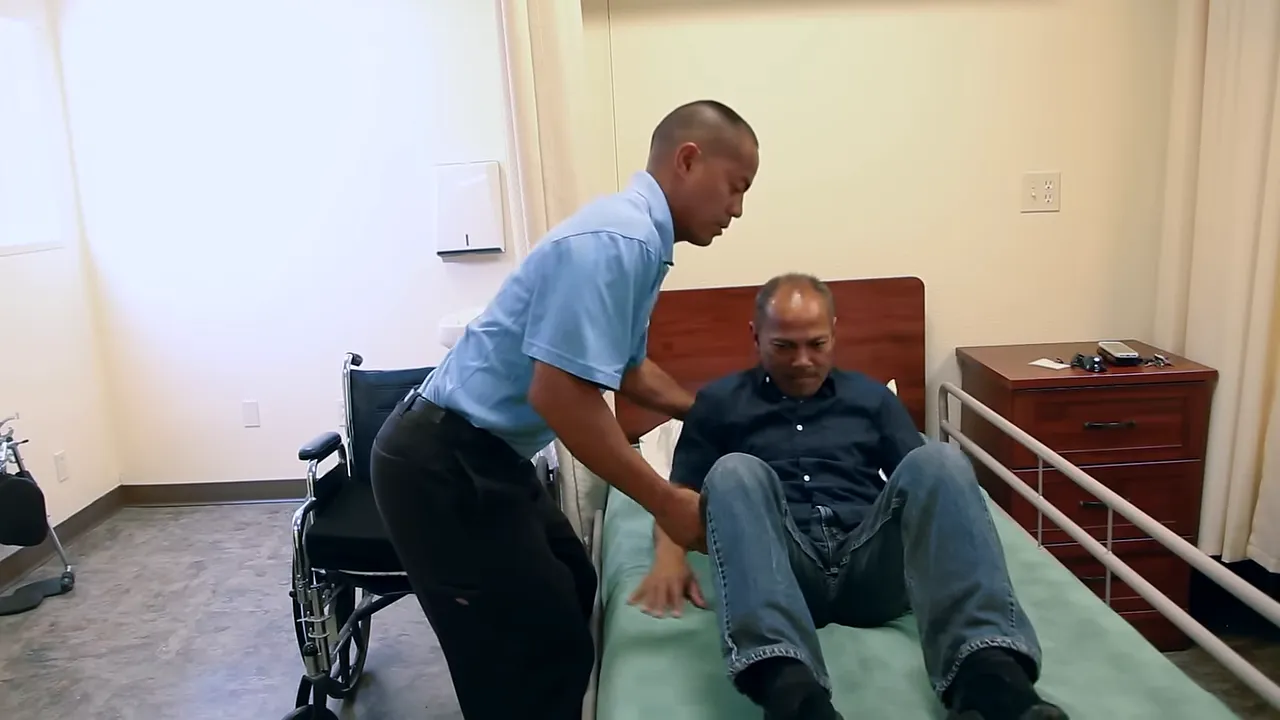
Start by asking the patient to bend their knees slightly. Then support them as they sit up and turn at the same time so their feet come off the bed.
A practical hand placement is to support the lower back while guiding the turn. Count out loud so you move together. Once they are upright, pause and make sure they are stable in sitting.
Continue assessing once the patient is seated
Do not rush the next step. Confirm that the patient is okay while sitting at the edge of the bed. Reassure them that you are there and keep explaining what comes next.
Apply the gait belt securely
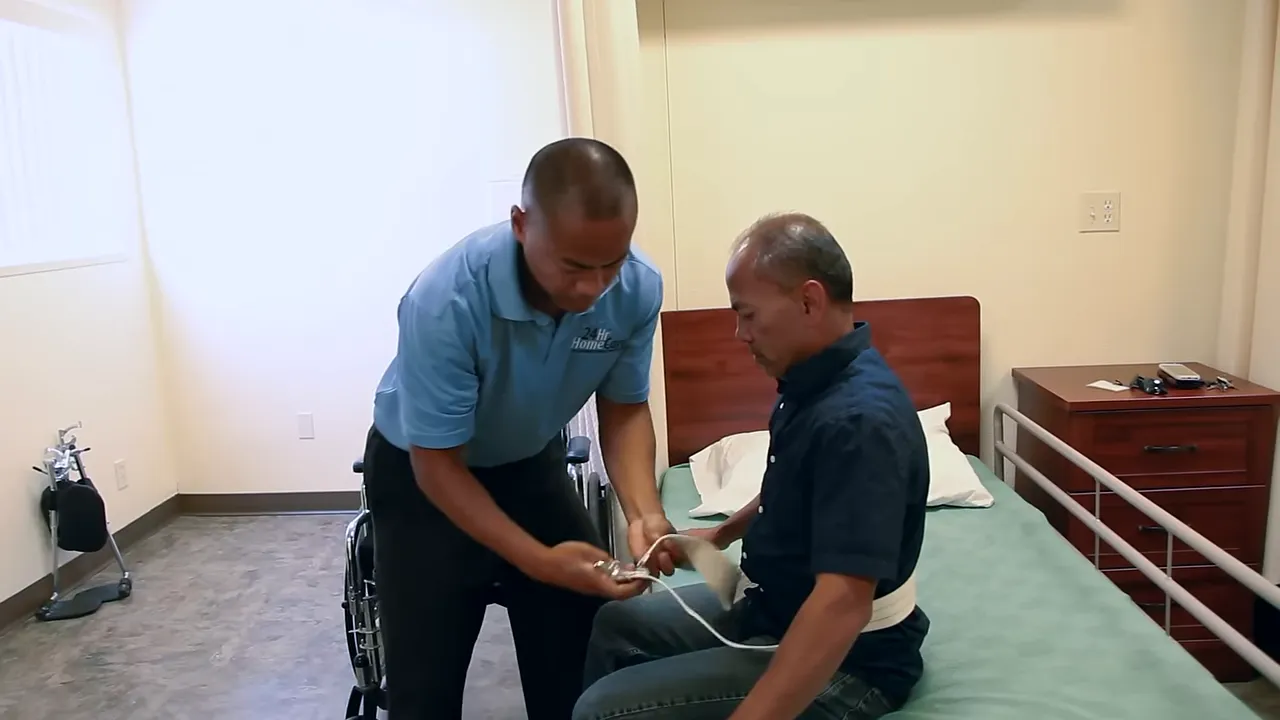
Place the gait belt around the patient once they are seated. The belt gives the caregiver a safer point of control during standing and turning.
Make sure it is secure before proceeding.
Prepare for the stand
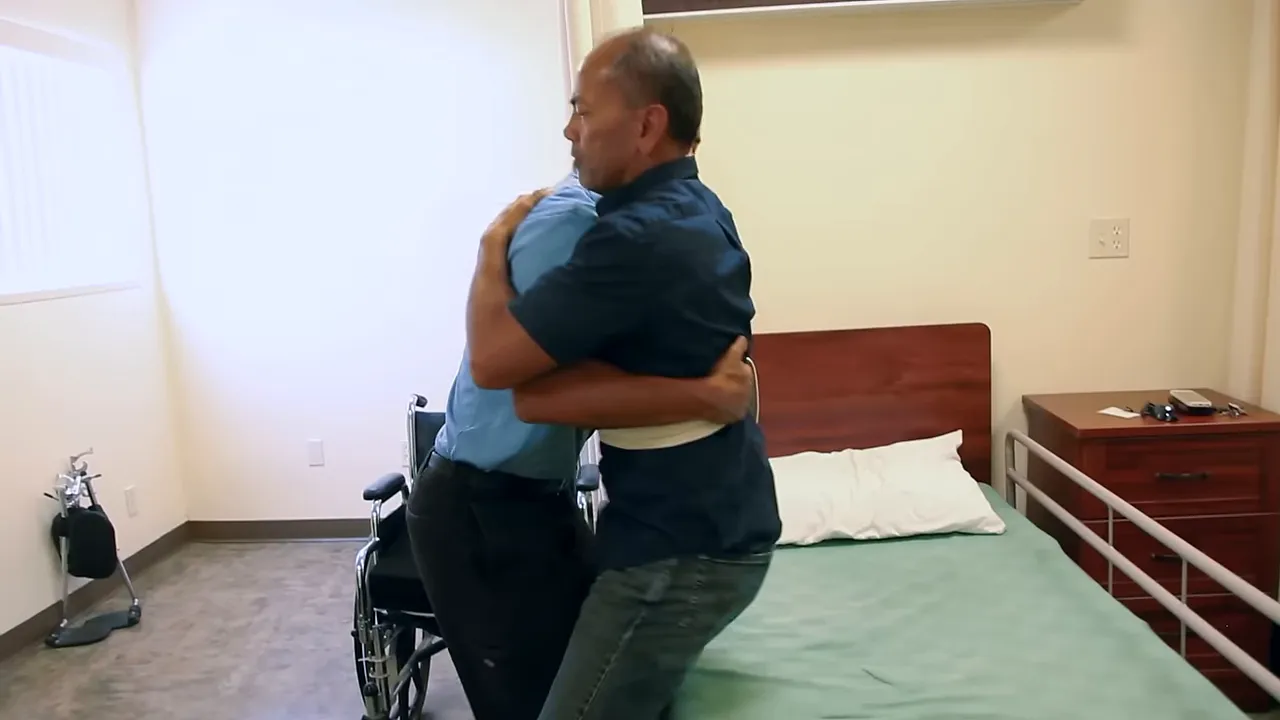
Ask the patient to place their arms over your shoulders. Position yourself close enough to support them well.
Use good lifting mechanics:
- Bend at the knees
- Keep your back straight
- Keep your chest up
- Shift your hips back
Your knees should be connected with the patient’s knees for support, rather than standing far away or loosely in front.
Stand together on a count
Count to three and have both of you stand at the same time. This coordinated effort helps the patient participate and reduces strain on the caregiver.
Once standing, maintain control and support through the gait belt and your body position.
Take small steps toward the wheelchair
Guide the patient with small steps toward the wheelchair. Keep the movement controlled. The transfer should be steady rather than fast.
A slow pivot with short steps is easier to manage than trying to turn too quickly.
Guide the patient into the chair
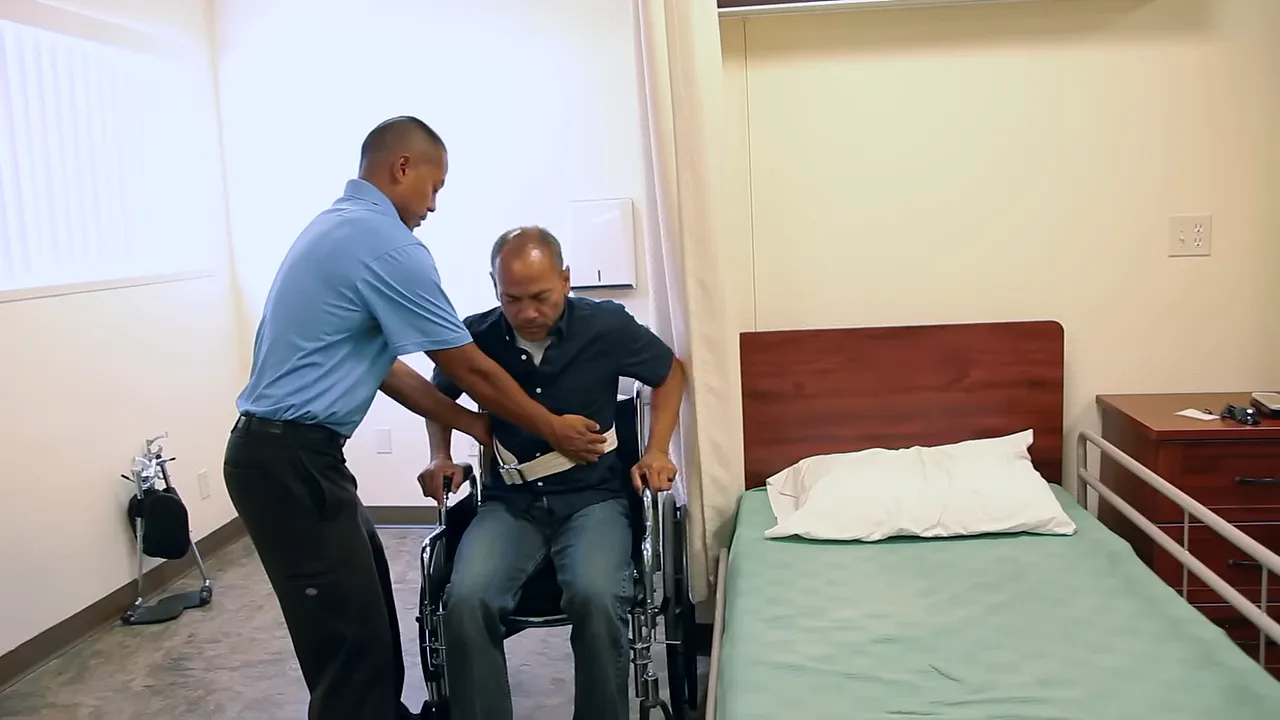
Once the patient feels the wheelchair behind them, tell them to reach down for the wheelchair supports and sit down. This helps them lower themselves with more control.
After they are seated, confirm that they are okay.
Unlock the wheelchair only after the patient is safely seated
After confirming the patient is safely positioned in the wheelchair, unlock it and proceed to the destination.
Key safety principles that matter most
- Always explain the transfer before and during each step.
- Keep assessing the patient throughout the movement.
- Use a gait belt when appropriate for added control.
- Lock the wheelchair before the patient sits down.
- Use proper body mechanics to protect your back.
- Move with the patient, not against them.
- Use small steps during the turn to the wheelchair.
Common mistakes to avoid
Skipping the explanation
Patients do better when they know what is happening. Giving simple instructions before each movement improves cooperation and safety.
Rushing from lying to standing
The transfer has stages. First help the patient sit at the edge of the bed, then reassess, then apply the gait belt, then stand.
Poor lifting posture
Bending with a rounded back puts the caregiver at risk. Keep the back straight, chest up, and knees bent.
Taking large turning steps
Large steps can throw off balance. Small steps make the pivot more stable.
Letting the patient sit before they reach for support
Before sitting, the patient should feel the wheelchair and reach for the supports. That gives them a better controlled descent into the chair.
Unlocking the wheelchair too early
The wheelchair should remain locked during the transfer into the chair. Unlock it only after the patient is fully seated and stable.
Quick checklist for caregivers
- Assess the patient
- Explain the transfer
- Position the wheelchair near the bed
- Lock the wheelchair
- Help the patient sit at the edge of the bed
- Reassess and reassure
- Secure the gait belt
- Use proper body mechanics
- Stand together on a count of three
- Take small steps to the wheelchair
- Have the patient reach for the supports
- Lower into the seat
- Confirm the patient is okay
- Unlock the wheelchair and move on
Frequently asked questions
Why use a gait belt for a bed to wheelchair transfer?
A gait belt gives the caregiver a more secure way to help with standing and turning. It improves control during the transfer.
When should the wheelchair be locked?
It should be locked before the patient transfers into it. Unlock it only after the patient is safely seated.
What kind of steps should the patient take when turning?
Small steps are recommended. This helps maintain balance and keeps the turn controlled.
Why pause after helping the patient sit on the bed?
That pause allows you to assess whether the patient is stable and ready for the next part of the transfer.
Final takeaway
A safe bed to wheelchair transfer depends on preparation, communication, proper body mechanics, and steady guidance. Assess the patient first, help them sit safely, secure the gait belt, stand together, pivot with small steps, and confirm they are stable once seated.
Done correctly, this transfer supports both patient safety and caregiver safety.