How to Stop Denture Pain and Odor: 3 Simple Rules for Full Denture Care
How to Stop Denture Pain and Odor: 3 Simple Rules for Full Denture Care

Photo by Peter Kasprzyk on Unsplash
Denture pain, bad smell, looseness, and repeated sore spots are often blamed on the denture itself. In many cases, the bigger issue is the daily routine.
For people who wear full removable dentures, the most important habits are simple: wear them consistently, store them wet when they are out, and clean both the denture and your mouth every day. Those three habits can improve comfort, reduce odor, and help prevent cracks, warping, and unnecessary adjustments.
This guide explains how that routine works, when it does not work, and the warning signs that mean your denture fit needs professional reassessment.
Why dentures start hurting or smelling
A full denture is not just a plastic appliance. It rests on living oral tissue and depends on the condition of the gums, underlying bone, saliva, and muscle control.
That means problems can come from more than one source:
- Tissue swelling that changes how the denture fits
- Dry storage that weakens or distorts the material
- Biofilm and deposits that create odor and inflammation
- Aging fit as the mouth changes over time
If the routine is inconsistent, even a well-made denture can begin to rub, loosen, trap food, smell unpleasant, or become harder to insert.
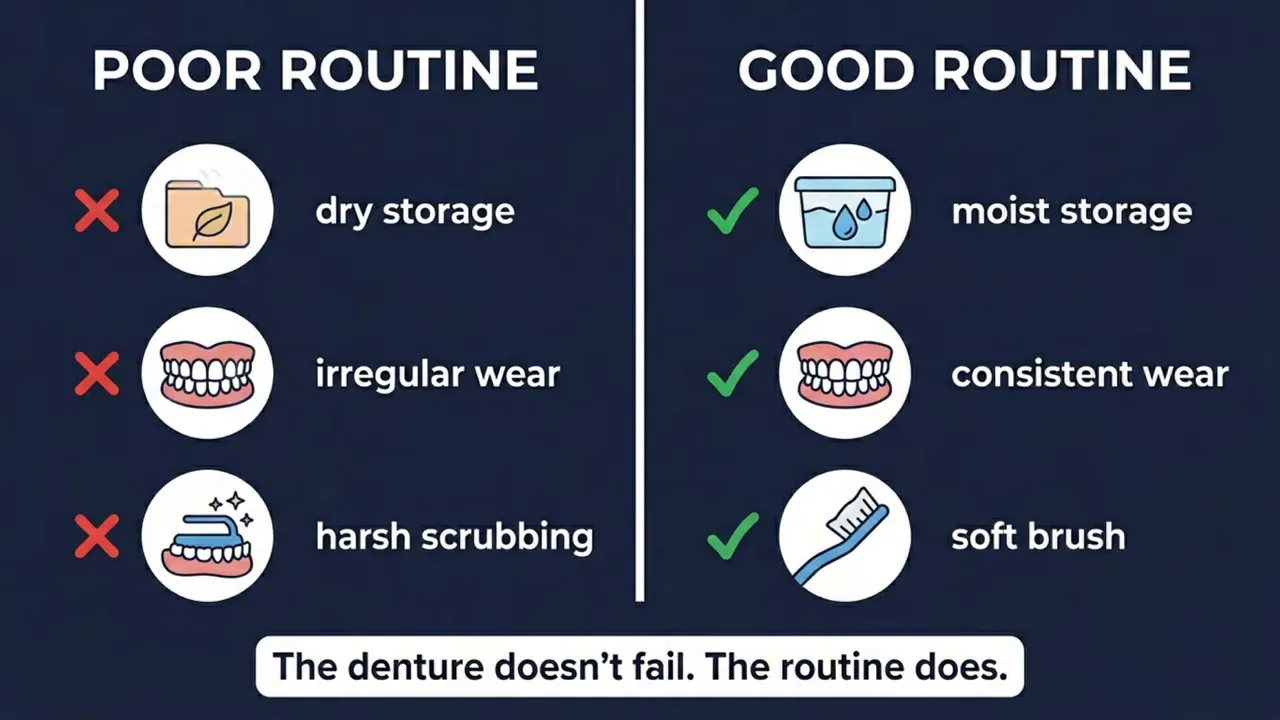
The 3 core rules of denture care
Think of denture care as a system:
- Consistent wear helps stabilize tissue response
- Wet storage helps protect the denture material
- Daily cleaning helps protect the mouth and the denture surface
If you miss one, the others have to work harder. If you miss two, problems tend to build quickly.
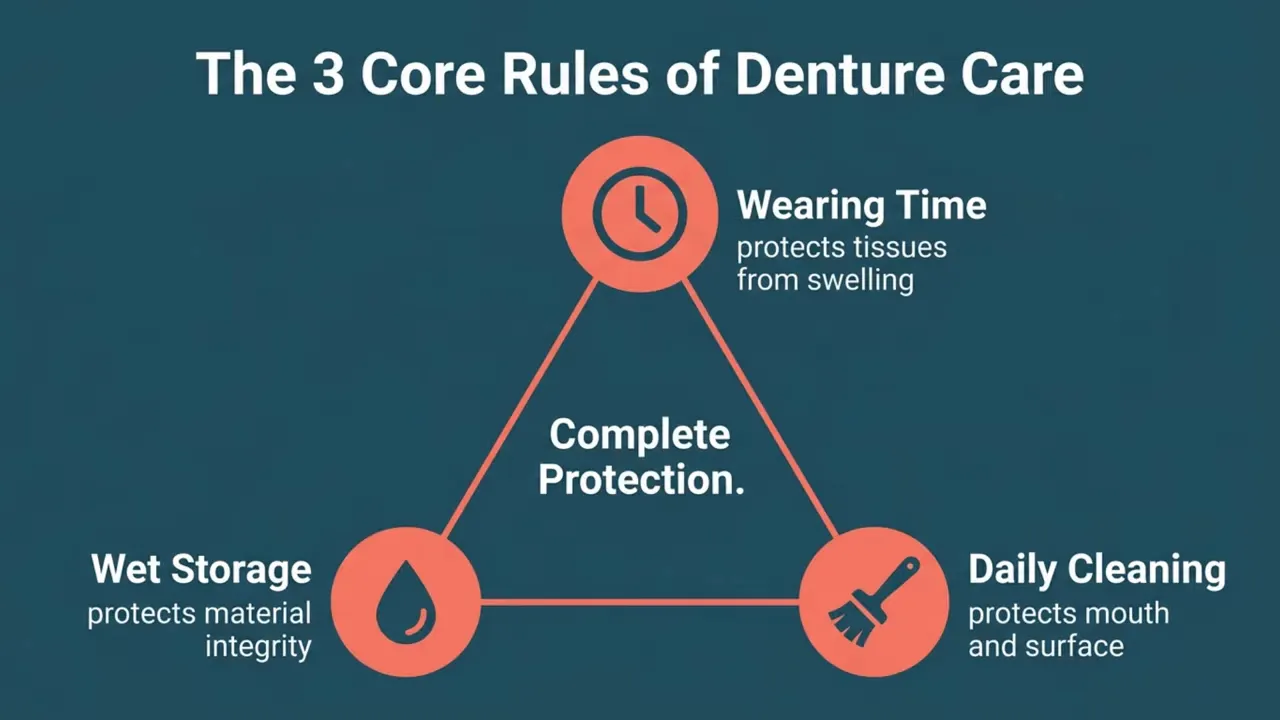
Rule 1: Wear full dentures consistently, not automatically off every night
This is the most surprising point for many denture wearers.
For many people with full removable dentures, routine long overnight removal can make morning comfort worse. When the denture stays out for many hours, the soft tissue may swell or change shape. By morning, reinserting the denture can create extra pressure on puffy tissue, leading to friction, tenderness, and recurring sore spots.
That is why a more stable pattern for many full denture wearers is:
- Wear the denture most of the time
- Remove it briefly for hygiene
- Return it after cleaning
The practical goal described here is close to continuous wear with short hygiene breaks, not hours of routine removal by default.
Does that mean you should never remove dentures?
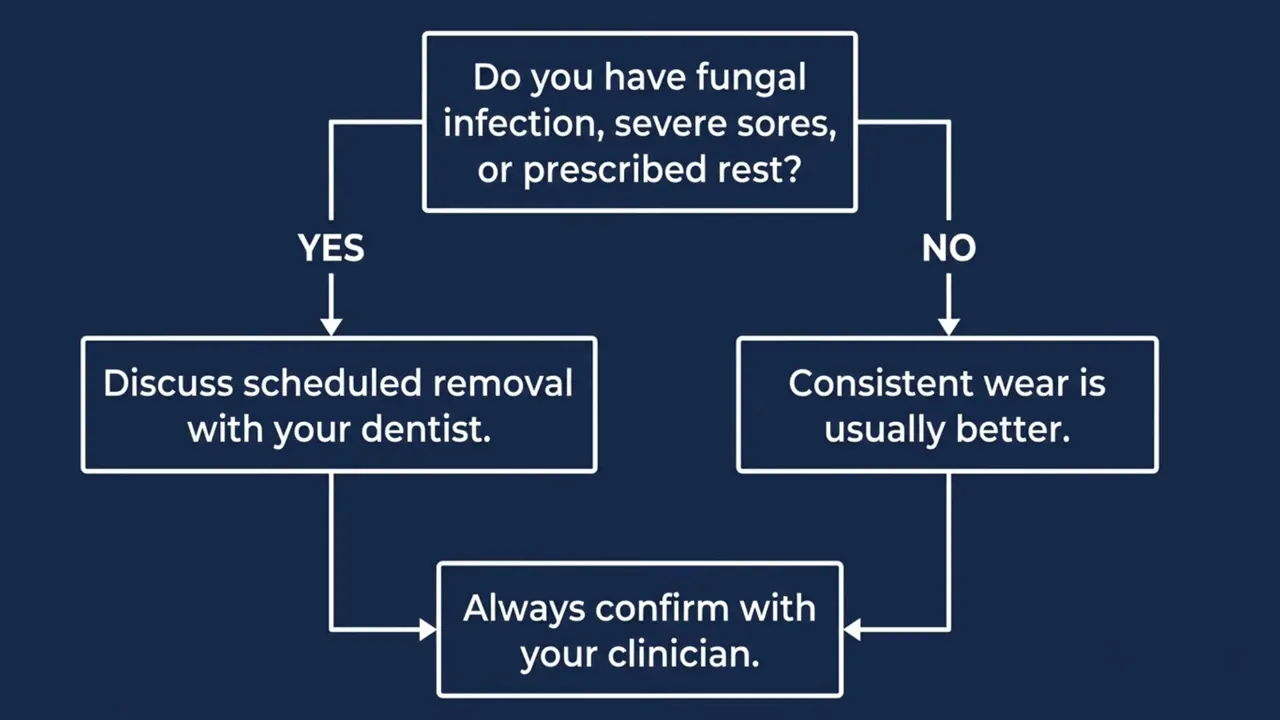
No. Some mouths do need scheduled rest.
More caution is needed if you have:
- Ulceration or visible sores
- Fungal irritation
- Severe dryness
- Unstable or very irritated tissue
In those situations, the timing of removal should be discussed with your dentist rather than guessed at home.
A useful self-check: the morning insertion test
Pay attention to how the denture feels first thing in the morning after it has been out.
- Slides in easily may suggest stable tissue
- Feels tighter than usual may suggest tissue swelling
- Feels sharp or painful should prompt a dental evaluation
If your denture regularly feels more aggressive or harder to seat after being out for hours, that is an important clue.
Important caution
If you currently remove your dentures nightly, do not abruptly force a new routine without guidance. The key idea is not blind imitation. It is understanding how your tissue responds and adjusting with professional input when needed.
Rule 2: Never let a denture sit dry
When a denture is outside the mouth, it should be kept in liquid right away.
Good options include:
- A denture container with water
- A clean cup with room temperature water
- A proper soaking container
What should be avoided:
- Leaving it on a tissue
- Leaving it on a tray or sink edge
- Storing it dry by the bed
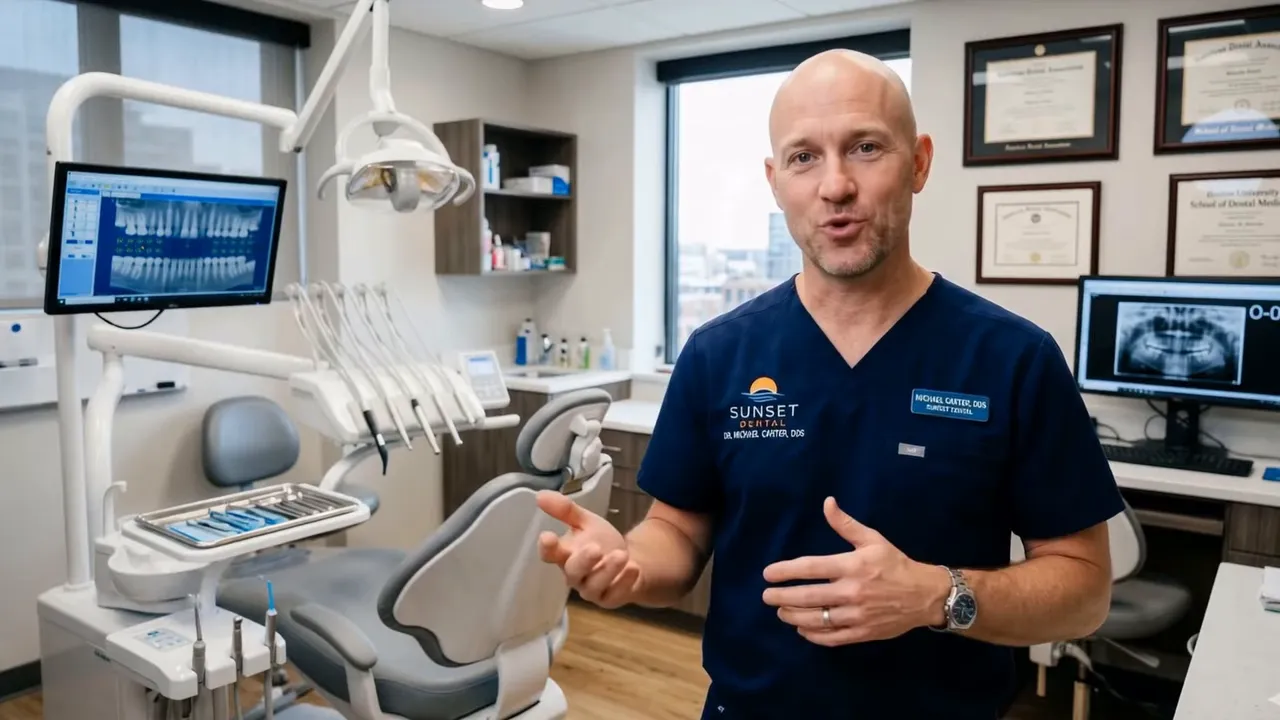
Why dry storage is a problem
Dry air can affect denture acrylic. Repeated drying may make the material more brittle and less ideal at the surface. That increases the risk of damage, odor retention, and cracking.
The risk gets even worse when dry storage is combined with another common accident: dropping the denture into a hard sink.
That combination can turn a manageable routine issue into a sudden break.
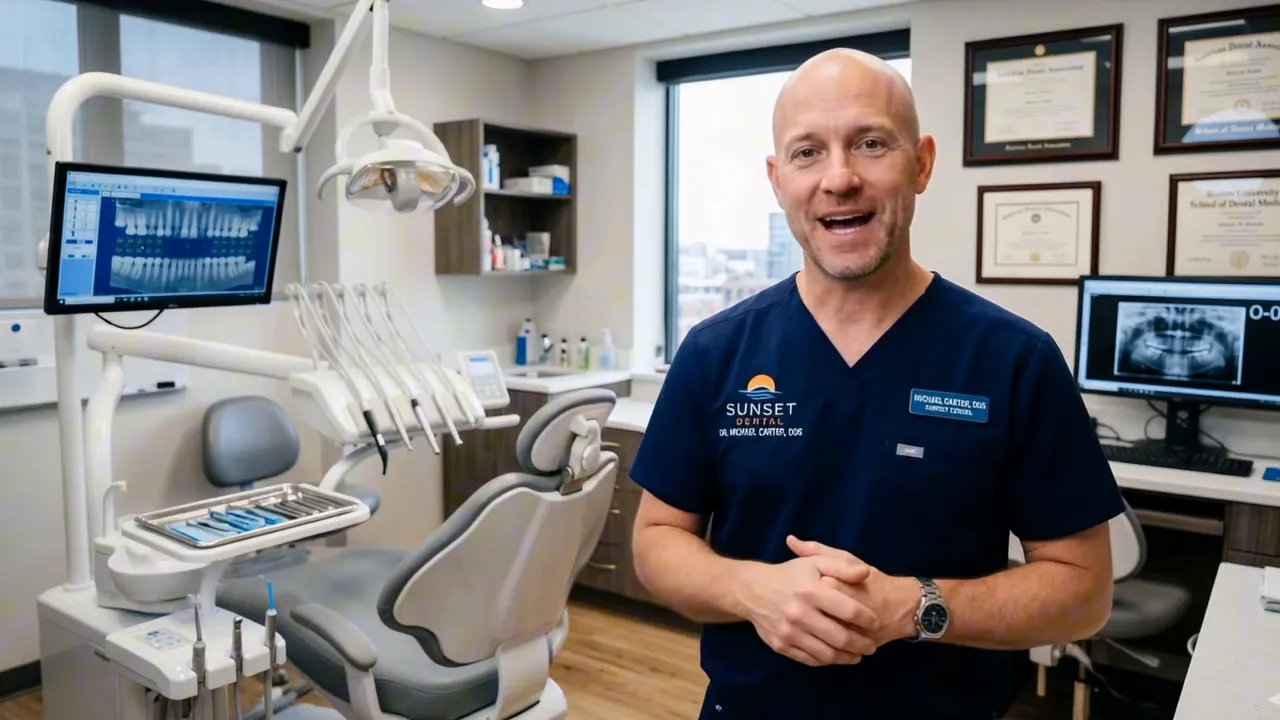
Use room temperature water, not hot water
Hot water can distort denture materials. The change may be subtle at first, but even small distortion can affect fit and stability.
What that often looks like over time:
- A little rocking
- A little rubbing
- More reliance on adhesive
- Less reliable chewing
Rule 3: Clean the denture and the mouth underneath it
One of the biggest misconceptions in denture care is that no natural teeth means less cleaning responsibility.
In reality, bacteria still collect on denture surfaces and oral tissues. Biofilm can form on acrylic, create odor, inflame the gums, and harden into deposits.
That is why cleaning has two targets:
- The denture
- The mouth underneath it
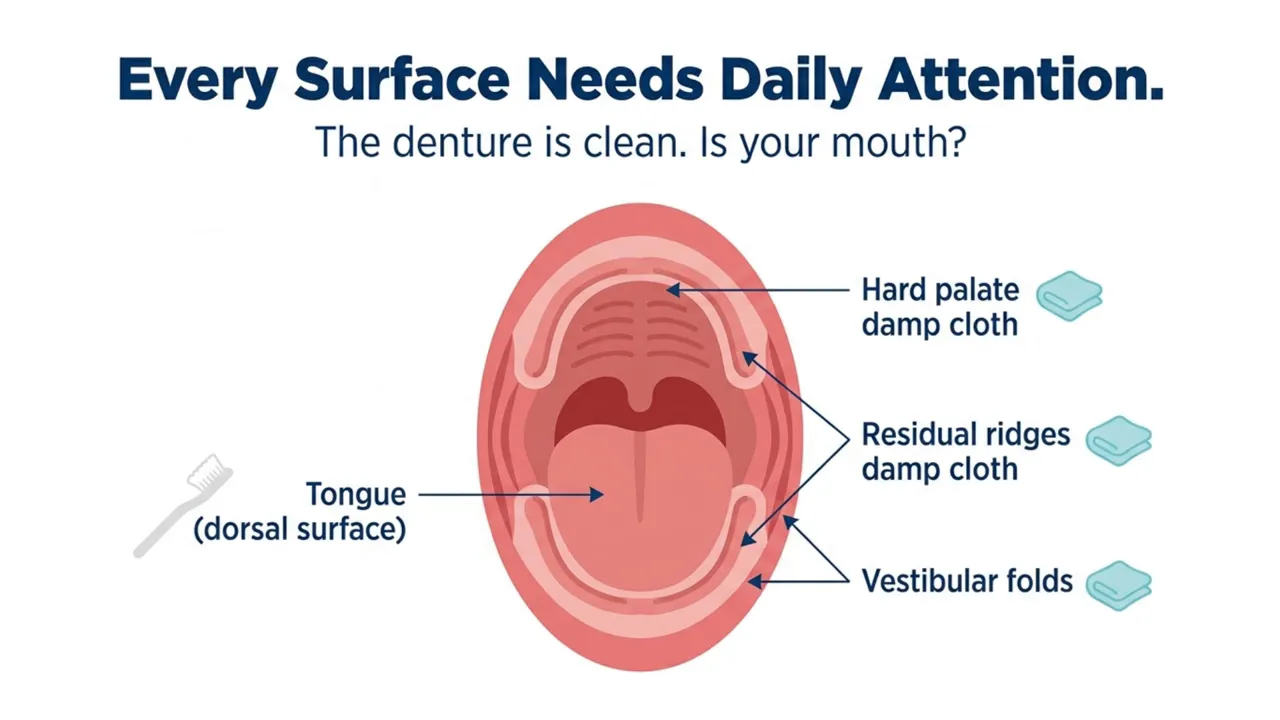
How to clean the mouth under dentures
A quick rinse is helpful, but it is not enough on its own.
A better routine is to:
- Rinse the mouth
- Gently clean the gums and other tissues
- Pay attention to the tongue and palate as well
For delicate or irritated gums, a clinician may recommend a very small amount of certain plant oils, such as sea buckthorn oil or rosehip oil, used carefully and sparingly. These are not universal self-treatment products. Stop if they cause burning, allergy symptoms, or unusual reactions, and ask your dentist before continuing.
People who need extra caution
Get individualized advice if you have:
- Diabetes
- Chronic dry mouth
- A history of fungal infection
- Persistent redness, burning, or soreness
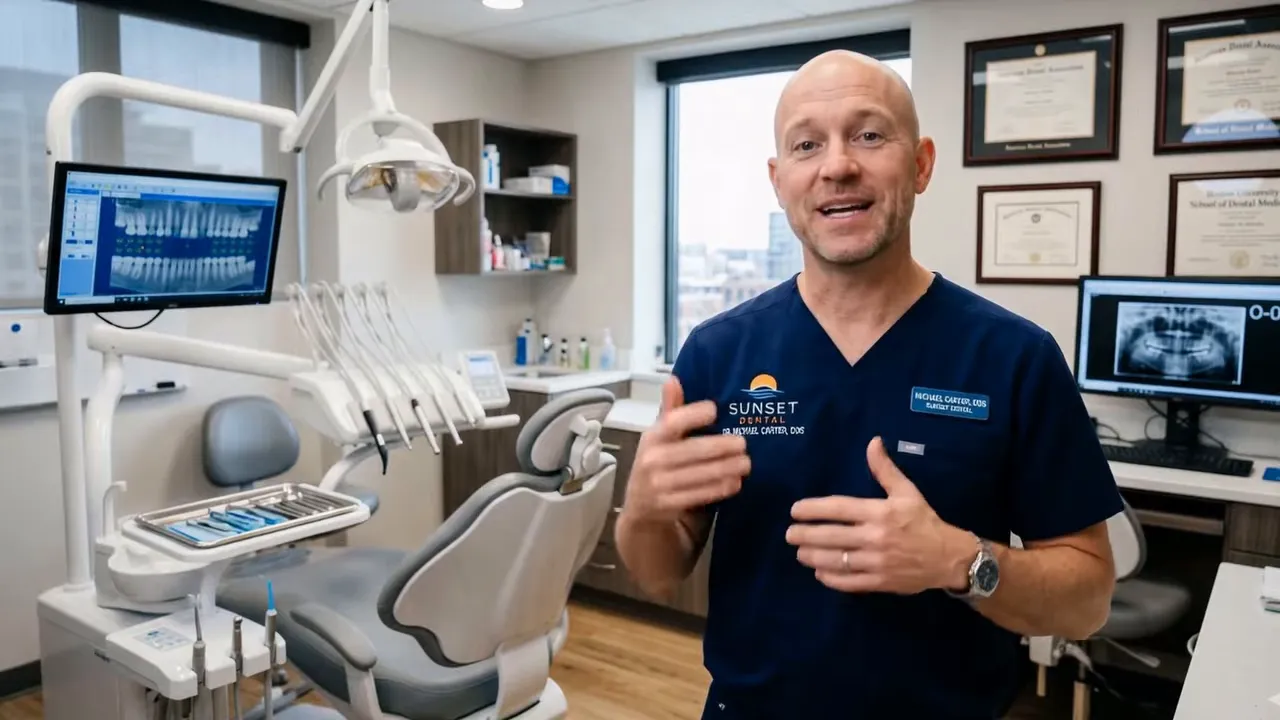
How to clean the denture safely at home
The goal is effective cleaning without scratching the surface.
Safer home care includes:
- A soft brush
- Effervescent denture cleaning tablets used as directed
- Thorough rinsing after soaking
Avoid being too aggressive. Scratching the surface makes it easier for plaque and odor to cling later.
What to avoid:
- Hard scrubbing
- Abrasive pastes
- Random household cleaners
- Ignoring product directions and using double strength or unlimited soaking without approval

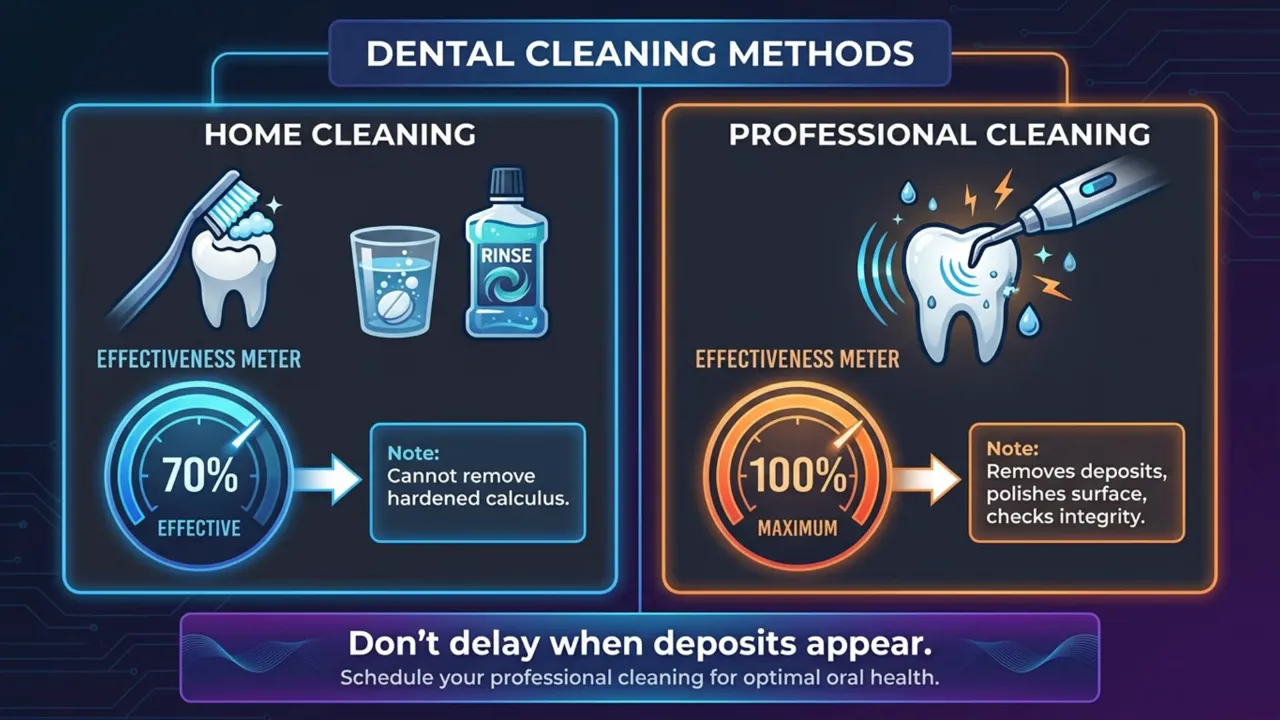
When home care is no longer enough
If you notice roughness, stubborn odor, or visible hardened buildup, scrubbing harder is not the answer.
Hardened deposits can require:
- Professional ultrasonic cleaning
- Polishing to improve surface smoothness
A polished surface is easier to keep clean because plaque has fewer places to cling.
How to handle dentures without breaking them
Dentures are durable enough for use, but they are not indestructible.
Safer handling habits include:
- Clean them over water or over a folded towel
- Remove them gently
- Avoid twisting or bending them casually
- Never leave them balanced on a sink edge
Many fractures happen during cleaning and removal, not during eating.
The hidden mistake that ruins everything: wearing a poor fit for too long
Even perfect cleaning and storage cannot fix a denture that no longer matches your mouth.
The mouth changes over time. Bone support changes. Soft tissue changes under pressure. The ridge remodels. As that happens, a denture that once fit well can start moving, rubbing, and trapping food.
This is the hidden mistake: using the same denture for years without reassessment while forcing it onto changing tissue.
What a changing fit can look like
- More looseness
- More noise or movement while chewing
- Recurring sore spots in the same place
- Food getting underneath more often
- Increasing dependence on adhesive
- Pain despite good cleaning habits
Those are not random annoyances. They are signs that the foundation under the denture may have changed.
How often should dentures be reassessed?
A professional correction is often needed every 3 to 5 years. That does not always mean full replacement.
Possible solutions can include:
- Reline to reshape the inside surface
- Adjustment to relieve pressure points
- Selective correction to restore function
- Remake when the fit has deteriorated too far

Never attempt home denture repairs
Do not use glue, heat tricks, or random repair kits from the internet. Home fixes can make proper correction harder later and may even make the denture impossible to salvage.
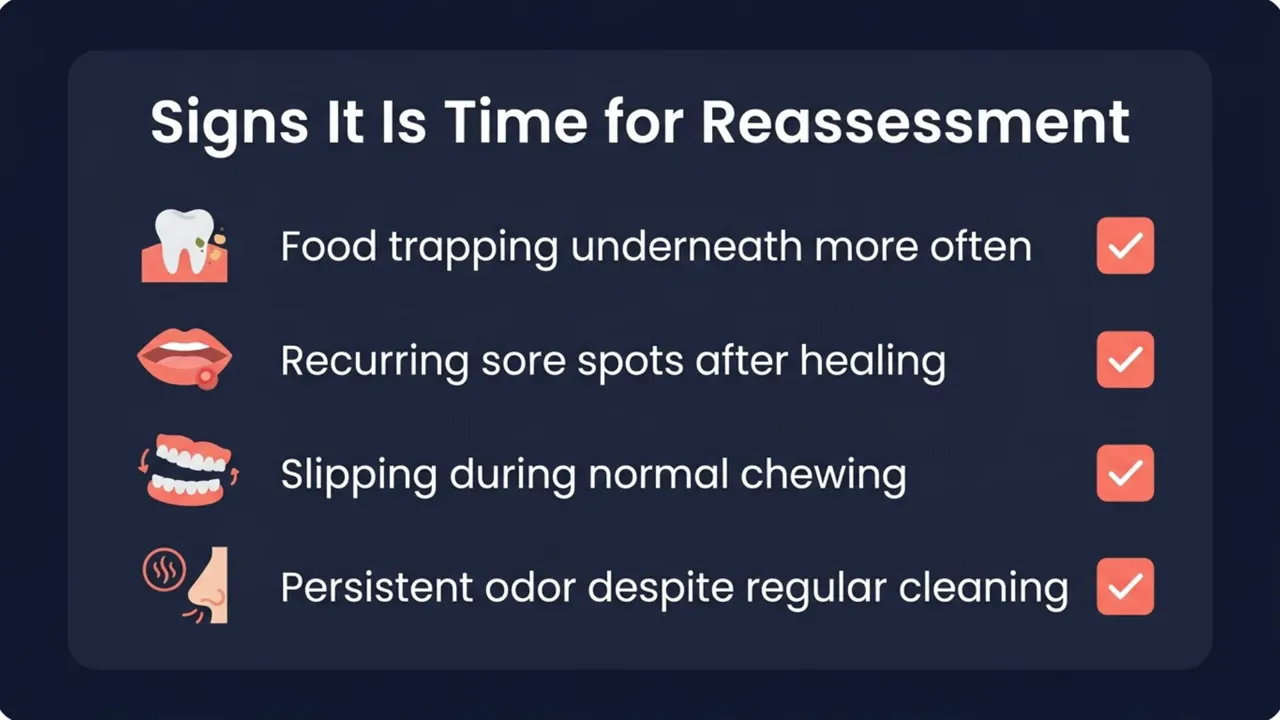
Signs it is time to schedule a denture reassessment
Book a dental visit if you notice any of the following:
- Food trapping under the denture more often
- Recurring sore spots after they seem to heal
- Slipping during normal chewing
- Persistent odor despite regular cleaning
- A suddenly unstable fit
- Visible sores, redness, or fungal irritation
- Morning insertion becoming sharply painful
Can denture problems affect nutrition and daily life?
Yes. Poor denture stability is not just a comfort issue.
When chewing becomes unreliable, people often start avoiding foods that are harder to manage, including:
- Protein foods
- Fruit
- Fibrous vegetables
That can gradually change eating habits and affect overall health. It can also affect confidence, social meals, and willingness to go out.

Common denture myths that cause problems
Myth: Dentures need air every night
Gums do not need air. They need healthy tissue conditions, pressure control, moisture, cleanliness, and a routine that does not trigger repeated swelling.
Myth: If it hurts, just tough it out
Repeated rubbing does not strengthen tissue. It creates trauma and inflammation.
Myth: If it smells, just scrub harder
Persistent odor may come from biofilm, hardened deposits, or a fit problem. More force is not always better.
Myth: If it hurts, stop wearing it completely on your own
Sometimes a short break is appropriate, but total unsupervised abandonment can create swelling and make reinsertion harder. Context matters.
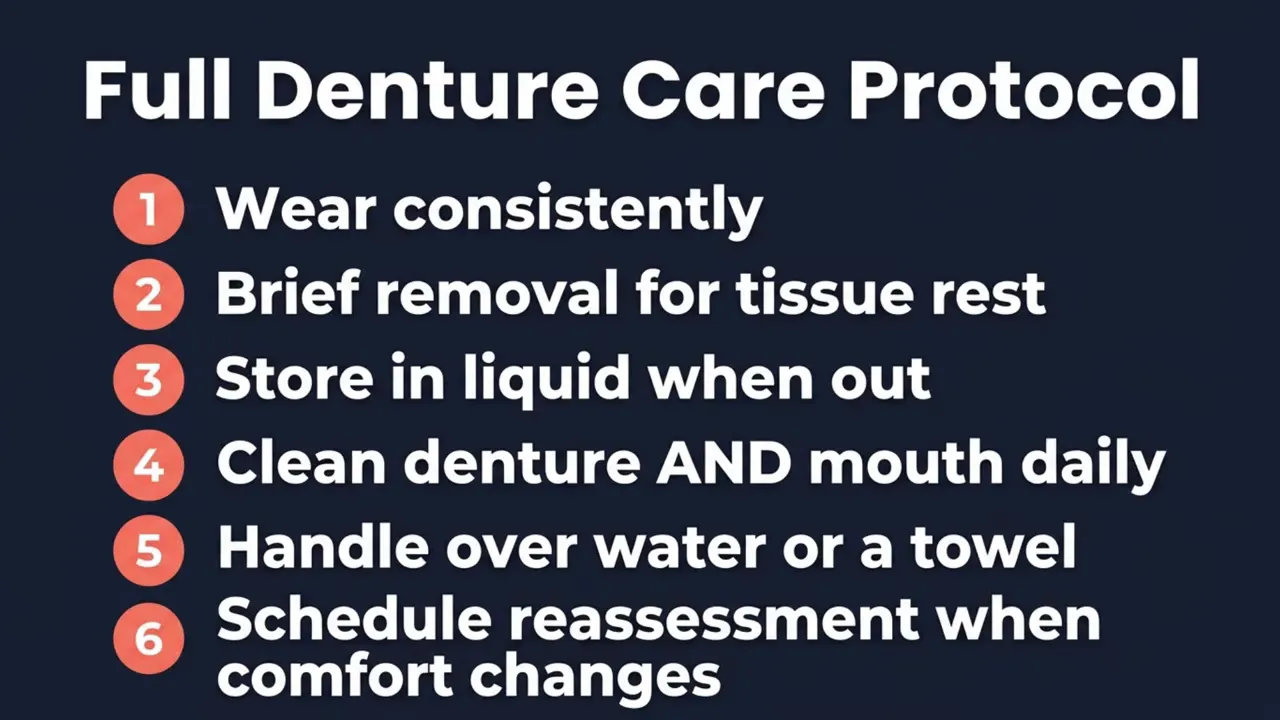
A simple daily denture care routine
If you wear full removable dentures, this is a practical routine to follow:
- Wear them consistently unless your dentist has told you otherwise.
- Remove briefly for hygiene, not for long routine dry-out periods.
- Keep them in liquid immediately when out.
- Clean the denture and the mouth every day.
- Handle them over water or a towel.
- Schedule reassessment when comfort changes, not only when a crisis happens.
Frequently asked questions
Should full dentures be removed at night?
Not automatically in every case. For many full denture wearers, routine long nightly removal can contribute to tissue swelling and morning soreness. Some people do need scheduled rest, especially with sores, fungal irritation, dryness, or clinician-directed care.
What is the best way to store dentures?
Keep them in liquid when they are out of the mouth. Use room temperature water or an appropriate soaking solution if directed.
Why do my dentures smell even after rinsing?
Rinsing alone may not remove biofilm or hardened deposits. The mouth underneath the denture may also need better cleaning. Persistent odor can also signal a rough surface or a fit issue.
Can I use toothpaste or household cleaner on dentures?
Abrasive or random cleaning products are not a good idea. They can scratch the denture and make plaque buildup worse over time.
How long do dentures last before needing correction?
Fit often changes over time, and professional correction is commonly needed every 3 to 5 years. That may be a reline, adjustment, or remake depending on the condition.
What to remember most
The goal with full dentures is not perfection. It is predictability.
A protective routine usually looks like this:
- Wear consistently
- Store wet
- Clean daily
- Monitor comfort
- Reassess fit before damage builds
If pain, odor, looseness, or repeated sore spots keep returning, do not assume that is just normal denture life. Protect the mouth first, respect the denture material, and have the fit checked when things change.