How to Respond to Repetitive Questions in Dementia
How to Respond to Repetitive Questions in Dementia

Photo by Dulcey Lima on Unsplash
Repetitive questions are common in dementia, and they can be exhausting for caregivers. A person may ask the same thing again and again, even after getting a clear answer moments earlier.
In many cases, this is not stubbornness or intentional behavior. It is often linked to memory loss, anxiety, uncertainty, or an unmet need. The most helpful response is usually not to correct or argue, but to reduce stress and make the situation easier to understand.
This guide explains why repetitive questions happen, how to respond in the moment, and what practical changes can reduce them over time.
Why people with dementia ask the same question repeatedly
As dementia progresses, a person may lose the ability to remember what was just said, asked, or answered. That means the question feels new each time.
Repetitive questioning is also often connected to anxiety. If someone cannot reliably hold onto information, they may feel unsure about what is happening, when something is happening, or what they are supposed to do next.
Sometimes the question is not really about the words being asked. It may be a sign that the person needs:
- Reassurance
- Attention
- Help understanding the day
- Support expressing an emotion or need
For example, asking repeatedly about a party or appointment may reflect worry about being late, not knowing what comes next, or feeling unprepared.
What not to do
Many caregivers naturally respond with frustration, especially after answering the same question several times. But sharp corrections can increase distress.
Avoid responses like:
- Telling the person they already asked
- Demanding that they remember
- Showing irritation through tone or body language
- Rushing them to move on
If the person senses annoyance, that emotion can add to their anxiety and make the questioning worse.
How to respond in the moment
The goal is to lower uncertainty, not to force memory. A calm, supportive response works better than a repeated correction.
1. Answer calmly and simply
Give a short answer in a steady tone. Even if it is the tenth time the question has come up, treat it as a real question.
This helps the person feel safe instead of embarrassed or scolded.
2. Redirect to something concrete
After answering, guide attention to a visible plan or a small next step. This can reduce worry and give the person something to focus on.
Helpful examples include:
- Looking at the day’s schedule together
- Pointing out what time it is now
- Naming the next activity
- Offering a simple task, such as signing a card or getting dressed
This approach works because it replaces abstract uncertainty with a clear action.
3. Look behind the question
Ask yourself what the person may really need. The repeated question may mean:
- "I am worried."
- "I do not know what happens next."
- "Please stay with me."
- "I need help getting ready."
When you respond to the underlying need, the questioning may ease.
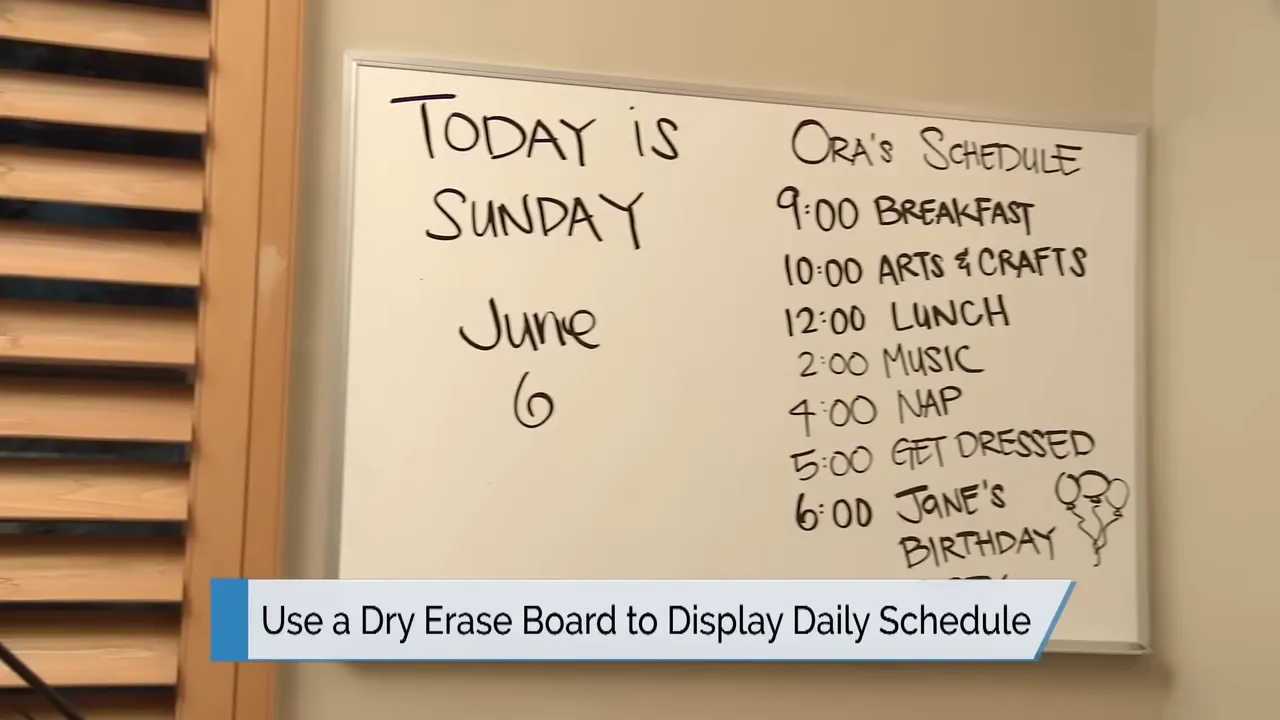
Use a dry erase board or visible daily schedule
One of the most useful tools is a dry erase board with the day’s schedule. A visible schedule can reduce uncertainty and help the person reorient throughout the day.
To make it work well:
- Place it somewhere easy to notice, such as the kitchen or living room
- Use capital letters and neat, readable writing
- Include the date and the main activities for the day
- Review it together when questions come up
It may take time before the person starts checking the board consistently. Even so, a visible routine can still lower anxiety.
What to include on the board
Keep the schedule simple and concrete. Focus on the parts of the day that matter most.
A useful board might include:
- Today’s day and date
- Meals
- Rest time
- Getting dressed
- Planned outing or event
The exact format matters less than consistency and readability.
Wait to mention events until it is time to prepare
If an upcoming appointment, party, or outing is mentioned too early, it can trigger repeated questions for hours.
When possible, do not bring up the event until it is close to the time to get ready. This limits the amount of time the person has to worry about it or repeatedly ask when it will happen.
This is especially helpful for events that create excitement or stress.
Reduce visual triggers in the environment
Objects in the room can cue questions over and over. A wrapped gift, purse, keys by the door, or visible coat can all signal that something is about to happen.
If those items are out too early, they can spark repeated questioning.
Try to put away or hide visual cues until they are needed, such as:
- Gifts
- Purses
- Keys
- Bags near the door
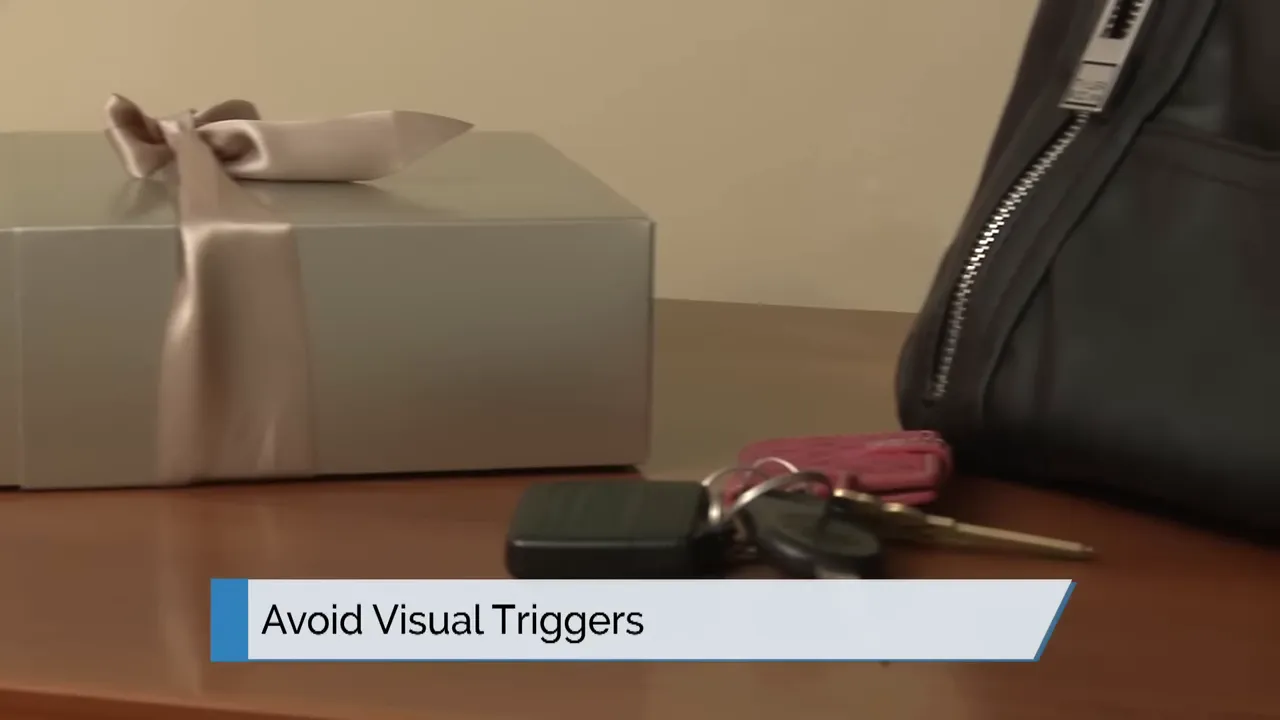
Small environmental changes can make a noticeable difference.
Be patient, even when it is hard
Patience is not just a kindness. It is part of the strategy.
If your tone becomes tense or irritated, the person may pick up on that feeling and become more anxious or agitated. That can lead to even more questioning.
Useful reminders for caregivers:
- Take a breath before answering again
- Keep your voice steady and warm
- Avoid arguing about what was already said
- Focus on reassurance over correction
Patience does not mean the situation is easy. It means choosing the response most likely to calm it.
Prepare yourself ahead of time
If you need to be somewhere, get yourself ready as early as possible. That way, you can give your full attention to helping the person with dementia rather than trying to manage everything at once.
This can be especially important before appointments or family events.
Preparation may include:
- Having your own items ready first
- Setting out only what is needed at the right time
- Allowing extra time for transitions
When the caregiver is rushed, the whole interaction usually becomes harder.
Do not rush before appointments or outings
Allow plenty of time for dressing, toileting, gathering items, and emotional adjustment. Rushing can increase confusion and stress, which often leads to more repeated questions.
A slower pace helps the person feel more secure and gives you room to respond calmly if questions come up.
A simple framework for managing repetitive questions
If you need something easy to remember, use this four-step approach:
- Answer briefly. Give the information in a calm tone.
- Reassure. Let the person know things are okay.
- Show something concrete. Use a schedule, clock, or next step.
- Redirect gently. Move into a simple activity or preparation task.
For example, if someone keeps asking when an event starts, you might answer with the time, look at the schedule together, point out what comes next, and invite them to help with a small task.
Common mistakes that make repetitive questions worse
- Explaining too much. Long answers can be harder to retain.
- Correcting memory failures. This usually adds frustration without solving the problem.
- Mentioning plans too early. Early reminders can trigger hours of repeated questions.
- Leaving cues in plain sight. Visible items can restart the same worry again and again.
- Rushing. Pressure increases anxiety.
Frequently asked questions
Is repetitive questioning always about memory loss?
No. Memory loss is a major reason, but anxiety and difficulty expressing needs can also play a big role.
Should you answer the same question every time?
Often, yes. A calm answer combined with reassurance and redirection is generally more helpful than pointing out that the question was already asked.
Can a written schedule really help?
Yes. A visible daily schedule can reduce uncertainty and support orientation, especially when it is placed in a familiar location and reviewed regularly.
What if the schedule does not help right away?
That can still be normal. It may take time for the person to start using it. Consistency matters.
Key takeaway
When a person with dementia asks the same question repeatedly, the most effective response is usually to reduce anxiety, increase clarity, and avoid confrontation.
Use calm answers, visible routines, fewer triggers, and plenty of time. Instead of trying to force memory, focus on making the day feel understandable and saf