How to Calm Agitation and Anxiety in Dementia
How to Calm Agitation and Anxiety in Dementia

Photo by Age Cymru on Unsplash
Agitation and anxiety are common in dementia, and they can make everyday tasks like getting dressed, leaving for appointments, or accepting help much harder. What often looks like stubbornness or anger is frequently a stress response.
In many cases, the most effective approach is not to push harder. It is to reduce pressure, preserve the person’s sense of control, and adjust how help is offered.
What agitation and anxiety can look like in dementia
These symptoms do not always look the same from person to person. They may show up as:
- Restlessness or difficulty sitting still
- Pacing or repetitive movement
- Fidgeting
- Irritability
- Fear, nervousness, or worry
- Resistance to help
If agitation builds, it can sometimes escalate into more intense reactions, including yelling or physically aggressive behavior.
Why people with dementia become agitated
Agitation is often triggered by a combination of stress, confusion, and loss of control. Common causes include:
- Feeling threatened by a situation or by someone stepping in too quickly
- Misperceiving what is happening
- Unmet needs
- Difficulty communicating clearly
- Frustration with a task
- Changes in routine
A key issue in dementia is that the person may not recognize their own limitations. They may truly believe they can manage on their own and may not see themselves as needing assistance. When help is forced on them, it can feel insulting, threatening, or controlling.
Why your approach matters so much
People with dementia are often very sensitive to tone, pacing, facial expression, and body language. If the caregiver sounds rushed, irritated, impatient, or commanding, that emotional signal can increase fear and resistance.
Even when the goal is practical, such as getting dressed on time, the interaction can worsen if the person feels pushed. A calmer approach can lower distress and make cooperation more likely.
What not to do when someone with dementia is agitated
Some well-meaning responses make the situation worse. Try to avoid:
- Rushing the person through a task
- Arguing about whether they need help
- Correcting them sharply
- Barking orders or giving rapid instructions
- Taking over immediately without permission
- Offering too many choices at once
For example, telling someone they are wearing the wrong clothes, insisting they hurry, or physically stepping in before they are ready can quickly increase agitation.
How to respond in the moment
When anxiety or agitation starts to rise, use a slower, more supportive approach.
1. Slow the pace
Allow extra time for routine tasks. Rushing tends to increase frustration, especially when dressing, grooming, or preparing to leave the house.
2. Use a gentle tone
Speak calmly and respectfully. A soothing tone can help the person feel safer. At the same time, avoid sounding patronizing or childish.
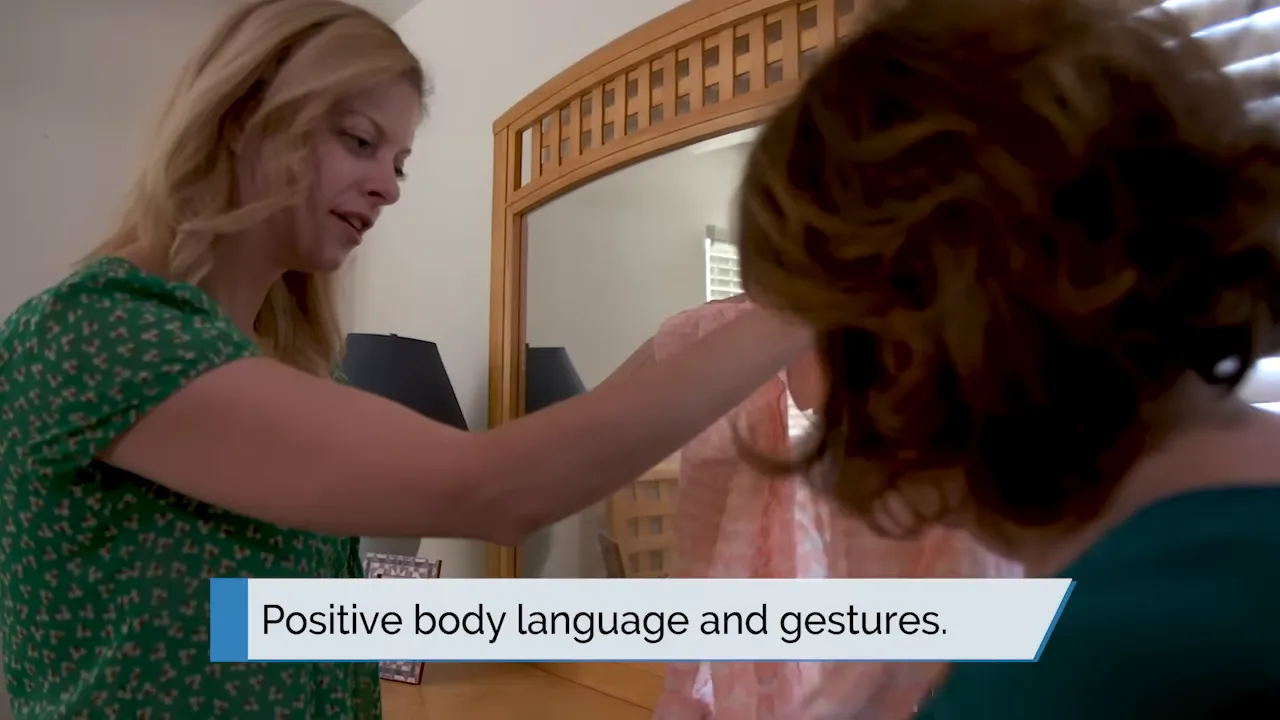
3. Keep body language calm and positive
Relaxed posture, open gestures, and a gentle touch can be reassuring when appropriate. Nonverbal cues matter as much as words.
4. Reassure instead of demanding
Let the person know you are there to support them, not control them. Reassurance can lower defensiveness and help preserve dignity.
5. Support independence where possible
If the person wants to do part of the task alone, allow that when it is safe. A useful message is: You can do this, and I am here if you need me.
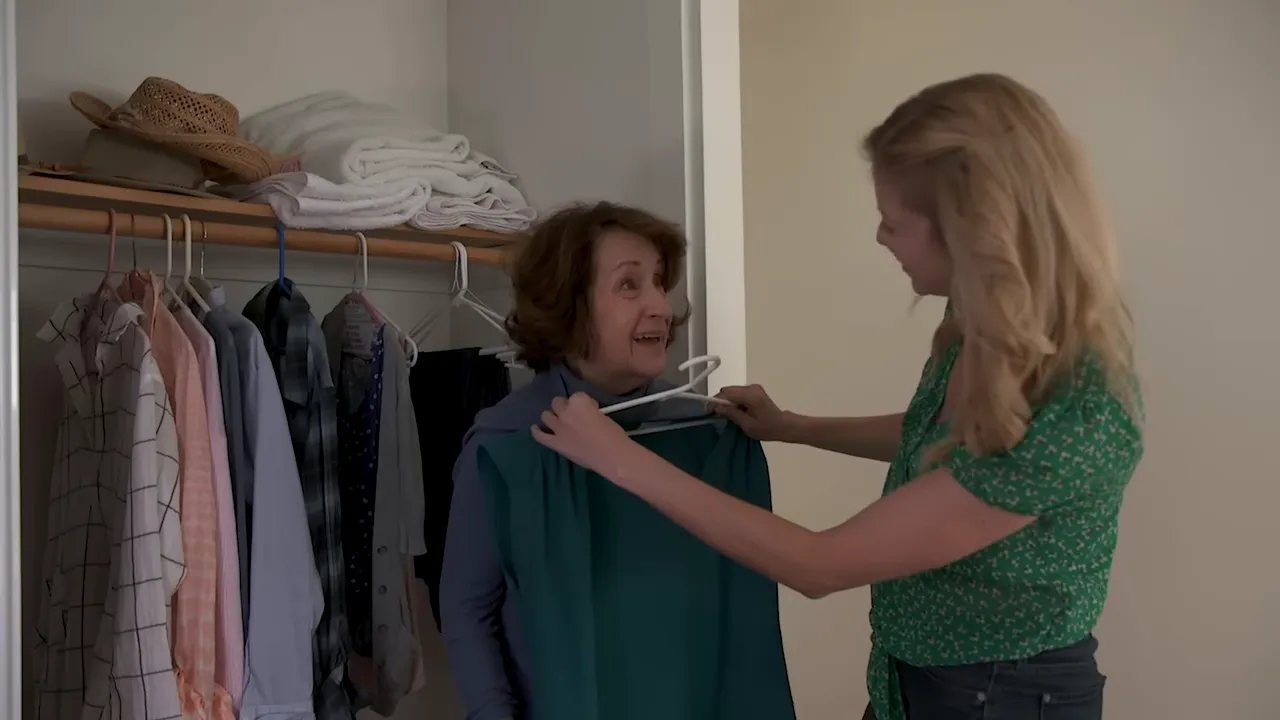
6. Offer limited, simple choices
Too many options can be overwhelming. Instead of opening a full closet and asking what they want, narrow it down to two easy choices.
For dressing, a simple prompt like choosing between a blue top and a green top is often easier than asking an open-ended question.
7. Redirect to something pleasant
When appropriate, connect the task to something positive and familiar. Mentioning a comforting next step can help shift attention away from the stress of the moment.
How to make dressing easier for someone with dementia
Getting dressed is a common trigger because it combines decision making, physical coordination, time pressure, and privacy. These strategies can help:
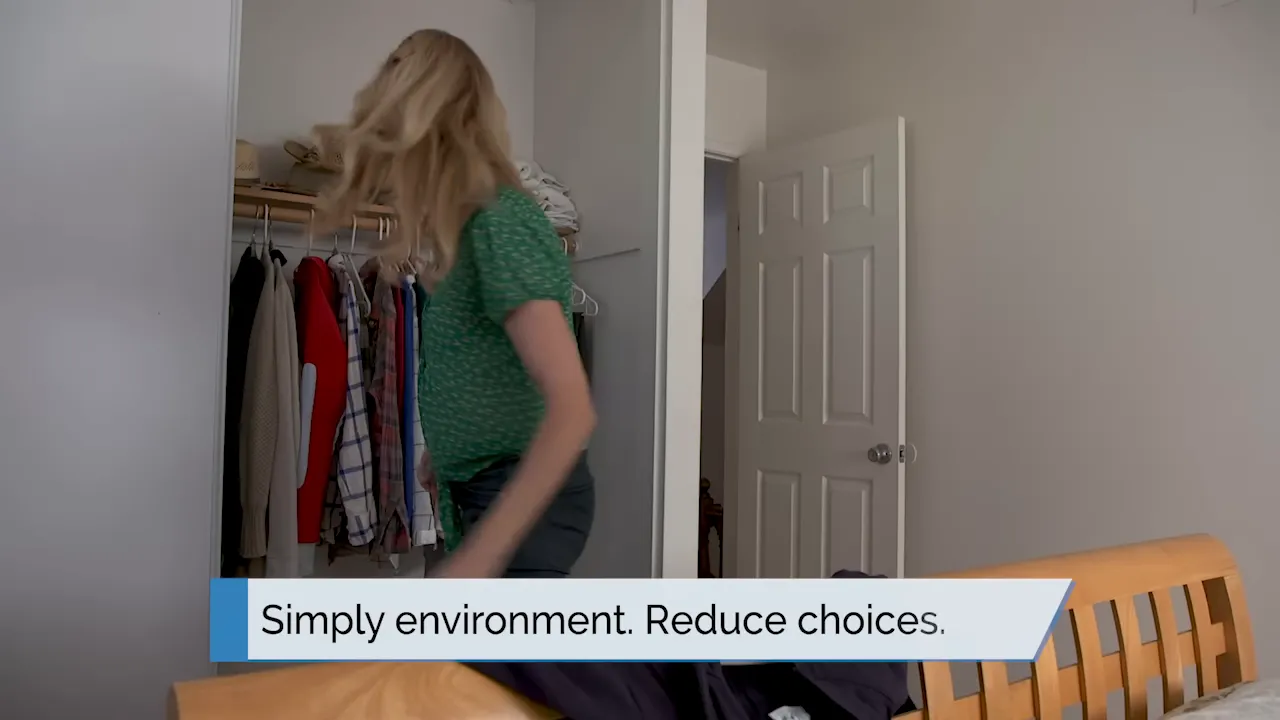
- Reduce the number of clothing options visible at one time
- Keep the closet simple and easy to scan
- Choose clothes that are easy to put on
- Offer help gradually instead of taking over all at once
- Focus on comfort as well as appropriateness
A crowded closet can create confusion and slow the process. Thinning out clothing and leaving only a few easy options can reduce frustration.
Plan around natural routines
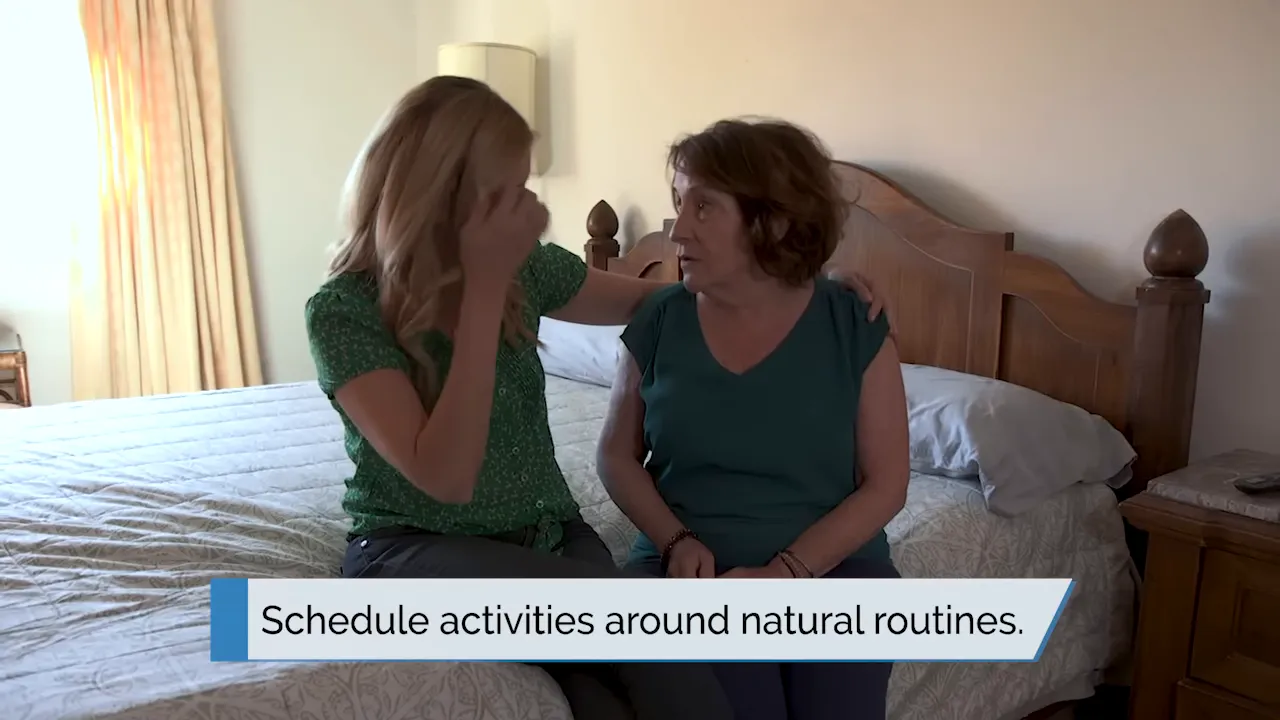
Routine matters. Changes in the usual schedule can trigger anxiety, especially when the person already feels unsure about what is happening.
Try to plan activities around the person’s natural rhythms. If they are usually slow to get going in the morning, avoid scheduling demanding tasks too early. If they function better later in the day, plan appointments and activities then when possible.
A practical framework for caregivers
When agitation shows up, this simple sequence can help:
- Pause and lower your own stress level first.
- Approach gently with calm voice and body language.
- Reassure before assisting.
- Offer one small step or one simple choice.
- Reduce clutter and pressure in the environment.
- Adjust the timing if the routine itself is part of the problem.
Common mistakes caregivers make
These patterns are especially common during stressful daily care:
- Trying to solve the problem with logic when the real issue is emotion
- Assuming refusal means the person is being difficult on purpose
- Expecting speed or flexibility that the person no longer has
- Leaving too many clothes, objects, or choices in view
- Scheduling important tasks at the wrong time of day
Often, the goal should be to make the task feel safer and easier, not to win the interaction.
When resistance to help is really about loss of control
One of the hardest parts of dementia care is accepting that resistance may come from impaired insight rather than intentional opposition. The person may not understand why help is needed. From their point of view, someone else may be interfering unnecessarily.
That is why preserving autonomy matters. Even small choices, respectful language, and patient timing can make care feel less threatening.
Key takeaways
- Agitation and anxiety in dementia are often triggered by fear, frustration, confusion, or loss of control.
- The caregiver’s tone, body language, and pacing can either calm or intensify the situation.
- Do not rush, argue, or demand.
- Use reassurance, gentle communication, and simple choices.
- Simplify the environment and plan around natural routines.
If dressing, appointments, or other daily tasks are regularly causing distress, start by changing the approach before assuming the person is simply refusing care. Small changes in communication and setup can make a meaningful difference.