How Dementia Care Can Be Delivered at Home
How Dementia Care Can Be Delivered at Home

Photo by Age Cymru on Unsplash
Dementia care at home is possible for many people, and often preferable, but only when the right supports are in place early and grow as needs change. That means timely diagnosis, coordinated primary care, reliable home care workers, community services, and meaningful support for family caregivers.
Without that foundation, families are often left navigating a crisis-driven system that responds late, changes providers too often, and pushes people toward hospitals or long-term care sooner than necessary.
What dementia means in practical terms
Dementia is an umbrella term for many diseases that affect memory, thinking, and daily functioning. Alzheimer’s disease is the most common, alongside vascular dementia and many other forms.
It is not a single condition, and it does not look the same for every person. Needs can range from mild help with shopping, banking, food preparation, and appointments to more advanced support with bathing, dressing, and full daily care.
One of the most important points for families is this: a diagnosis does not mean life at home is over. Many people can continue living in their homes and communities for a long time when supports are put in place early and adjusted gradually.
Why home dementia care matters more than ever
The number of people living with dementia is already high and is expected to rise as the population ages. In Canada, there are more than 600,000 people living with dementia, with projections reaching 1.7 million by 2050.
That growth matters because dementia is not a short-term illness. It is progressive and long-term, which means care systems built mainly around acute episodes and hospital treatment are often a poor fit.
Home-based dementia care matters because it can:
- Help people remain in familiar surroundings longer
- Preserve community connection and quality of life
- Reduce avoidable crises
- Lower hospital use
- Delay or reduce transitions to long-term care
- Support caregivers before burnout becomes severe
For most people, home is the preferred setting. The key question is not whether home care can work. It is what kind of system makes it work consistently.
Can people with dementia stay at home?
In many cases, yes. Most people living with dementia can remain at home, especially earlier in the disease and often much longer than families expect, if the right level of support is available.
That support does not have to arrive all at once. A better model is a gradual increase over time. Someone may initially need help with errands, meals, routines, transportation, or medication organization. Later, they may need more hands-on personal care and closer monitoring.
Some people will eventually require long-term care as the disease progresses. But the broader point remains: many transitions happen earlier than they should because community care arrives too late or is too fragmented.
Why early diagnosis is the gateway to home support
Getting diagnosed early is one of the most important steps in successful dementia care at home.
Diagnosis can be straightforward when symptoms and history are clear, but it is not always simple. It becomes harder when someone has multiple health conditions or when memory changes are still in the early stages.
Even when dementia is recognized, it is often not identified in a timely manner. That delay matters because diagnosis opens the door to:
- A care plan
- Community services and supports
- Education for family caregivers
- Monitoring as needs change
- Steps to prevent crisis events
Stigma is another barrier. Some families avoid assessment because of fear, shame, or assumptions that nothing can be done. That can lead to later intervention, more stress, and a steeper path into emergency care.
What good dementia home care should include
Home care for dementia should not be limited to a last-minute response once personal care becomes unsafe. A better model starts earlier and builds over time.
Effective home dementia care should include:
- Consistent workers so changes in mood, memory, and routine are noticed quickly
- Predictable timing so families are not left guessing when help will arrive
- A knowledgeable contact person when symptoms or needs change
- Support with daily living such as meals, shopping, finances, transportation, and routines
- Personal care including bathing and dressing when needed
- Day programs and community supports that expand as the disease progresses
- Coordination with primary care and specialists rather than isolated visits
The best systems are proactive, not reactive. They aim to prevent health destabilization rather than waiting for a fall, infection, wandering incident, or caregiver collapse.
Where current home care often falls short
A common problem is that public home care often arrives late in the course of dementia. Help may not be offered when someone first struggles with food preparation, shopping, or banking, even though those are often the first signs that living alone is becoming harder.
Instead, services tend to focus more heavily on personal care needs like bathing and dressing, often justified by safety concerns. But dementia-related risk does not begin only at that stage.
Other frequent problems include:
- Time-limited service rather than long-term support for a long-term illness
- Too many different providers entering the home
- Frequent care coordinator changes
- Disruptive scheduling
- Rigid task rules that make help less practical than families need
That kind of fragmentation is especially hard on people with dementia, who often do better with routine, familiarity, and trust.
Why continuity of care is so important
Continuity is not a nice extra. It is central to quality dementia care.
When the same home care worker visits regularly, that person learns what is normal for the client. Small changes become easier to spot, such as differences in personality, emotional state, memory, or daily habits. Those changes can lead to faster intervention and earlier diagnosis of new problems.
Continuity also reduces stress for the person receiving care. Repeated introductions, different routines, and unfamiliar faces can be confusing and destabilizing.
For family caregivers, continuity means fewer explanations, less duplication, and more confidence that someone really understands the situation.
Why dementia care needs a team, not just visits
Dementia care works best when it is delivered by a team connected through primary care. A home care worker alone cannot carry the system. A physician alone cannot either.
Better home-based dementia care brings together:
- Primary care clinicians
- Specialists when needed
- Home and community care providers
- Alzheimer Society and similar community supports
- Family caregivers or care partners
This approach helps families get proactive planning instead of fragmented responses. It also creates a more predictable system, which is essential in a condition that changes gradually but constantly.
How memory clinics can support care at home
One model discussed as promising is the use of memory clinics built around primary care. These clinics train and support physicians in community practice so they can better assess and care for people living with dementia and their families.
In Ontario, there are about 100 of these memory clinics, with access reaching only about one fifth of the province. The concept is to strengthen diagnosis, care planning, and community-based support early enough to avoid preventable crises.
A provincial evaluation cited for this model found that people receiving this kind of care had better outcomes, stayed at home longer, and used fewer hospital and long-term care resources.

Challenges in rural and remote areas
Home dementia care can be especially difficult outside large urban centres.
Rural and remote communities may have less access to:
- Clinicians with dementia expertise
- Interprofessional assessment teams
- Timely diagnosis pathways
- Reliable community services
When diagnosis is delayed, people also lose timely access to the services that help them stay home longer. That can make the entire care journey more crisis-prone.
The workforce problem behind home dementia care
One of the clearest barriers to home-based dementia care is a severe workforce shortage.
Home care is described as essential but often neglected. Workers may face casual scheduling, poor continuity, unpaid travel between clients, and conditions that make the work feel more like gig labor than a skilled healthcare role.
That creates two major problems:
- Recruitment becomes harder because the work is undervalued.
- Retention suffers because workers leave for hospitals or long-term care where pay and job stability may be better.
For dementia care, this matters even more than usual. Familiarity and relationship-building are part of the care itself. If the workforce model prevents continuity, the service becomes less effective even when visits are technically provided.
What family caregivers actually do
Family caregivers, sometimes called care partners, carry an enormous share of dementia care.
Their role often includes:
- Coordinating appointments and services
- Helping with dressing, bathing, and daily routines
- Managing finances and paperwork
- Monitoring safety
- Providing emotional support
- Filling gaps when formal care is inconsistent or unavailable
In Canada in 2020, an estimated 350,000 caregivers were providing an average of 26 hours a week. That was equivalent to 235,000 full-time jobs and more than $7.3 billion in labour when valued at the federal minimum wage cited in the discussion.
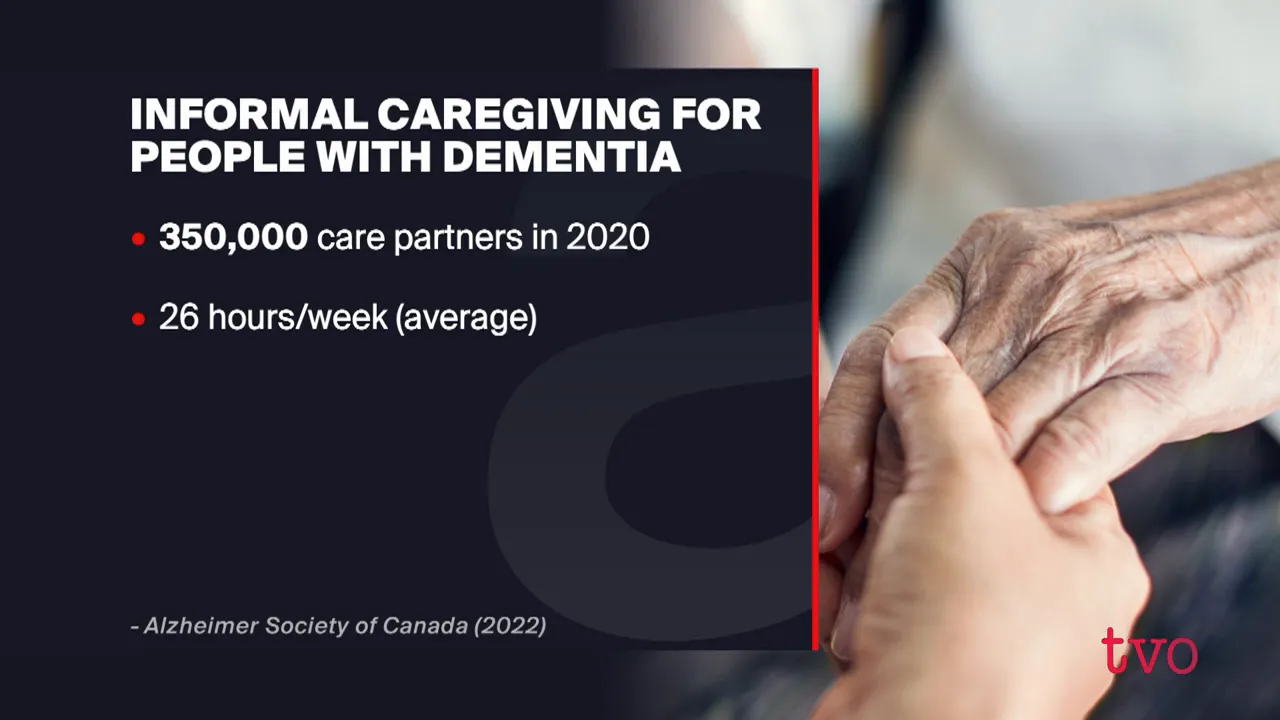
By 2050, that number is projected to exceed 1 million caregivers.
Why caregivers need more support
Family caregivers are a vital resource, but they cannot be treated as the default solution to system gaps.
Support needs include:
- Consistency from home care providers
- Predictable service schedules
- Access to knowledgeable guidance when the condition changes
- Community organizations that offer information and support
- Practical financial help when caregiving disrupts employment or income
Caregiving can be emotionally and physically intense, especially for spouses or adult children balancing jobs and other responsibilities. Some reduce work hours, retire early, or absorb major career and income losses.
That is why stronger caregiver support is not only compassionate. It is part of keeping people with dementia safely at home.
What happened during the pandemic
The pandemic exposed how fragile dementia home care already was.
Reports described a major increase in crisis calls from people living with dementia and caregivers after home care hours were cut back or disappeared. At the same time, long-term care experienced devastating outcomes, many involving residents with dementia.
The lesson was stark: when home care is reduced, families are left carrying more than they can manage, and the whole system becomes more dangerous.
Even after restrictions eased, many people still struggled to get enough hours or the right kind of support at home.
Common mistakes families and systems make
1. Waiting too long to seek assessment
Early symptoms are sometimes dismissed as normal aging. Delayed diagnosis means delayed planning.
2. Treating dementia care as crisis care
Waiting until someone can no longer bathe or dress independently misses years of lower-level needs that could have been supported earlier.
3. Assuming family can fill every gap
Many caregivers are already stretched thin. Some people with dementia live alone, which makes this assumption especially unrealistic.
4. Accepting too much fragmentation
Frequent staff turnover and multiple coordinators are not just inconvenient. They undermine quality of care.
5. Overlooking stigma
Shame and fear can keep people from seeking help. Dementia support should focus on living well, not withdrawal from community life.
Can dementia numbers be reduced in the future?
There is some reason for hope. Research has advanced in risk reduction and brain health, including better understanding of factors that may help delay onset.
Examples mentioned include:
- Good sleep
- Addressing hearing loss early
- General steps that support brain health
Even a modest delay could have a large effect. Modeling cited in the discussion suggested that delaying dementia by one year could reduce the number of Canadians living with dementia by about half a million.
That does not remove the need for home care reform, but it does show that prevention and delay strategies can matter at a population level.
What better dementia home care should look like
A stronger system would:
- Make diagnosis timelier in primary care
- Expand access to team-based memory clinic models
- Start home supports earlier, not only after major decline
- Provide consistent workers and fewer care handoffs
- Improve job conditions so home care workers stay in the field
- Integrate community organizations into care planning
- Offer better support for caregivers, including practical and financial help
- Design services around long-term progressive illness, not short-term episodes
Key takeaway
Dementia care can be delivered at home for many people, but only if the system is built around early diagnosis, continuity, teamwork, and gradual increases in support.
The biggest problem is not that home care is impossible. It is that home care is too often late, fragmented, and understaffed. When that happens, preventable crises become the norm.
For families facing dementia now, the most important steps are to seek assessment early, ask about community supports, look for coordinated primary care, and push for consistency in home services whenever possible.