Home Safety for Seniors: Practical Fall Prevention Tips for Every Room
Home Safety for Seniors: Practical Fall Prevention Tips for Every Room

Photo by Marc Pell on Unsplash
Falls at home are a major safety concern for older adults. Many injuries happen during ordinary daily activities such as getting out of bed, walking through a cluttered room, reaching for items in the kitchen, or slipping on a spill that was easy to miss.
A safer home does not always require major remodeling. Often, the most effective changes are simple: improve lighting, remove tripping hazards, keep mobility aids within reach, and make sure help can be called quickly if a fall happens.
Why fall prevention at home matters for seniors
Home is where many accidents happen. A single fall can lead to pain, loss of confidence, reduced independence, and larger health issues afterward. That is why prevention matters.
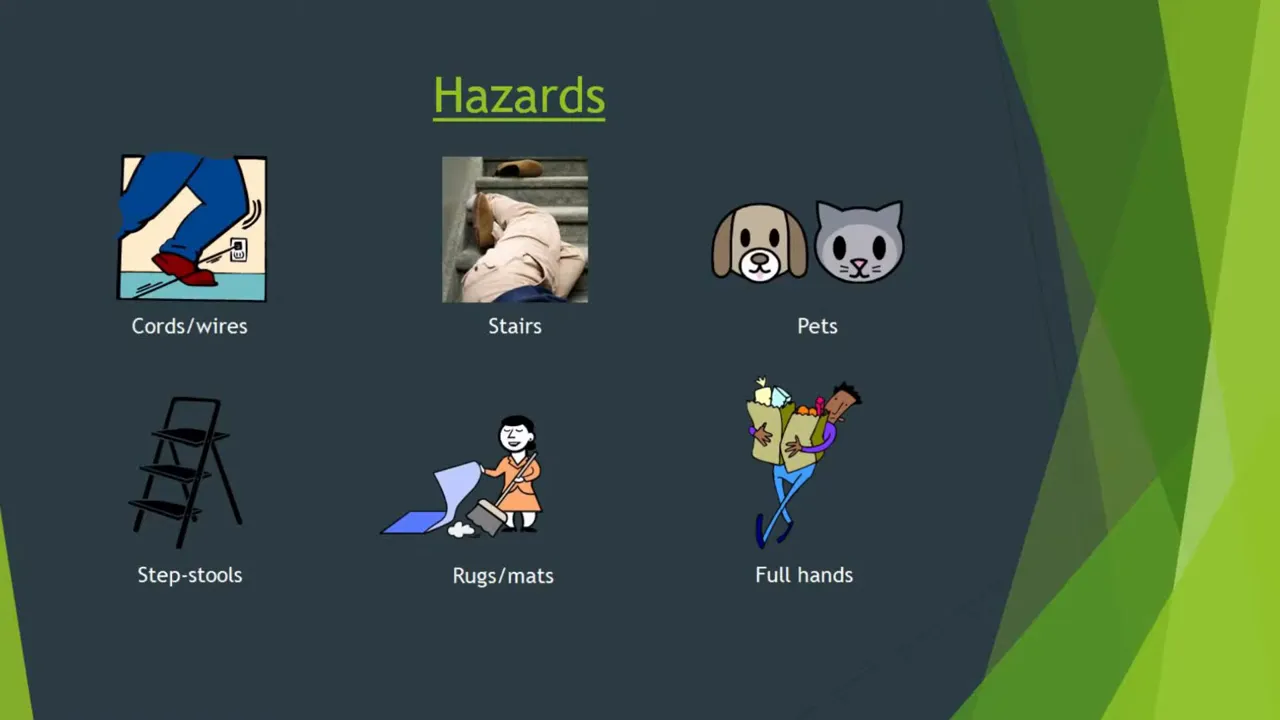
The goal is to reduce common hazards before they cause a problem. In most homes, the biggest risks come from:
- Clutter on the floor, including shoes and slippers
- Loose rugs or mats that shift underfoot
- Poor lighting, especially at night
- Spills left on kitchen floors
- Reaching too high without proper support
- Pets underfoot
- Unsecured wires and cords
Helpful tools that can make a home safer
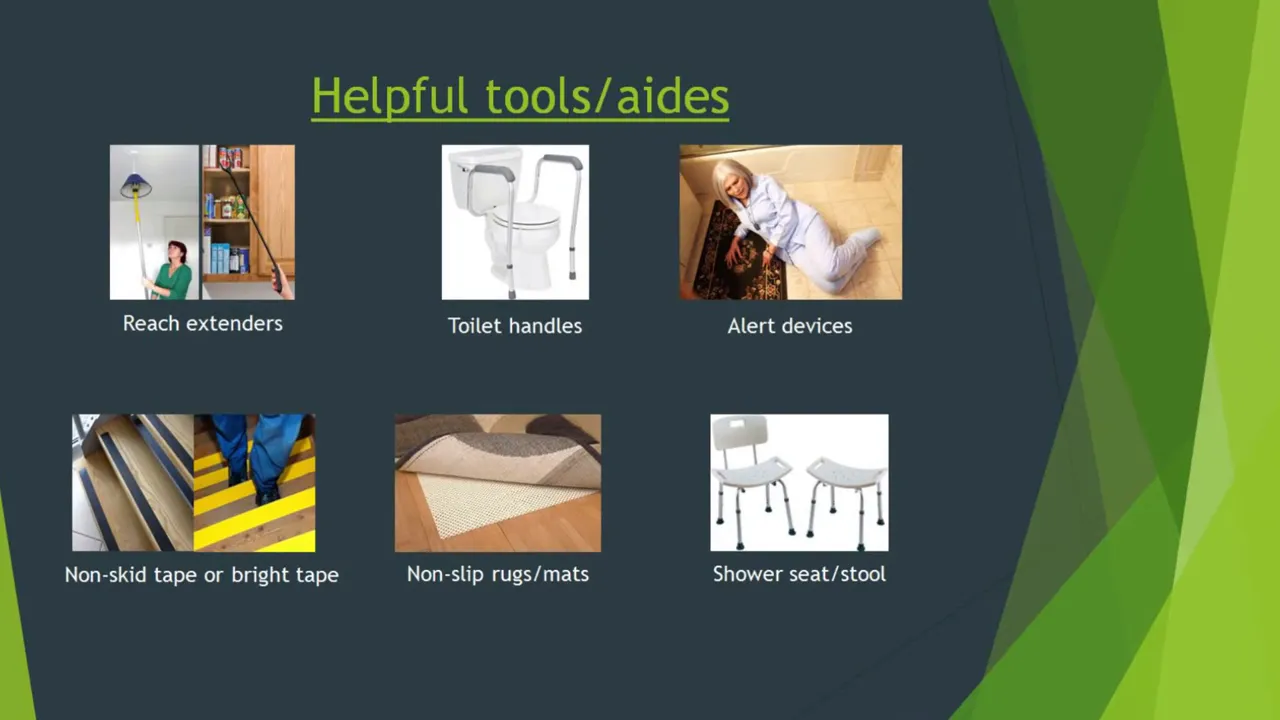
Some safety items can reduce risk and make movement around the home easier. Depending on the person and the layout of the home, useful options may include:
- Handrails or support handles
- Flashlights for nighttime trips
- Bath supports
- Non slip tape or better traction for slippery areas
- Non slip mats
- Shower seats or shower safety aids
- Alert devices worn on the wrist or neck
Not every home needs every device, but the right aid in the right place can reduce preventable falls.
Bedroom safety tips for seniors
The bedroom is one of the most important places to improve safety because many falls happen when getting up during the night.
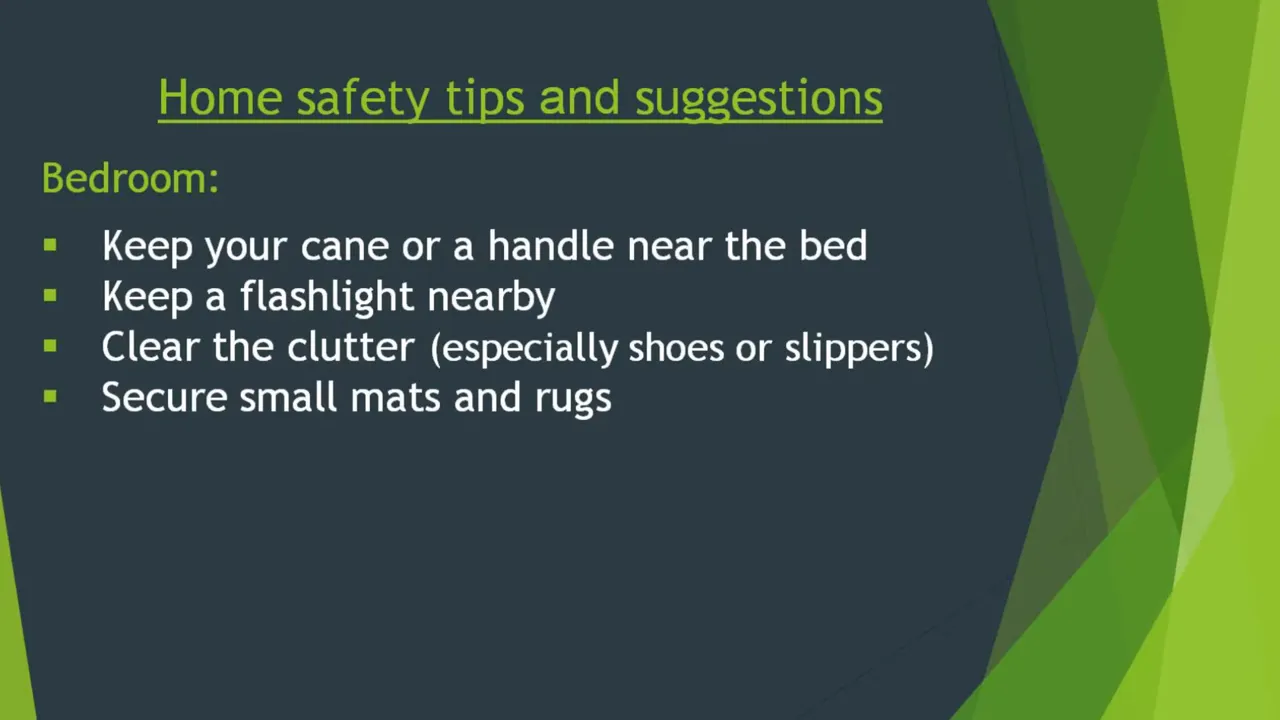
1. Keep a cane or handle near the bed
If a cane, walker support point, or sturdy handle is needed, it should be within easy reach before standing up. Reaching across the room in the dark can lead to stumbling.
2. Keep a flashlight nearby
A flashlight next to the bed can help with nighttime visibility. It is especially useful when someone wants light without turning on the main room light right away.
3. Clear the floor
Shoes, slippers, clothing, and other items on the floor can become instant trip hazards. The path from the bed to the door or bathroom should stay open.
4. Secure small mats and rugs
Loose rugs in or near the bedroom can slide or curl up at the edges. If a rug is kept, it should be secured so it does not move.
Kitchen safety tips for seniors
The kitchen combines several common risks: reaching overhead, wet floors, cords, and hot appliances. A few precautions can make this room much safer.
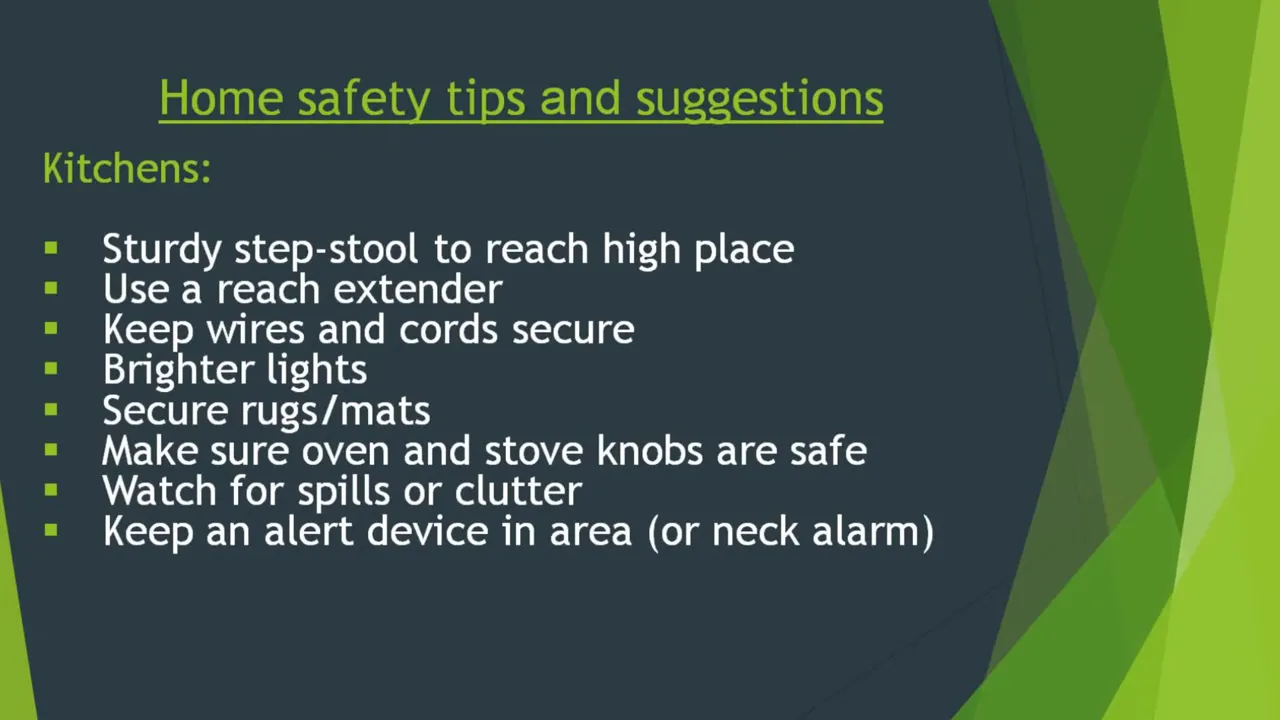
Use a sturdy step stool for high places
If something must be reached above shoulder height, use a stable step stool rather than standing on an unsafe surface. A flimsy chair is not a good substitute.
Use a reach extender when possible
A reach extender can help avoid unnecessary climbing. This is often the safer option for lightweight items stored a little too high.
Keep wires and cords secure
Loose cords can catch a foot unexpectedly. Keep them tucked away and out of walking paths.
Improve the lighting
Brighter lights make it easier to see spills, clutter, and edges of mats or flooring changes.
Secure rugs and mats
Kitchen mats should stay flat and stable. If they slide or bunch up, they increase fall risk instead of reducing fatigue.
Check oven and stove knobs
Worn or damaged knobs can create safety issues. If knobs are loose, broken, or not working properly, they should be addressed promptly.
Watch for spills and clutter
Even a small amount of water on the floor can be enough to cause a serious slip. Clean spills right away and avoid leaving items where someone may step around them awkwardly.
Keep an alert device nearby
If someone falls where no one can hear them, getting help quickly becomes much harder. A wearable alert device on the wrist or neck can make a major difference.
Simple room by room home safety checklist
Use this quick checklist to spot obvious hazards around the home.
Bedroom checklist
- Mobility aid within reach of the bed
- Flashlight nearby
- No shoes or clutter on the floor
- Rugs and mats secured
Kitchen checklist
- Stable step stool available
- Reach extender available for higher shelves
- Cords moved out of walking areas
- Bright lighting
- Mats secured and flat
- Stove and oven knobs functioning safely
- Spills cleaned immediately
- Alert device accessible or wearable
Common fall hazards people overlook
Some risks become easy to ignore because they are familiar. These are often the ones most likely to cause a fall.
- Slippers or shoes left by the bed
- Small rugs that seem harmless but slide easily
- Dim lighting in hallways, bedrooms, or kitchens
- Temporary clutter that turns into permanent clutter
- Spilled water that is forgotten for even a few minutes
- Household pets moving unexpectedly near the feet
What to do if a senior lives alone
When an older adult lives alone, prevention is only part of the plan. The other part is making sure they can call for help if needed.
One of the most practical options is an alert device worn on the neck or wrist. If a fall happens and getting up is difficult, pressing a button can quickly connect the person to assistance.
For someone living alone, this can be just as important as clearing clutter or securing rugs.
Mistakes to avoid when trying to make a home safer
- Leaving mobility aids just out of reach
- Assuming a small rug is not a real hazard
- Using an unstable object instead of a sturdy step stool
- Ignoring worn appliance knobs
- Waiting to clean a spill later
- Keeping the home too dim at night
- Relying on shouting for help instead of using an alert device
Frequently asked questions about home safety for seniors
What is the biggest fall risk in the home for seniors?
There is not just one. Common risks include clutter, loose rugs, poor lighting, spills, and trying to reach high places without proper support.
How can seniors prevent falls at night?
Keep a cane or support within reach of the bed, use a flashlight, and make sure the floor is clear of shoes, slippers, and other objects.
Are rugs dangerous for older adults?
They can be if they slide, bunch up, or curl at the edges. Small mats and rugs should be secured or removed if they cannot be made stable.
What kitchen changes help reduce falls?
Use a sturdy step stool, keep cords secure, improve lighting, secure mats, check appliance knobs, and clean spills immediately.
Should seniors use a medical alert device at home?
For many people, yes. An alert device can be very important, especially for those who live alone or spend time in parts of the house where help may not be heard quickly.
Key takeaway
The best home safety plan for seniors focuses on everyday hazards that are easy to fix. Start with the highest risk areas, especially the bedroom and kitchen. Keep pathways clear, improve lighting, secure rugs and mats, use proper tools for reaching, and make sure help is always within reach.
Small changes can greatly reduce the chance of a fall and help support safer, more independent living at home.