High Blood Pressure in Older Adults: What the Numbers Mean, Why It Matters, and When to Treat
High Blood Pressure in Older Adults: What the Numbers Mean, Why It Matters, and When to Treat

High blood pressure, also called hypertension, is one of the most common chronic health conditions in older adults. It often causes no symptoms, yet over time it can raise the risk of stroke, heart disease, kidney disease, heart failure, and cognitive problems.
If you are trying to understand what counts as normal blood pressure, how hypertension is diagnosed, or when treatment should start in an older person, the key is to look at three things together: accurate readings, long term risk, and the person’s overall health status.
What blood pressure actually measures
Blood pressure is the force of blood pushing against the walls of the arteries.
It is recorded as two numbers:
- Systolic pressure, the top number, measures pressure when the heart squeezes.
- Diastolic pressure, the bottom number, measures pressure when the heart relaxes between beats.
A reading like 120/80 mmHg means:
- 120 is the systolic pressure
- 80 is the diastolic pressure
Blood pressure is not fixed. It naturally changes from moment to moment and also varies during the day. Exercise, stress, body position, sleep, and overall health can all affect it.
That is why a single high reading does not automatically mean a person has hypertension.
What is normal blood pressure for older adults?
Normal, or optimal, blood pressure is less than 120/80 mmHg.
That definition is the same for adults of all ages and for all genders. Even though blood pressure tends to rise with age, higher numbers are not considered normal just because someone is older.
Still, there is an important distinction between what is normal and what treatment goal is appropriate. In older adults, those are not always exactly the same thing.
What counts as high blood pressure?
Hypertension exists on a spectrum. Risk gradually increases as blood pressure rises over time. There is no magical number where danger suddenly begins, but guidelines still use cutoffs to help define and treat the condition.
U.S. definition
Current U.S. guidelines define:
- Stage 1 hypertension as systolic 130 to 139 or diastolic 80 to 89
- Stage 2 hypertension as systolic 140 or higher or diastolic 90 or higher
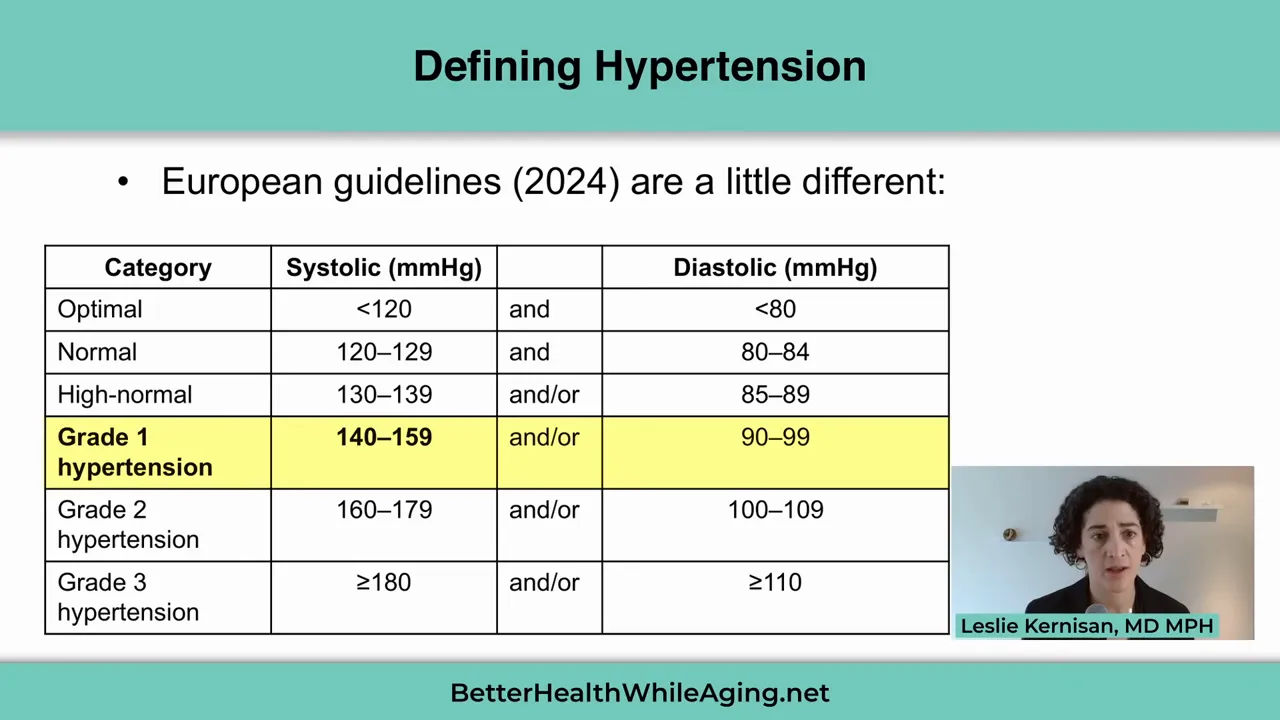
European definition
European guidelines use a higher cutoff and still generally define hypertension as starting at 140/90.
That does not mean blood pressure behaves differently in different countries. It means expert groups chose different thresholds for labeling risk and deciding when to intensify treatment.
Why accurate blood pressure measurement matters
Blood pressure is easy to measure poorly.
If the reading is taken too quickly, with the wrong cuff size, while talking, or without enough rest first, the result may be misleading. In many routine office settings, readings are taken in a rushed way, which can make blood pressure seem higher than it really is.
Best technique for measuring blood pressure
For the most accurate reading, these steps matter:
- Sit quietly in a chair for 5 minutes before measuring
- Avoid caffeine, exercise, and smoking for 30 minutes beforehand
- Empty the bladder first
- Keep the arm supported at chest level
- Use the correct cuff size
- Do not talk during the measurement
- Take 2 or 3 readings, 1 to 2 minutes apart, and average them
- Ideally measure on at least 2 separate occasions before diagnosing hypertension
Home blood pressure monitoring is often more useful
For many older adults, a good home monitor provides a better picture than a single office reading.
Helpful tips include:
- Use an automated upper arm cuff
- Avoid wrist and finger devices if accuracy matters
- Measure at the same time each day
- Check daily for about a week if trying to understand a pattern
- Write down both the blood pressure and the pulse
Home readings can also help identify white coat hypertension, which means blood pressure is much higher in a medical setting than it is at home.

What causes high blood pressure in older adults?
Most hypertension is primary, also called essential hypertension. That means it is not caused by one single separate disease. Instead, it develops through a mix of age related changes and risk factors.
Common causes and risk factors
- Advancing age, especially due to stiffer arteries
- Obesity
- Genetics and family history
- High sodium intake
- Higher alcohol intake
- Physical inactivity
- Insufficient sleep
- Chronic social stress
- Noise and air pollution
Secondary causes of hypertension
Sometimes high blood pressure is caused or worsened by another issue. Examples include:
- Medications, especially NSAIDs such as ibuprofen, stimulants, and steroids
- Drugs such as cocaine or amphetamines
- Kidney disease
- Sleep apnea
- Hormonal disorders
This is one reason medication review matters in older adults with rising blood pressure.
Does high blood pressure cause symptoms?
Usually, no.
Most people with hypertension feel completely fine, even when blood pressure is quite high. That is why hypertension is often called a silent problem.
Very high blood pressure can sometimes cause symptoms, especially when readings are in a severe range. Possible symptoms include:
- Headache
- Shortness of breath
- Chest pain
- Vision changes
If blood pressure is over 180 systolic or over 120 diastolic, urgent medical evaluation is important, especially if symptoms are present.
Why high blood pressure is dangerous over time
The main harm from hypertension is not usually how a person feels today. It is the damage that persistent pressure causes to arteries and organs over months and years.
Chronic hypertension is associated with:
- Stroke
- Heart disease and other cardiovascular events
- Heart failure
- Kidney disease
- Brain injury, including vascular dementia
- Earlier death
In general, the higher the blood pressure and the longer it stays elevated, the greater the risk.
When should high blood pressure be treated in older adults?
This is where treatment becomes more individualized.
For older adults, treatment decisions should consider:
- The actual blood pressure readings
- How consistently elevated the readings are
- Age
- Frailty
- Other medical conditions
- Life expectancy
- Symptoms such as dizziness or lightheadedness
- Whether treatment side effects are causing problems
A practical threshold
In older adults, treatment is generally worth serious consideration when systolic blood pressure is above 150. Lowering someone from very high levels into the 140s often produces the biggest reduction in risk.
Reducing blood pressure further may also help, but the extra benefit tends to become smaller as readings approach normal.
What blood pressure goal should an older adult aim for?
A blood pressure goal is the level treatment is trying to reach. This is not always identical to the ideal normal reading of under 120/80.
For many older adults, it makes sense to think in stages:
- First, get blood pressure down to a safer range
- See how the person feels and whether treatment is tolerated
- Then decide whether to aim lower
U.S. and European goals differ
Current U.S. guidance generally recommends aiming for a systolic pressure under 130 regardless of age, while allowing reconsideration if a person has limited life expectancy.
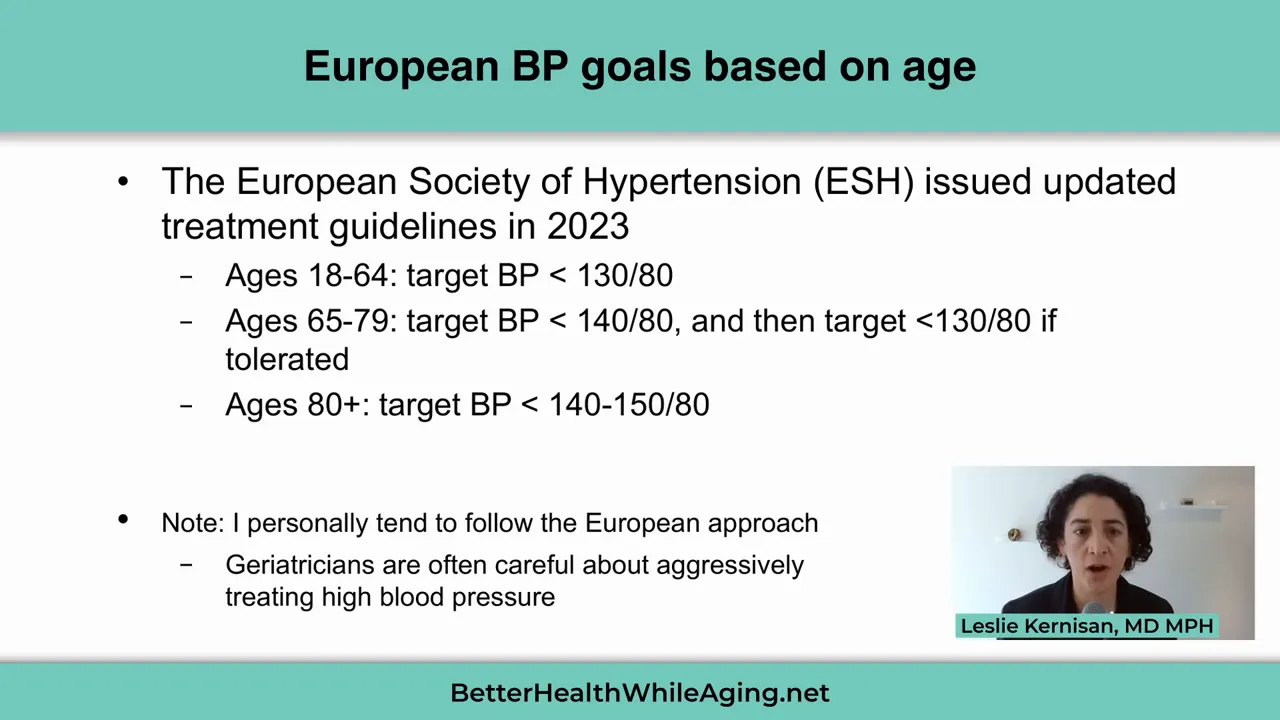
European guidance is more flexible for older adults:
- Age 18 to 64: target under 130/80
- Age 65 to 79: first target under 140/80, then consider 130/80 if tolerated
- Age 80 and older: a systolic target in the 140 to 150 range may be reasonable
Why goals may be higher in frail older adults
Aggressive treatment is not always better.
Some older adults can become overtreated and develop problems such as:
- Dizziness
- Lightheadedness when standing
- Falls
- Treatment burden from multiple medications
That is why blood pressure targets should be tailored, especially in people in their late 80s or 90s, people with frailty, and people with more limited life expectancy.
How research influenced blood pressure goals
A major study called SPRINT helped shift treatment recommendations. It found that, in selected adults age 50 and older who were at increased cardiovascular risk, more intensive blood pressure treatment reduced cardiovascular events, stroke, and death compared with a less intensive target.
But there are two important cautions:
- The extra benefit was real but not huge for every individual
- Many frailer older adults were not included in the study, including people with dementia, diabetes, or nursing home residence
That helps explain why some experts still prefer a stepwise, individualized approach rather than pushing every older adult toward the same low target.
Common mistakes people make with blood pressure
- Relying on one reading instead of looking at multiple measurements over time
- Ignoring home monitoring when office readings seem inconsistent
- Using the wrong cuff size
- Measuring too soon after activity, coffee, or stress
- Assuming no symptoms means no risk
- Treating the number without considering the person, especially in frail older adults
- Forgetting to record pulse along with blood pressure at home
- Missing medication causes, such as NSAIDs or steroids
What to do if you are concerned about high blood pressure
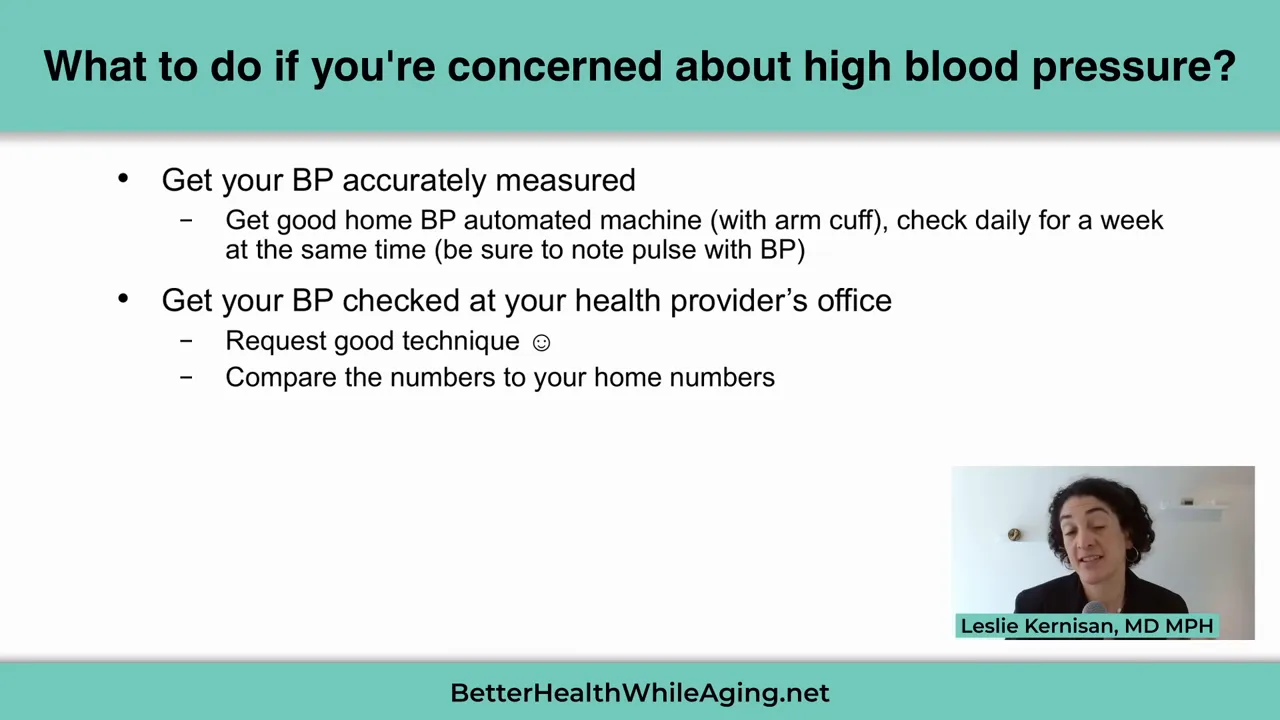
1. Get accurate readings
Use a validated home upper arm monitor and follow good measurement technique.
2. Gather enough data
Check blood pressure daily for about a week, ideally at the same time of day, and record both blood pressure and pulse.
3. Compare home and office readings
If possible, bring the home device to a clinic appointment to see whether it matches the office machine reasonably well.
4. Review medications and health conditions
Ask whether any prescription drugs, over the counter pain relievers, kidney problems, or sleep apnea could be contributing.
5. Ask about your personal goal
A useful question is: What blood pressure target makes sense for me right now, and why?
6. Make a follow up plan
If treatment changes are made, blood pressure should be rechecked soon. Changes often show up within about a week.
Frequently asked questions
Is 140/90 normal for an older person?
No. It may be common, but it is not considered normal. Whether it should be treated aggressively depends on the person’s age, frailty, overall health, and treatment tolerance.
What is the best blood pressure monitor for home use?
An automated upper arm cuff monitor is generally the preferred choice. Wrist and finger devices are usually less accurate.
Can stress raise blood pressure?
Yes. Emotional stress can raise blood pressure in the short term, and chronic stress can contribute over time.
Does blood pressure increase with age?
Yes, often because arteries become stiffer with age. But that age related rise is not the same as saying it is healthy or harmless.
If home readings are lower than office readings, which should I trust?
Often the home readings better reflect day to day blood pressure, especially if the home technique is good. A large difference may suggest white coat hypertension.
Bottom line
High blood pressure is very common in older adults, but it should not be dismissed as a normal part of aging. It usually causes no symptoms, yet it can seriously affect the brain, heart, kidneys, and blood vessels over time.
The most important steps are to measure blood pressure accurately, look at patterns instead of single readings, and choose treatment goals that fit the individual. For many older adults, getting systolic pressure below 150 is an important first step. Whether to aim lower depends on overall health, frailty, side effects, and personal priorities.