Dementia Sundowning: Symptoms, Stages, Causes, and How to Manage It
Dementia Sundowning: Symptoms, Stages, Causes, and How to Manage It

Photo by Age Cymru on Unsplash
Sundowning is a common pattern in dementia where confusion, agitation, anxiety, or restlessness get worse later in the day, especially in the late afternoon, evening, or at night. It is not a formal diagnosis, but it is a widely used term for a cluster of behaviors that can be exhausting and disruptive for both the person with dementia and the caregiver.
If you are trying to understand what sundowning looks like, when it usually appears, and what actually helps, the key is to focus on patterns, routine, sleep, environment, and medical red flags.
What is sundowning in dementia?
Sundowning, sometimes called sundowner syndrome, describes a group of symptoms that tend to show up or intensify later in the day. These symptoms can vary from person to person, and there is no single agreed-upon medical definition, but the overall pattern is recognizable.
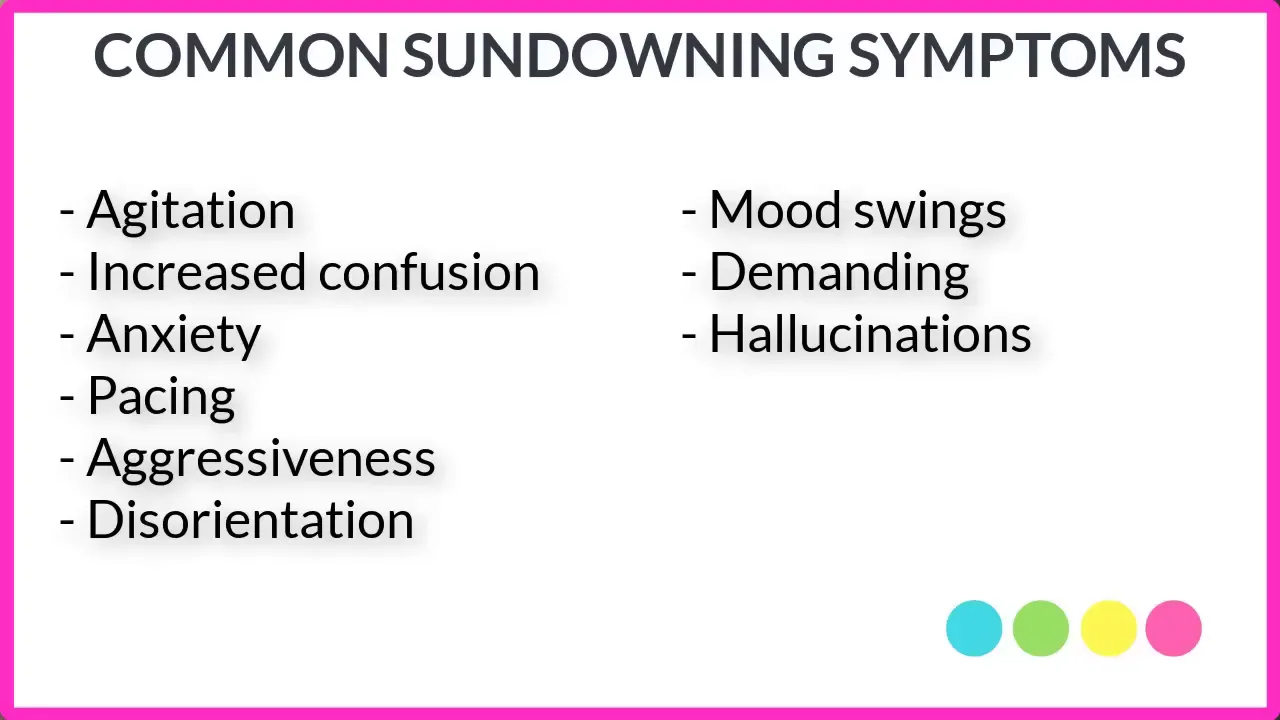
Common signs include:
- Agitation
- Increased confusion
- Anxiety
- Pacing
- Aggressive behavior
- Disorientation
- Mood swings
- Hallucinations
- Demanding or unusually intense behavior
Because these symptoms often occur in the evening or overnight, sundowning can also interfere with sleep and increase the risk of nighttime wandering.
At what stage of dementia does sundowning usually happen?
Sundowning can happen in people with cognitive impairment at different points, but it is most commonly associated with moderate to severe dementia.
That means it may become more noticeable as dementia progresses and the brain has a harder time processing daily stimulation, changes in routine, and environmental cues. It is not limited to one specific diagnosis and may occur in different types of dementia, including Alzheimer’s disease and other dementias mentioned in the source material.
It is also described as fairly common, with estimates as high as up to 66 percent of people with dementia experiencing it.
Why sundowning may happen
The exact cause is not fully settled, but one practical explanation is that the brain has to work harder all day to make sense of what is happening. Earlier in the day, after sleep, the person may function better. As the day goes on, mental fatigue builds.
When that fatigue increases, the person may have more trouble:
- Understanding the environment
- Separating current events from past memories
- Interpreting what they see and hear accurately
- Managing stress, stimulation, and transitions
This can lead to a late-day “meltdown” pattern marked by anxiety, confusion, and agitation.
Who is more likely to experience it?
Sundowning can occur in any person with cognitive impairment, but some situations may make it more likely or more noticeable.
According to the source material, it tends to occur more often in people with dementia who live at home than in those living in a care facility. That does not mean home care causes sundowning, only that the pattern may appear more often in that setting.
It may also be more noticeable when:
- The day lacks structure
- Sleep is poor or irregular
- The environment becomes dim, noisy, or overstimulating
- The caregiver is stressed or exhausted
How to reduce sundowning symptoms
Behavioral and environmental strategies are the first place to start. Medication may sometimes help, but non-drug approaches are preferred first because some medications used for dementia-related behaviors can increase confusion.
1. Keep a consistent daily routine
Regular schedules can lower stress and make the day easier to process. Try to keep important parts of the day as predictable as possible.
Focus on consistency with:
- Wake-up time
- Meal times
- Activity times
- Bedtime
Structure helps, but the day should still leave room for rest and pleasant activities.

2. Aim for the right amount of sleep
Too little sleep and too much sleep can both create problems. The goal is balance.
Helpful sleep-related steps include:
- Encourage a steady sleep schedule
- Consider whether a short nap after lunch helps restore energy
- Avoid caffeine, nicotine, and alcohol close to bedtime
If the person is sleeping poorly at night, look at what happens during the day before assuming bedtime is the only issue.
3. Protect the caregiver’s stress level
Stress can be contagious in dementia care. If the caregiver is tense, frustrated, or depleted, the person with dementia may react to that emotional tone.
That does not mean difficult behavior is anyone’s fault. It means caregiver well-being is part of the care plan.
Practical examples include:
- Building your own self-care into the daily routine
- Taking a daily walk if that is realistic
- Resting when the person with dementia rests, when possible
Caregiver fatigue can make evening hours harder for everyone.
4. Schedule enjoyable activities at the right time
Passive time in front of the television is not always the best way to get through the day. Pleasant, simple activities can reduce distress and redirect attention.
Try to schedule activities:
- During the times symptoms usually begin
- Or just before those times
Examples from the source material include:
- Listening to music
- Sorting items
- Walking
Also try to place the most challenging tasks earlier in the day, when functioning is often better. That may include bathing, appointments, and outings.

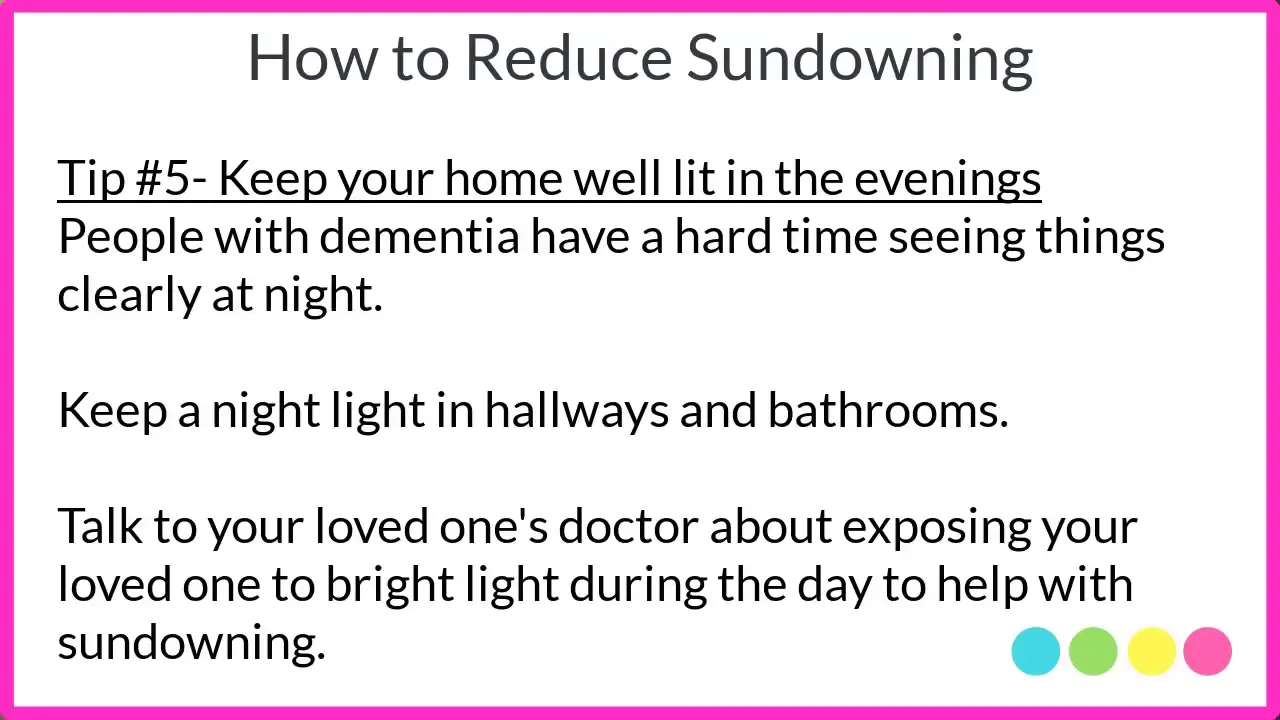
5. Improve lighting in the evening
Dim lighting can make perception harder for older adults, especially for people with dementia. Shadows, reflective surfaces, and dark rooms may be misinterpreted and trigger fear or confusion.
Helpful lighting ideas include:
- Keep the home well lit in the evening
- Use night lights in hallways and bathrooms
- Ask the doctor whether daytime bright light exposure may help with nighttime sleep
6. Create a calmer environment
Evening should be quieter and more soothing, not more stimulating.
Useful calming approaches include:
- Soothing music
- Aromatherapy
- Holding hands
- Hand massage
- Reducing loud background noise
Be cautious with television content at night. Loud, chaotic, or violent programs may be confusing or upsetting because the person may not correctly interpret that what is on screen is fictional.
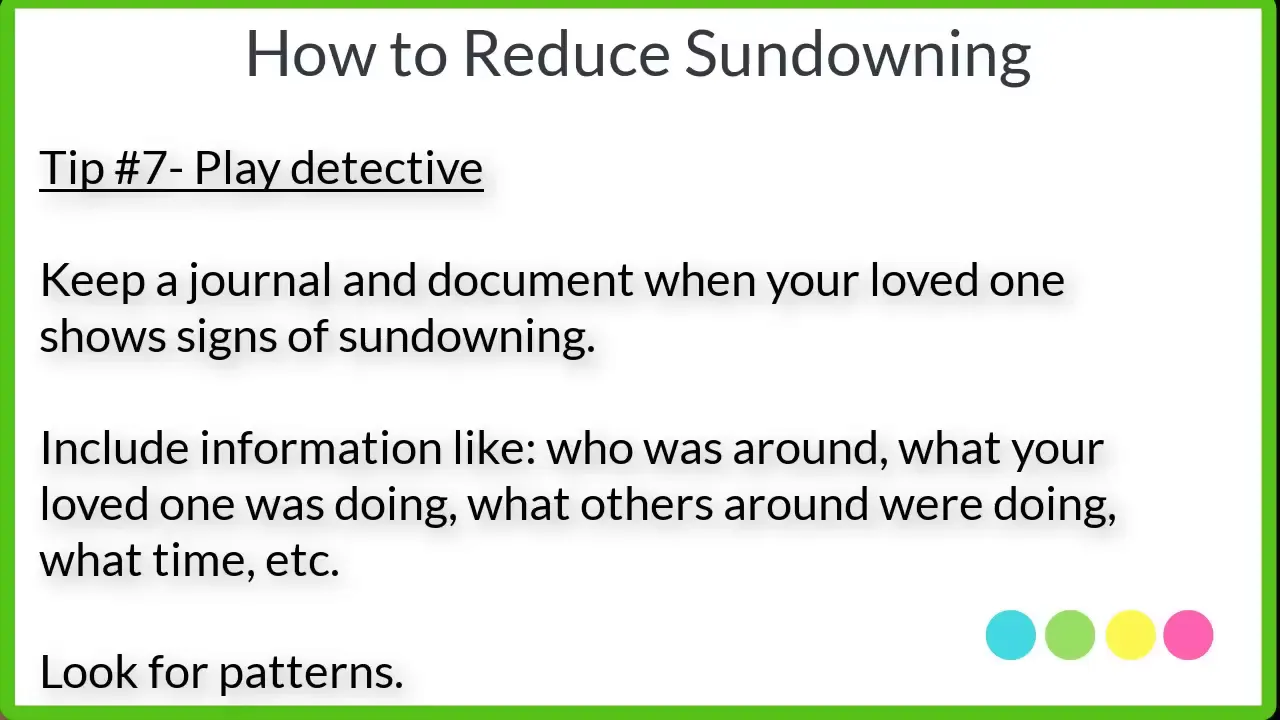
7. Track patterns in a journal
If sundowning seems unpredictable, start collecting details. A journal can help you identify triggers and timing.
Write down:
- What time symptoms start
- Who was present
- What the person was doing
- What you were doing
- What was happening in the environment
Once a pattern shows up, it becomes easier to intervene earlier.
8. Talk to the doctor if non-drug approaches are not enough
If behavioral and environmental strategies are not helping, talk with the person’s doctor about whether medication or another treatment approach may be appropriate.
This conversation matters because:
- Some medications may help
- Some medications may worsen confusion
- Over-the-counter and prescription options both need medical guidance
The decision should be individualized and made with the treating clinician.
What not to do during sundowning
Some common responses can accidentally make the situation worse.
Try to avoid:
- Introducing unnecessary changes late in the day
- Scheduling stressful tasks in the evening
- Using loud TV or chaotic background noise
- Allowing the home to become too dark
- Letting caregiver exhaustion go unchecked
- Assuming every late-day behavior change is “just sundowning”
When behavior changes may be a medical emergency
Not every spike in confusion or agitation is sundowning. A sudden, major change in behavior can be a sign of delirium, which may be caused by an underlying medical problem such as an infection.
Contact a doctor promptly if the person:
- Becomes much more confused than usual
- Shows a sudden, dramatic behavior change
- Starts doing things that are clearly out of character
- Seems to worsen rapidly over a short period of time
A treatable medical issue may be contributing to the behavioral changes.
Frequently asked questions about sundowning
Is sundowning a diagnosis?
No. It is a term used to describe a pattern of symptoms, not a formal diagnosis.
Does sundowning only happen at night?
It most often appears in the late afternoon, evening, or nighttime, but the exact timing can vary by person.
Does it only happen in Alzheimer’s disease?
No. It can occur in people with cognitive impairment and different forms of dementia.
Can a nap help sundowning?
Sometimes. A nap after lunch may help some people by giving the brain a chance to rest, but too much daytime sleep can also create problems. Balance matters.
Can brighter light help?
Better evening lighting may reduce confusion, and some research suggests daytime bright light exposure may support better sleep at night.
Quick checklist for managing sundowning at home
- Keep wake-up, meal, and bedtime schedules consistent
- Do hard tasks earlier in the day
- Use enjoyable activities before the usual agitation window
- Limit caffeine, nicotine, and alcohol before bedtime
- Keep evening spaces bright and easy to navigate
- Reduce noise and overstimulation
- Choose calming TV or skip it at night
- Track symptoms and triggers in a journal
- Watch for sudden changes that may signal delirium
- Speak with the doctor if symptoms remain severe
Bottom line
Sundowning in dementia usually shows up as worsening confusion, agitation, or anxiety later in the day, and it is most commonly seen in the moderate to severe stages of dementia. While the exact cause is not fully known, fatigue, poor sleep, environmental stress, dim lighting, and overstimulation may all play a role.
The most effective first steps are often simple but consistent: build a routine, support sleep, lower stress, time activities well, improve lighting, and look for patterns. If the change is sudden or extreme, do not assume it is routine sundowning. Medical evaluation is important.