Bathing Adaptations for Older Adults: Safer Ways to Get In and Out of the Tub
Bathing Adaptations for Older Adults: Safer Ways to Get In and Out of the Tub

Bathing can become difficult with age, especially when stepping over a bathtub wall, lowering down into the tub, or standing on a wet surface. The right bathing adaptations can reduce fall risk, improve confidence, and make daily hygiene more manageable.
This guide explains practical bath safety equipment for older adults, including bathtub grab bars, tub transfer benches, non-slip bath mats, and absorbent bathrobes. It also covers how each item helps and what to check before buying.
Why bathing safety matters for older adults
The bathroom is one of the most common places for slips and loss of balance. Bathtubs are especially challenging because they combine several risk factors at once:
- A high tub edge that must be stepped over
- Wet, slippery surfaces
- Limited space to turn or reposition
- The need to sit down and stand up safely
Adaptive bathing equipment helps by giving extra support during transfers, improving stability inside the tub, and reducing the effort needed before and after bathing.
Best bathing aids for getting in and out of a bathtub
1. Bathtub grab bars
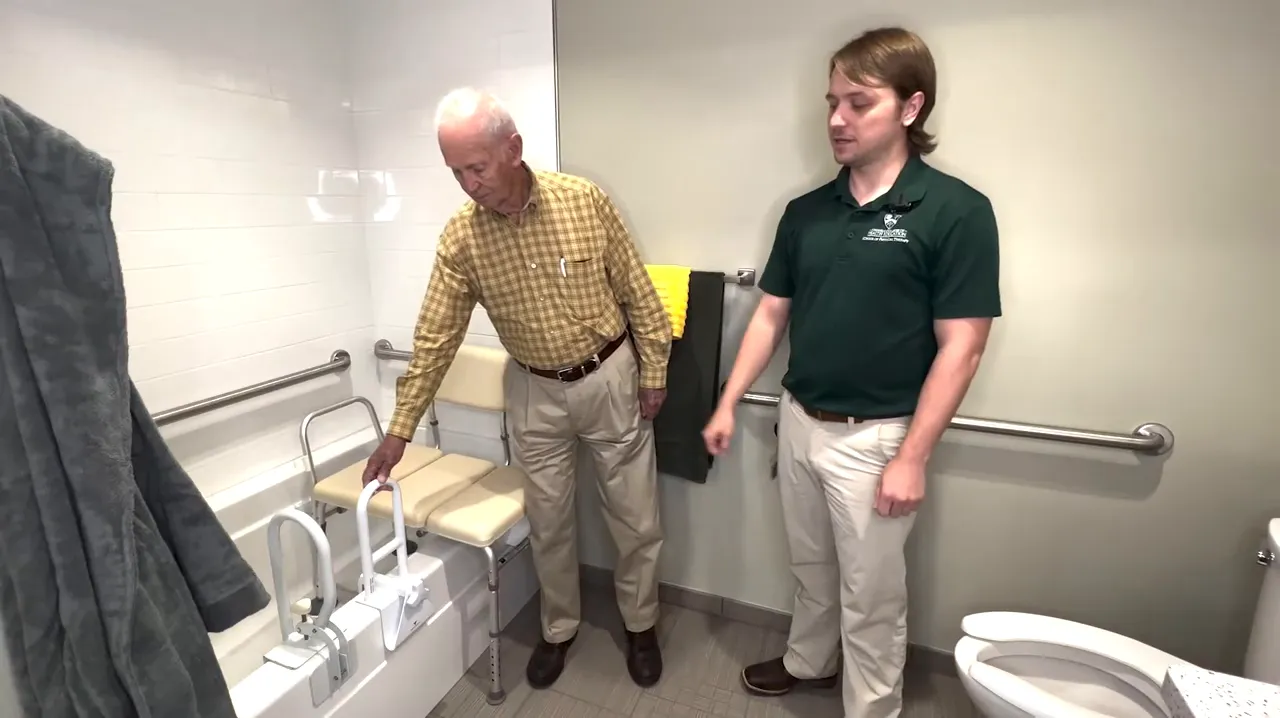
A bathtub grab bar attaches to the tub and provides a stable handhold during entry and exit. This can make it easier to step over the tub wall and control movement while shifting weight.
One advantage is convenience. Once attached correctly, the bar can remain in place and be used each time the tub is needed.
Helpful for:
- People who need extra hand support when stepping in or out
- Older adults with mild balance issues
- Anyone who wants a more secure transfer point at the tub edge
Important note: the grab bar must fit the bathtub properly. A poor fit can make the equipment less safe and less effective.
2. Tub transfer bench
A tub transfer bench is one of the most useful bathing aids for older adults who have trouble stepping into the tub. It lets a person sit down first outside the tub, then move across the bench into the bathing area.
This reduces the need to balance on one leg while stepping over the tub wall.
Basic transfer sequence:
- Sit on the outer part of the bench first.
- Slide across the seat.
- Bring one leg into the tub.
- Then bring the other leg in.
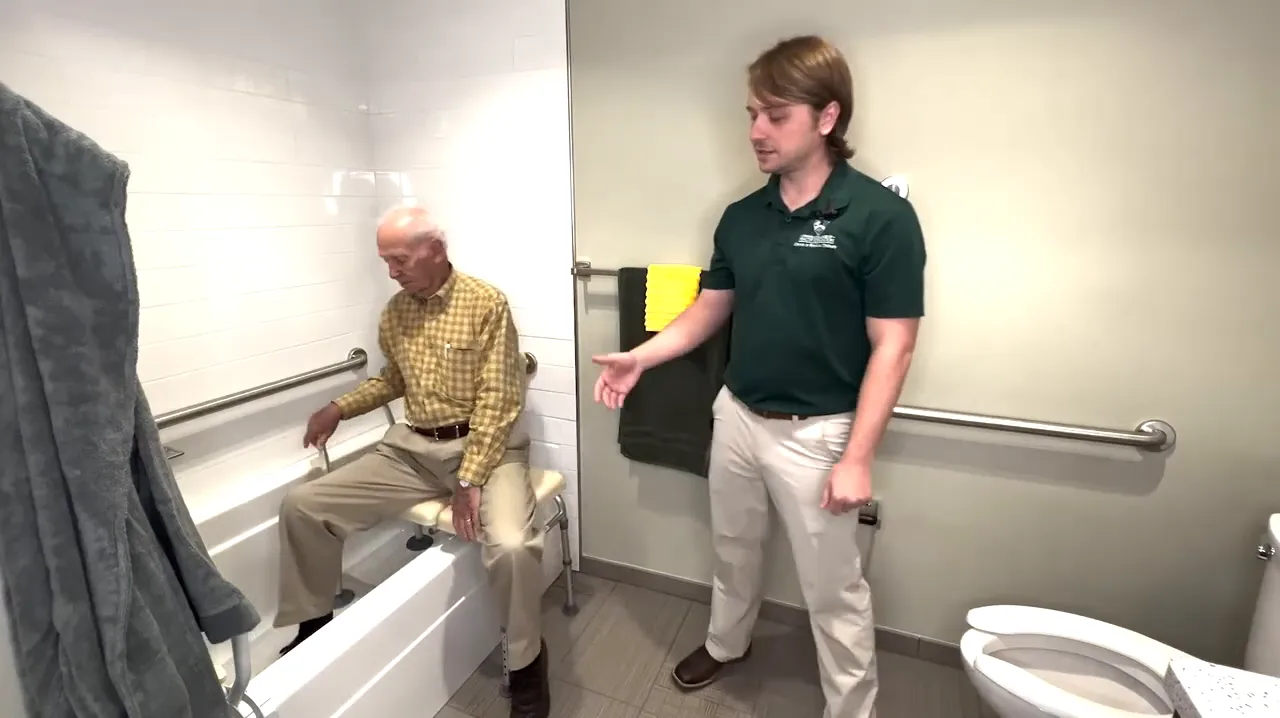
Some transfer benches also include a handle, which can provide extra leverage and support during the move in and out of the tub.
Helpful for:
- Difficulty lifting the legs over the tub edge
- Reduced balance during standing transfers
- Need for a seated method of tub entry
3. Non-slip bath mat
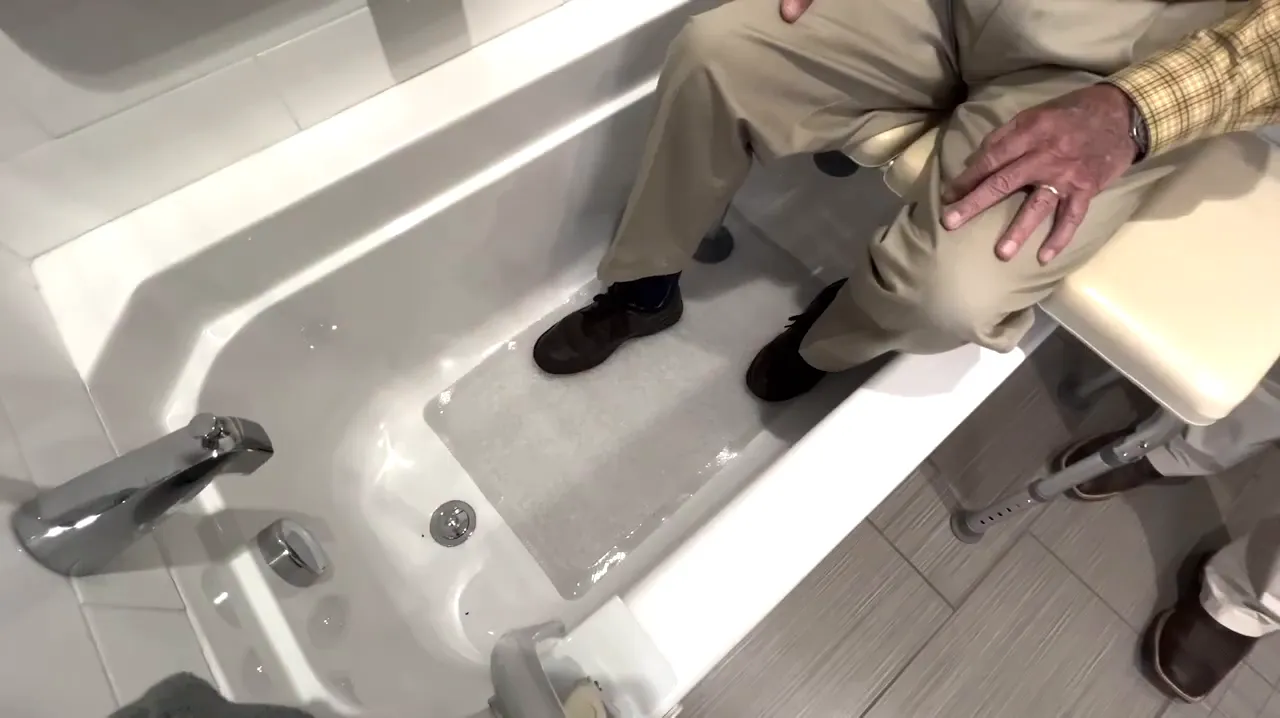
Once inside the tub, the next concern is footing. A non-slip bath mat can help reduce slipping on the tub floor.
The example shown in the source material includes a built-in loofah, but the key safety feature is the non-slip surface. For many older adults, that added traction can make bathing feel much more secure.
Helpful for:
- Slippery tub surfaces
- Standing instability while bathing
- Added confidence during foot placement
4. Terry cloth bathrobe
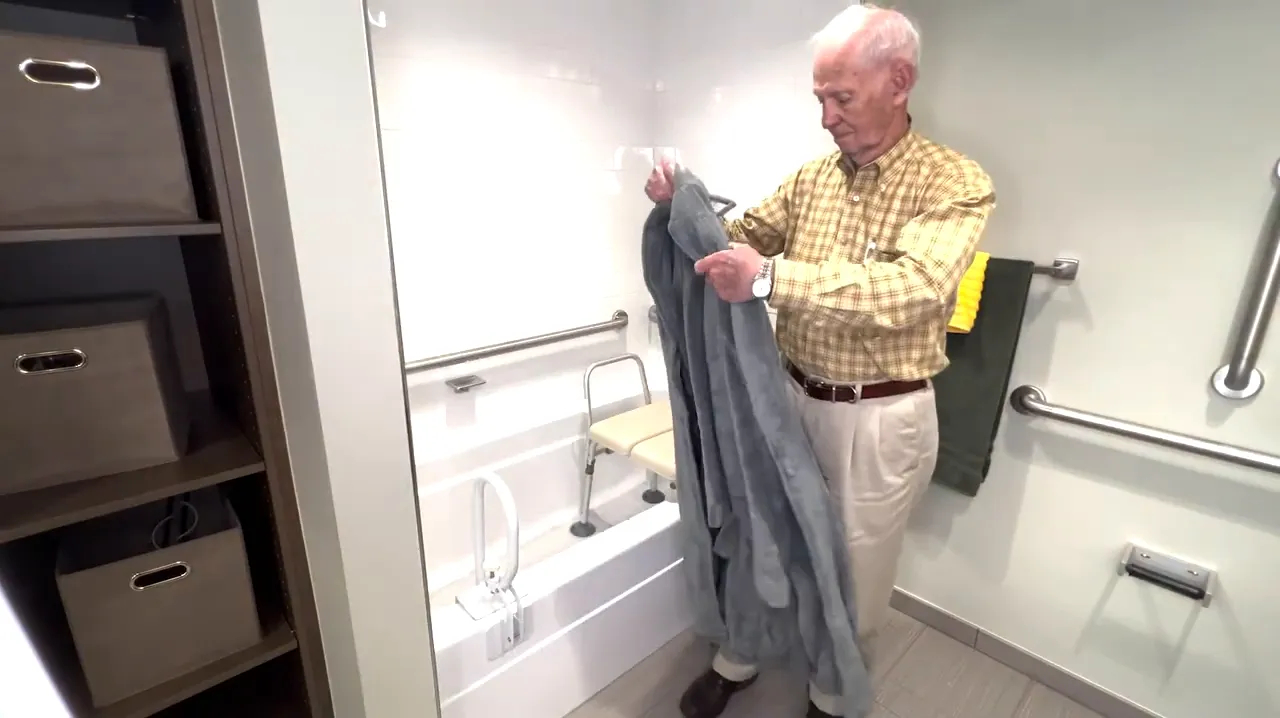
Bath safety does not end when the water turns off. After bathing, an absorbent terry cloth bathrobe can help dry the body quickly and may save energy and time.
This is especially useful for older adults who tire easily or who benefit from simplifying the drying routine immediately after getting out of the tub.
How a tub transfer bench improves bath safety
Many falls happen during the transition into or out of the bathtub, not during the bath itself. A tub transfer bench addresses that problem directly by changing the transfer from a standing step-over movement to a seated sliding movement.
This matters because seated transfers usually require:
- Less balance
- Less single-leg standing
- Less effort to clear the tub wall
- More control from start to finish
If an older adult struggles with stepping over the tub edge, a transfer bench is often more practical than relying on strength alone.
What to look for before buying bathing equipment
Before purchasing any adaptive bathing device, make sure it fits the bathtub and meets the user’s needs. This is one of the most important parts of choosing bath safety equipment.
Use this checklist:
- Tub compatibility: confirm that the grab bar or bench is designed for your bathtub style and dimensions.
- User needs: choose equipment based on balance, leg strength, mobility, and comfort with transfers.
- Ease of use: make sure the person can understand and repeat the transfer method safely.
- Support features: consider whether a bench with a handle would be more helpful.
- Surface safety: add a non-slip mat for traction once inside the tub.
- Post-bath routine: include absorbent items that simplify drying off after bathing.
How to choose the right bathing adaptation
If balance is the main issue
A bathtub grab bar and a non-slip bath mat may provide enough extra stability for some people.
If stepping over the tub wall is difficult
A tub transfer bench is usually the most helpful adaptation because it allows a seated transfer instead of a standing step into the tub.
If fatigue is also a concern
Look beyond the transfer itself. An absorbent terry cloth bathrobe can make the full bathing process less tiring by helping with drying and conserving energy.
Common mistakes to avoid
- Buying equipment without checking tub fit. Not every device works with every bathtub.
- Focusing only on getting in. Getting out of the tub can be just as difficult and needs the same level of planning.
- Skipping traction inside the tub. Support at the tub edge helps, but the tub floor can still be slippery.
- Ignoring the full routine. Safe bathing includes entry, bathing, exit, and drying off afterward.
- Choosing equipment that does not match the person’s actual mobility needs. The best device is the one the user can operate safely and consistently.
Frequently asked questions
What is the best way for an older adult to get into a bathtub safely?
For many people, the safest method is a seated transfer using a tub transfer bench. The person sits first, slides across, and then brings the legs into the tub one at a time.
Do older adults need both a grab bar and a transfer bench?
Some do, some do not. A grab bar may be enough for mild support needs, while a transfer bench is more useful when stepping over the tub wall is hard. The right choice depends on the person and the bathtub setup.
Why is a non-slip bath mat important?
It helps reduce slipping inside the tub by improving traction on a wet surface.
How can bathing be made less tiring for seniors?
Using adaptive equipment can reduce effort during transfers, and an absorbent terry cloth bathrobe can help save time and energy after bathing.
Takeaway
The most useful bathing adaptations for older adults are often simple: a bathtub grab bar, a tub transfer bench, a non-slip bath mat, and an absorbent bathrobe. Together, these tools can make bathing safer, easier, and less physically demanding.
When choosing equipment, prioritize fit, stability, and the user’s specific mobility needs. The goal is not just comfort. It is a safer, more manageable bathing routine from start to finish.