10-Minute Full Body Bed Workout for Seniors and Beginners
10-Minute Full Body Bed Workout for Seniors and Beginners

Photo by bruce mars on Unsplash
A short bed workout can help you get moving on low-energy days, warm up before a longer session, or fit gentle exercise into a busy routine. This type of routine is especially useful for seniors and beginners because it is low impact, simple to modify, and can be done on a bed, sofa, or floor.
The routine below works the lower body, upper body, hands, wrists, ankles, and neck in about 10 minutes. It focuses on muscle engagement, flexibility, mobility, and circulation without requiring you to stand up.
Who this workout is for
This routine is a good fit for:
- Seniors who want a gentle full body workout at home
- Beginners starting with low-impact exercise
- Anyone with low energy who still wants to move a little
- People looking for a warm-up before walking, stretching, or strength work
You can treat it as a standalone session or use it to wake up the body before something more challenging.
Why a bed workout can be effective
Exercising while lying down reduces impact and can feel more approachable than standing exercise. It also makes it easier to focus on controlled movement.
Benefits of this style of routine include:
- Joint-friendly movement
- Gentle core engagement
- Hip and leg activation
- Shoulder and arm mobility
- Better ankle and wrist movement
- A simple way to increase blood flow
It can also be easier to stay consistent when the barrier to starting is low.
Before you begin
Use a supportive surface and move slowly. A firmer bed, sofa, or exercise mat on the floor usually works best.
Keep these safety points in mind:
- Stop if you feel pain, dizziness, or shortness of breath.
- Work at your own pace and reduce the repetitions if needed.
- If lifting a limb feels too difficult, lower the range of motion.
- If you have a medical condition or are starting a new exercise routine, check with your healthcare provider first.
How to do the 10-minute full body bed workout
The routine below follows the same movements and general rep counts from the source material, but organized into a written format that is easier to follow.
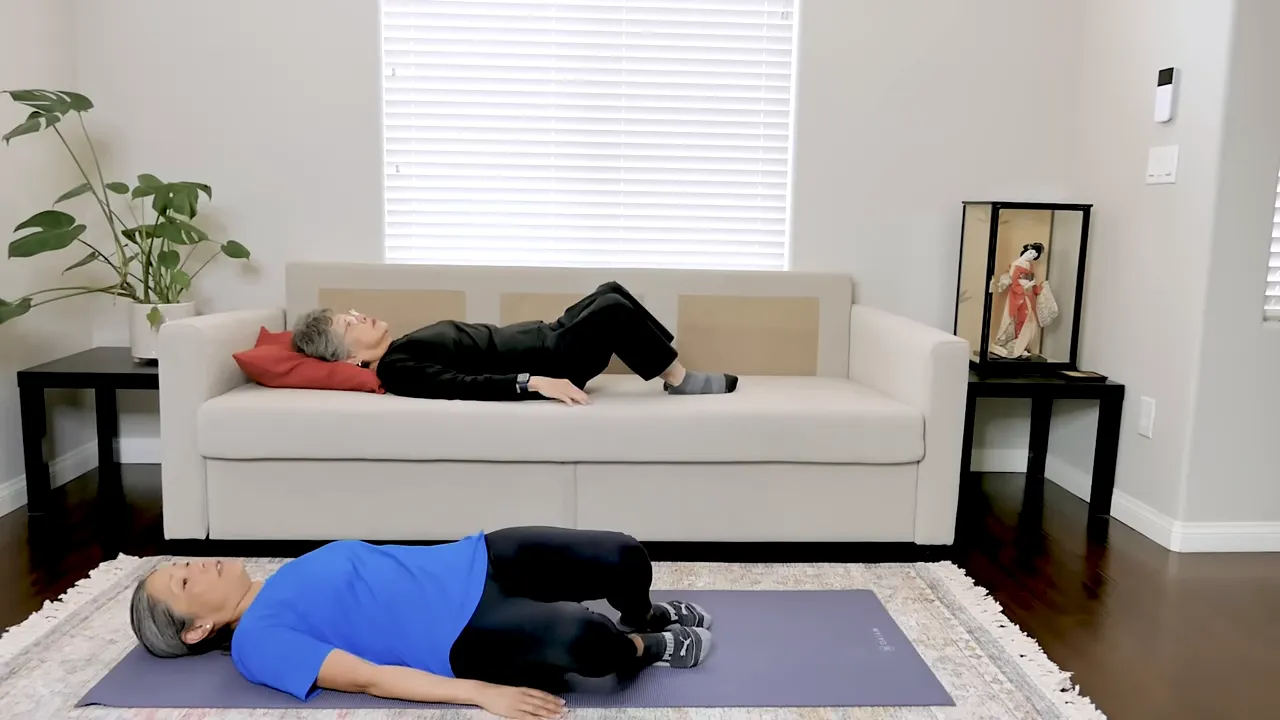
1. Windshield wiper knees
How to do it: Lie on your back with knees bent and feet resting on the bed or floor. Gently let both knees move side to side.
Reps: About 4 times each side
What it helps: Lower back mobility and a gentle warm-up for the hips
2. Marching with knees to chest
How to do it: Stay on your back with knees bent. Lift one knee toward the chest, lower it, then switch sides in a marching pattern.
Reps: 10 each side
What it helps: Hip mobility, lower abdominal engagement, and circulation
If needed, make the movement smaller and bring the knee up only as far as feels comfortable.
3. Heel presses
How to do it: Keep one knee bent. Straighten the other leg by pressing the heel outward, then bring it back in. Switch sides after finishing the set.
Reps: 10 each side
What it helps: Core engagement, hip mobility, and leg activation
For more support, you can briefly rest the heel down between repetitions.
4. Straight leg lifts
How to do it: One knee stays bent while the other leg is straight. Lift the straight leg up to about thigh height, or as high as comfortable, then lower it. Repeat on the other side.
Reps: 10 each side
What it helps: Thigh strength, hip flexors, and core stability
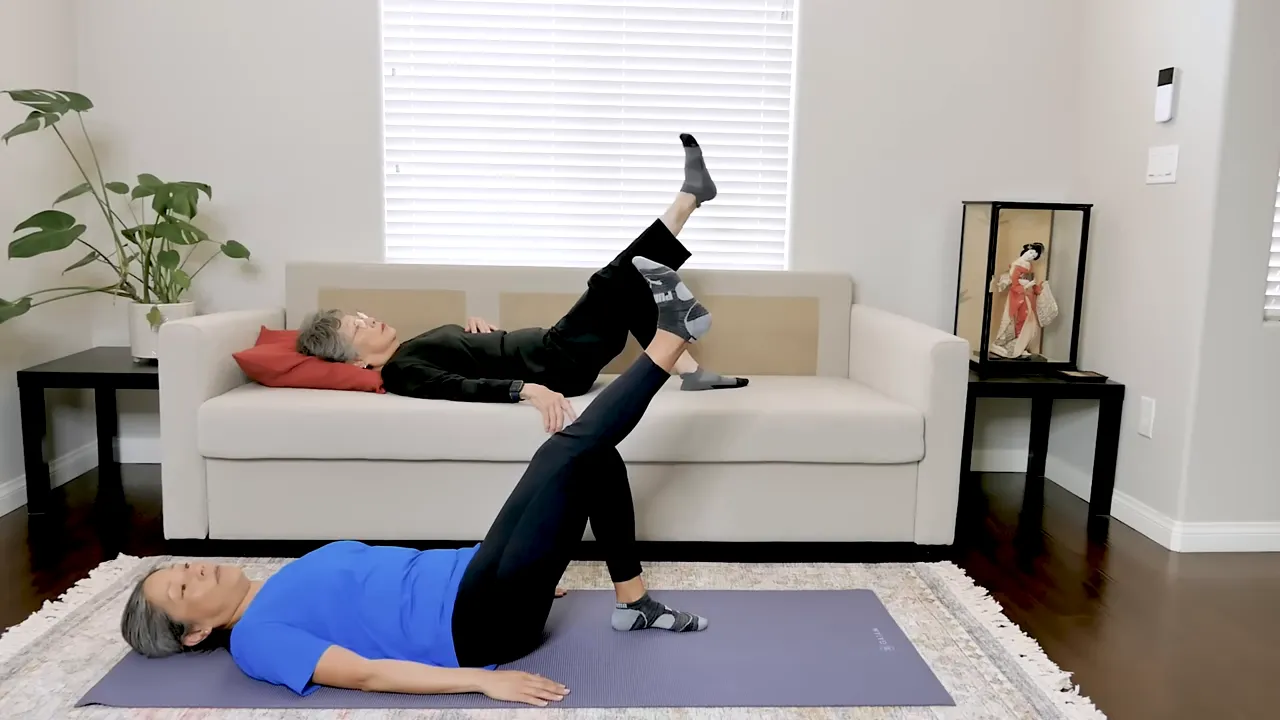
If the full lift is too much, lower the leg sooner or rest between reps.
5. Gentle head turns
How to do it: With legs relaxed, slowly turn your head to one side, come back to center, then turn to the other side.
Reps: 2 rounds each direction
What it helps: Neck mobility and tension relief
Move gently and do not force the range of motion.
6. Chest presses
How to do it: Bring both arms up over the chest with hands in fists. Press the arms upward and straighten them, then lower.
Reps: 10
What it helps: Chest, shoulders, and arms
Focus on fully extending the arms in a controlled way.
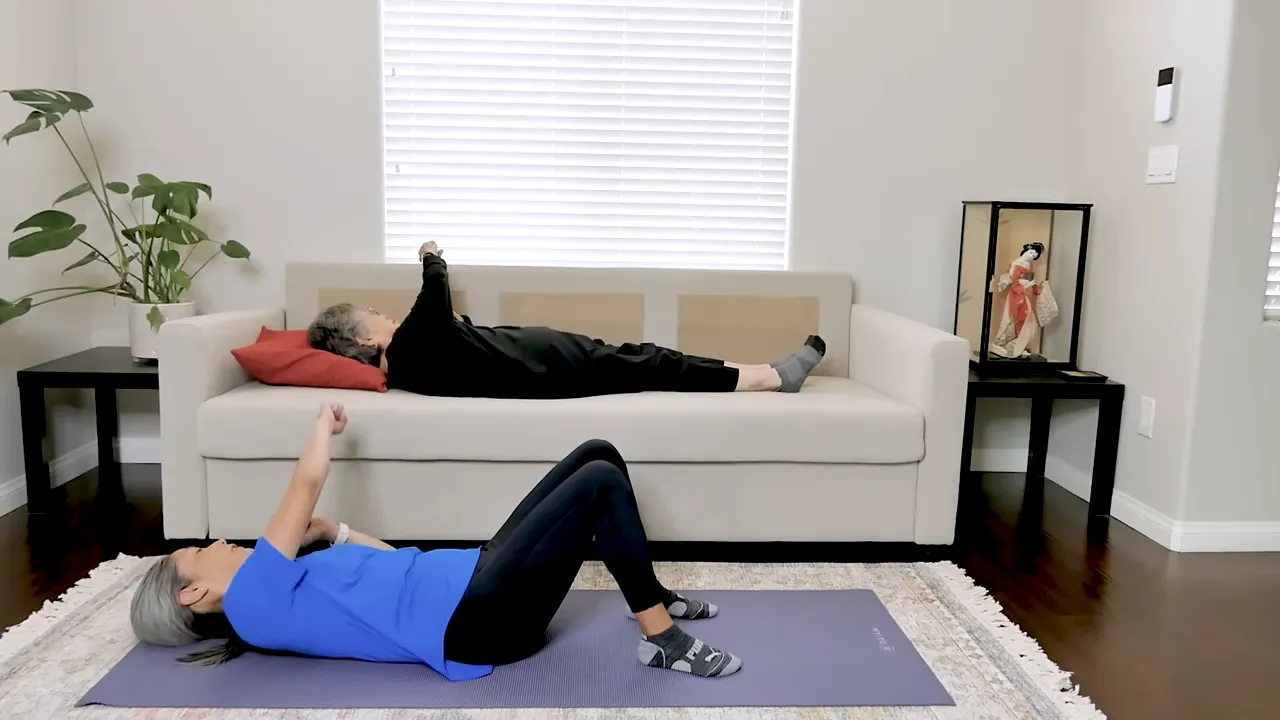
7. Side punches
How to do it: With arms raised, punch one arm out to the side, then the other, alternating back and forth.
Reps: 10 each side
What it helps: Upper back, shoulders, and arms
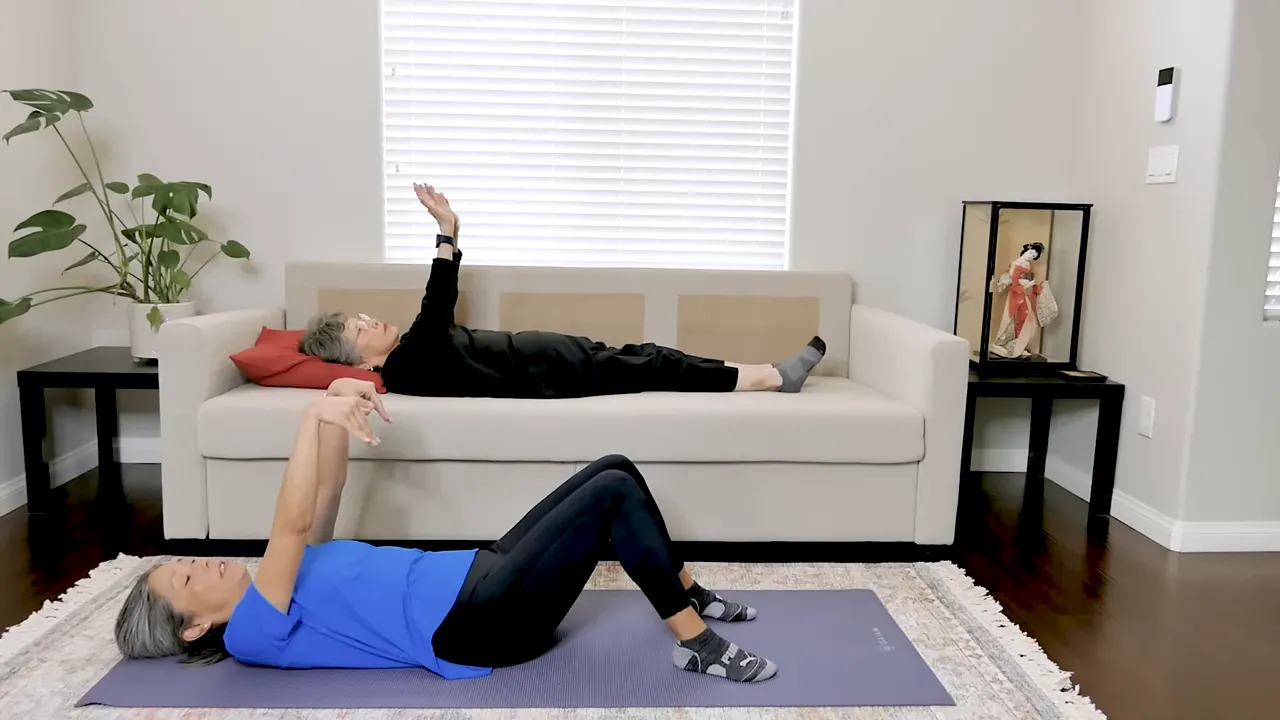
8. Alternating arm raises
How to do it: Lift one arm overhead, lower it, then lift the other. Keep palms facing inward if that feels comfortable for the shoulders.
Reps: A few controlled alternating reps, with 3 more sets near the end of the sequence
What it helps: Shoulder mobility and arm control
If you have shoulder issues, lift only to a pain-free height.
9. Hand and wrist exercises
Part 1: Flex the wrists by moving fingertips down and up.
Reps: 10
Part 2: Open the fingers wide, then close them.
Reps: 10
What it helps: Wrist mobility, hand movement, and gentle forearm activation
10. Ankle pumps and ankle circles
How to do ankle pumps: Stretch both legs out. Point the toes away, then pull them back up.
Reps: About 10 total, with 5 emphasized near the end
How to do ankle circles: Circle the ankles outward, then inward.
What it helps: Ankle mobility, lower leg circulation, and foot movement
This is a useful way to finish because it helps bring attention back to the lower legs and feet.
How long should the workout take?
This full sequence takes about 10 minutes. You can shorten it by doing fewer repetitions or choosing only a few movements, such as:
- Windshield wiper knees
- Marching
- Chest presses
- Ankle pumps
That creates a fast, gentle warm-up in just a few minutes.
Can this count as exercise for the day?
Yes. On low-energy days, a short routine like this can absolutely count as your movement for the day. It may not replace all forms of exercise long term, but it still supports mobility, circulation, and consistency.
It can also help build the habit of moving regularly, which matters just as much as intensity for many beginners.
Can you do these exercises on a sofa or floor?
Yes. The same routine can be done on:
- A bed
- A sofa
- The floor on a mat
If you use a sofa, make sure you have enough room to move your arms and legs comfortably. If you use a bed, a firmer mattress may make the exercises easier to control.
Best modifications for seniors and beginners
If you are just getting started, these adjustments can make the routine more comfortable:
- Do fewer reps than listed
- Pause between movements
- Lower one limb only partway instead of doing the full range
- Keep heels down during heel presses if lifting is too hard
- Raise arms only to shoulder height if overhead motion is uncomfortable
- Move more slowly to improve control
The goal is not to match a number perfectly. The goal is to move safely and consistently.
Common mistakes to avoid
- Moving too fast. Faster is not better here. Controlled movement helps with muscle engagement and comfort.
- Forcing range of motion. Especially with the neck, shoulders, and hips.
- Holding your breath. Try to breathe steadily through each repetition.
- Doing too much on the first day. Start small and build from there.
- Ignoring pain signals. Mild effort is normal. Sharp or increasing pain is not.
When to use this routine
This bed workout works well in several situations:
- In the morning to wake up the body
- Before a walk as a warm-up
- On tired days when standing exercise feels like too much
- As a reset break during a sedentary day
Because it is low impact and easy to modify, it can fit into many routines.
Simple 10-minute bed workout checklist
- Windshield wiper knees
- Marching knees to chest
- Heel presses
- Straight leg lifts
- Head turns
- Chest presses
- Side punches
- Alternating arm raises
- Hand and wrist work
- Ankle pumps and circles
- Finish with a few slow breaths
Final takeaway
A full body workout in bed can be a practical option for seniors and beginners who want gentle movement without a lot of setup. In about 10 minutes, you can work the legs, core, upper body, hands, wrists, and ankles while improving mobility and circulation.
If your energy is low, doing a shorter and easier version is still worthwhile. The most important step is simply getting started and listening to your body.